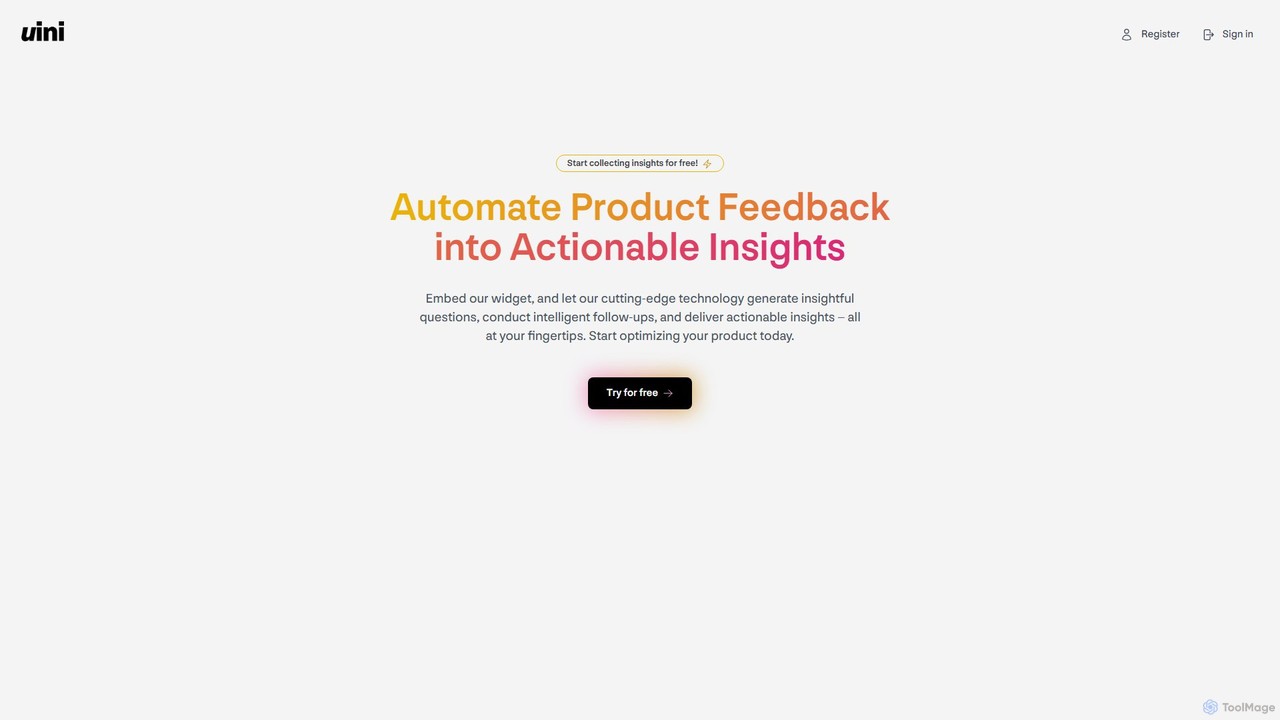
Feedback Management tools are AI-powered platforms designed to automatically collect, analyze, and manage customer or user feedback from multiple channels. They leverage technologies like Natural Language Processing (NLP) to interpret unstructured text, identifying sentiment, key topics, and emerging trends. This allows businesses to transform qualitative feedback from surveys, reviews, and support tickets into actionable, quantitative insights. By centralizing and making sense of the customer's voice, these tools help prioritize product roadmaps, improve customer experience, and make data-driven decisions.
Core Features
- Sentiment Analysis: Automatically determines the emotional tone (positive, negative, neutral) of feedback to gauge user satisfaction.
- Topic & Theme Clustering: Groups related feedback into themes like 'pricing', 'UI bugs', or 'feature requests' without manual tagging.
- Multi-Channel Aggregation: Consolidates feedback from diverse sources such as app stores, social media, email, and surveys into a single dashboard.
- Insight Prioritization: Uses AI to identify and rank the most urgent or impactful feedback based on frequency, sentiment, or customer segment.
- Automated Routing: Automatically directs specific types of feedback to the relevant teams, such as bug reports to engineering or feature ideas to product.
Use Cases
These tools are essential for product managers, customer experience (CX) teams, and marketing departments in SaaS companies, e-commerce businesses, and mobile app development. They are used to validate product decisions, identify drivers of customer churn, and monitor brand perception in real-time.
How to Choose
When selecting a Feedback Management tool, consider its integration capabilities with your existing stack (e.g., Jira, Slack, Zendesk). Evaluate the depth of its analytics, including trend analysis and root cause identification. Also, assess the range of supported data sources, scalability for handling feedback volume, and the clarity of its pricing model.