ToolMage
Sign in

Best 1 Hris AI tools for Business

Popular Hris AI tools in Business include Lattice, helping you work more efficiently.

Lattice
Paid

Lattice

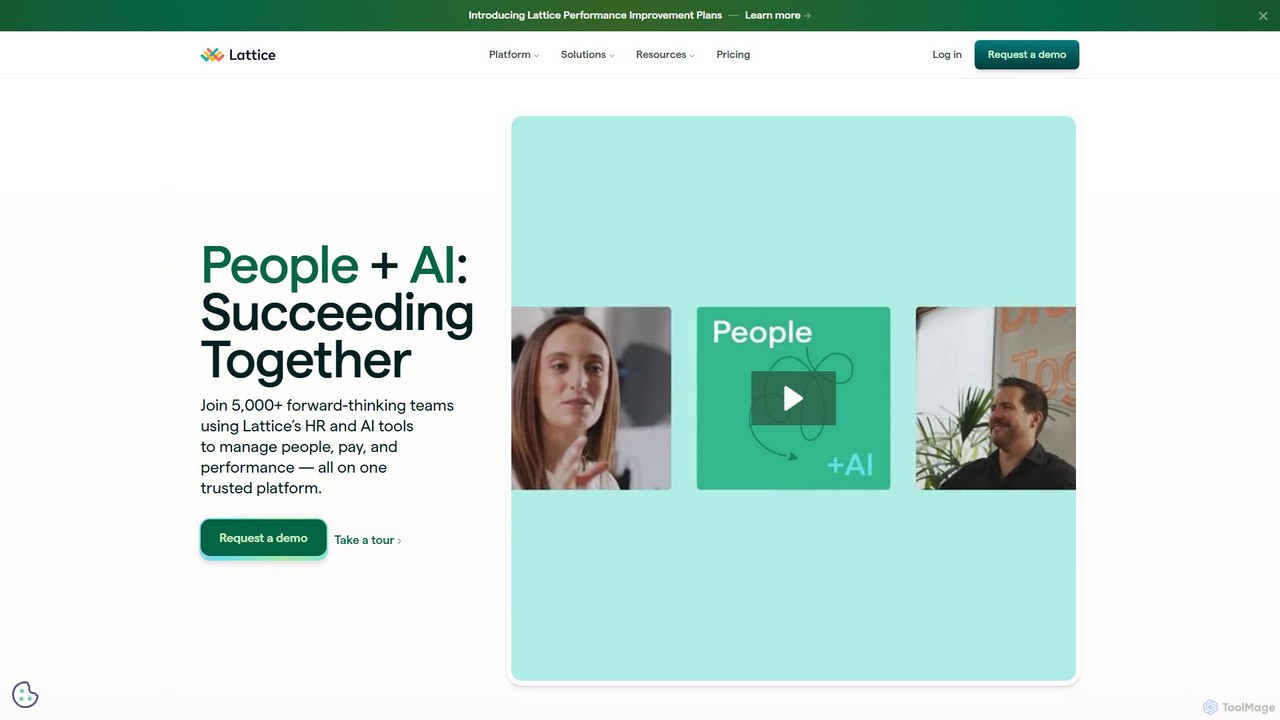
Lattice is a comprehensive, AI-powered people management platform that combines HRIS, performance management, employee engagement, and career development tools. It helps over 5,000 companies build high-performing, engaged teams by unifying people programs, data, and AI-driven insights into a single, intuitive system loved by HR, managers, and employees.

Hris
Visits 239KFavorites 142Likes 137

About Hris

Hris (Human Resources Information System) are AI-powered tools that integrate various HR functions into a unified platform. These systems leverage artificial intelligence to automate routine tasks, provide data-driven insights, and enhance the overall employee experience. They are crucial for modern businesses seeking to optimize human capital management, streamline HR operations, and support strategic decision-making.

Core Features

  • Automated Recruitment: Streamlines candidate sourcing, screening, and interview scheduling using AI algorithms.
  • Performance Management: Facilitates goal setting, feedback collection, and performance reviews with AI-assisted insights.
  • Payroll and Benefits Administration: Automates complex payroll processing, tax compliance, and benefits enrollment.
  • Employee Self-Service: Provides employees with direct access to personal data, leave requests, and company policies.
  • Workforce Analytics: Offers predictive insights into staffing needs, talent gaps, and employee retention through data analysis.

Applicable Scenarios

Hris tools are indispensable for HR departments in organizations of all sizes, from small businesses to large enterprises. They are used by HR managers to centralize employee data, by recruiters to accelerate hiring, and by employees to manage their personal HR-related tasks. Businesses leverage Hris to ensure compliance, improve operational efficiency, and foster a better employee experience.

How to Choose

When selecting an Hris, consider its integration capabilities with existing business systems, the breadth and depth of its AI features (e.g., predictive analytics, automation), scalability to accommodate future growth, and robust data security measures. Evaluate the user interface for ease of use for both HR staff and employees, and assess the vendor's support and implementation services.

Hris use cases

1

Automating Candidate Screening and Shortlisting

HR recruiters in large enterprises leverage AI-powered Hris to efficiently process thousands of job applications. By defining specific criteria and keywords, the system automatically screens resumes, identifies top-tier candidates, and creates a shortlist, significantly reducing the manual effort and time spent on initial candidate evaluation. This allows recruiters to focus on engaging with qualified individuals rather than administrative tasks, improving hiring speed by up to 60%.

2

Predictive Workforce Planning and Skill Gap Analysis

Business leaders and HR strategists utilize Hris's advanced analytics capabilities to forecast future workforce needs. By analyzing historical data, market trends, and internal performance metrics, the system can predict potential skill gaps, identify areas for upskilling or reskilling, and inform strategic hiring decisions. This proactive approach helps organizations maintain a competitive edge and ensures they have the right talent at the right time, optimizing resource allocation and reducing future recruitment costs.

3

Personalizing Employee Onboarding Experiences

New hires in a rapidly growing tech company benefit from an Hris that personalizes their onboarding journey. The system automatically assigns relevant training modules, provides access to necessary documents based on their role and department, and connects them with mentors. This AI-driven personalization ensures a smooth and engaging start for new employees, significantly improving their integration into the company culture and reducing early attrition rates by fostering a sense of belonging and preparedness.

4

Streamlining Performance Review Cycles

HR departments in mid-sized companies use Hris to streamline their annual performance review cycles. The system automates the distribution of review forms, tracks progress, and provides managers with AI-assisted insights for fair and objective feedback. It also aggregates performance data over time, allowing for easier identification of high-potential employees and areas for development, ultimately making the review process more efficient and data-driven, saving up to 40% of administrative time.

5

Optimizing Payroll and Benefits Administration

HR and finance teams in a multinational corporation rely on Hris to manage complex payroll and benefits administration across different regions. The system automates calculations, ensures compliance with local tax laws and regulations, and facilitates seamless enrollment in various benefit plans. This automation minimizes errors, reduces compliance risks, and frees up HR staff from tedious administrative tasks, allowing them to focus on more strategic initiatives, leading to a 25% reduction in processing time.

6

Enhancing Employee Self-Service and Engagement

Employees across various departments use the self-service portal of their company's Hris to manage their HR-related needs independently. They can update personal information, request time off, access pay stubs, and enroll in training programs without needing direct HR intervention. This empowers employees, reduces the workload on HR staff, and improves overall employee satisfaction and engagement by providing convenient, 24/7 access to essential HR functions, leading to a 30% decrease in routine HR inquiries.

Hris FAQ

What is Hris?

Hris (Human Resources Information System) is a software solution that integrates various HR functions into a single platform. It centralizes employee data, automates administrative tasks like payroll and benefits, and provides tools for recruitment, performance management, and workforce analytics. The goal of Hris is to streamline HR operations, improve data accuracy, and enhance the overall employee experience within an organization.

How does AI enhance Hris functionality?

AI significantly enhances Hris by automating repetitive tasks such as resume screening, onboarding workflows, and payroll processing, reducing manual errors and saving time. It also provides advanced analytics for predictive workforce planning, identifying skill gaps, and forecasting employee turnover. Furthermore, AI can personalize employee experiences, offer intelligent chatbots for self-service inquiries, and provide data-driven insights for performance management, making HR processes more efficient, strategic, and employee-centric.

What are the key benefits of implementing an Hris?

Implementing an Hris offers numerous benefits, including increased operational efficiency through automation of routine HR tasks, improved data accuracy and compliance with regulations, and enhanced strategic decision-making with robust analytics and reporting. It also leads to a better employee experience by providing self-service options and personalized interactions, ultimately boosting engagement and retention. For businesses, Hris translates to cost savings, reduced administrative burden, and a more agile and informed HR department.

How to choose the right Hris for my business?

Choosing the right Hris involves evaluating several factors. First, assess your business's specific HR needs and size to ensure the system offers the necessary functionalities and scalability. Consider its integration capabilities with existing software (e.g., ERP, accounting). Look for robust data security and compliance features. Evaluate the user-friendliness for both HR staff and employees, and compare pricing models. Finally, research vendor reputation, customer support, and implementation services to ensure a smooth transition and ongoing assistance.

What is the difference between Hris, HRMS, and HCM?

While often used interchangeably, Hris, HRMS, and HCM represent different scopes of HR software. Hris (Human Resources Information System) primarily focuses on core HR administrative functions like employee data, payroll, and benefits. HRMS (Human Resources Management System) builds upon Hris by adding talent management features such as recruitment, performance, and learning. HCM (Human Capital Management) is the broadest, encompassing all HRMS functions plus strategic workforce planning, analytics, and global HR capabilities, aiming for a holistic view of human capital.