Business Best in category 2 results Interviewing AI Tool

Popular AI tools in the Interviewing field of Business include FloCareer、InterviewFlowAI, etc., helping you quickly improve efficiency.

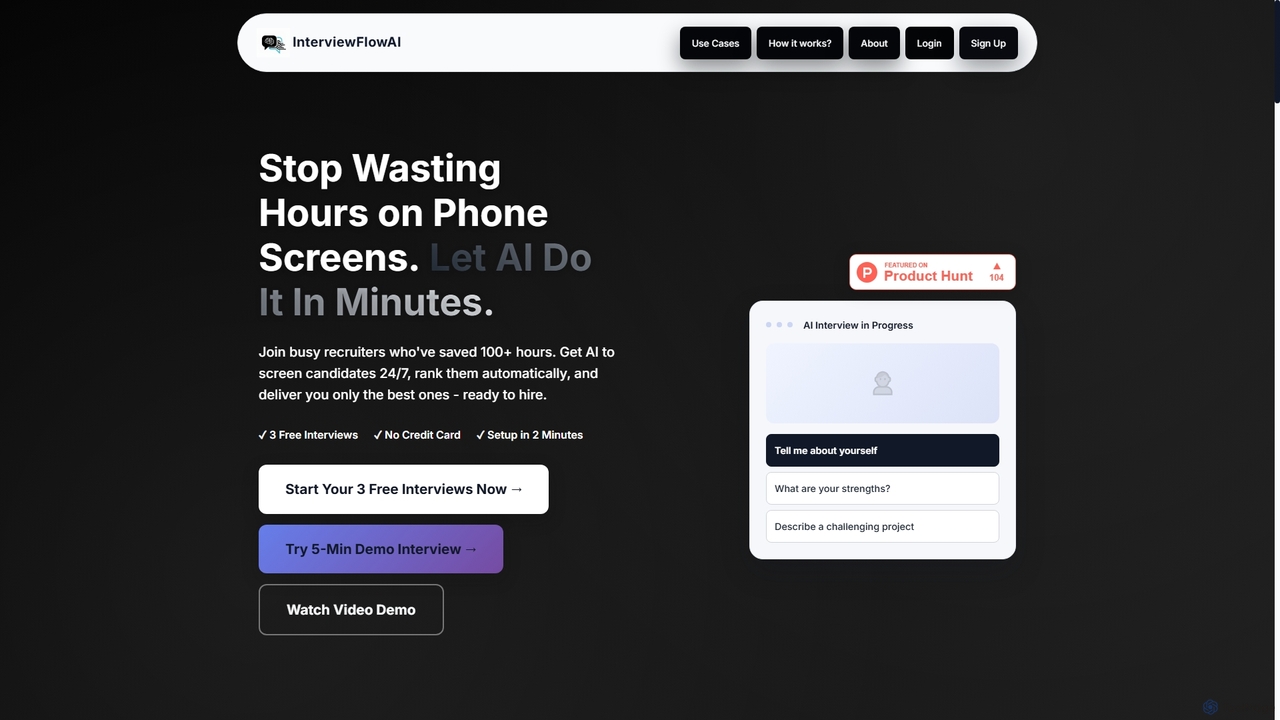
InterviewFlowAI

InterviewFlowAI

InterviewFlowAI is an AI-powered recruitment platform designed to automate candidate screening, saving recruiters significant time and effort. It …

5.3K
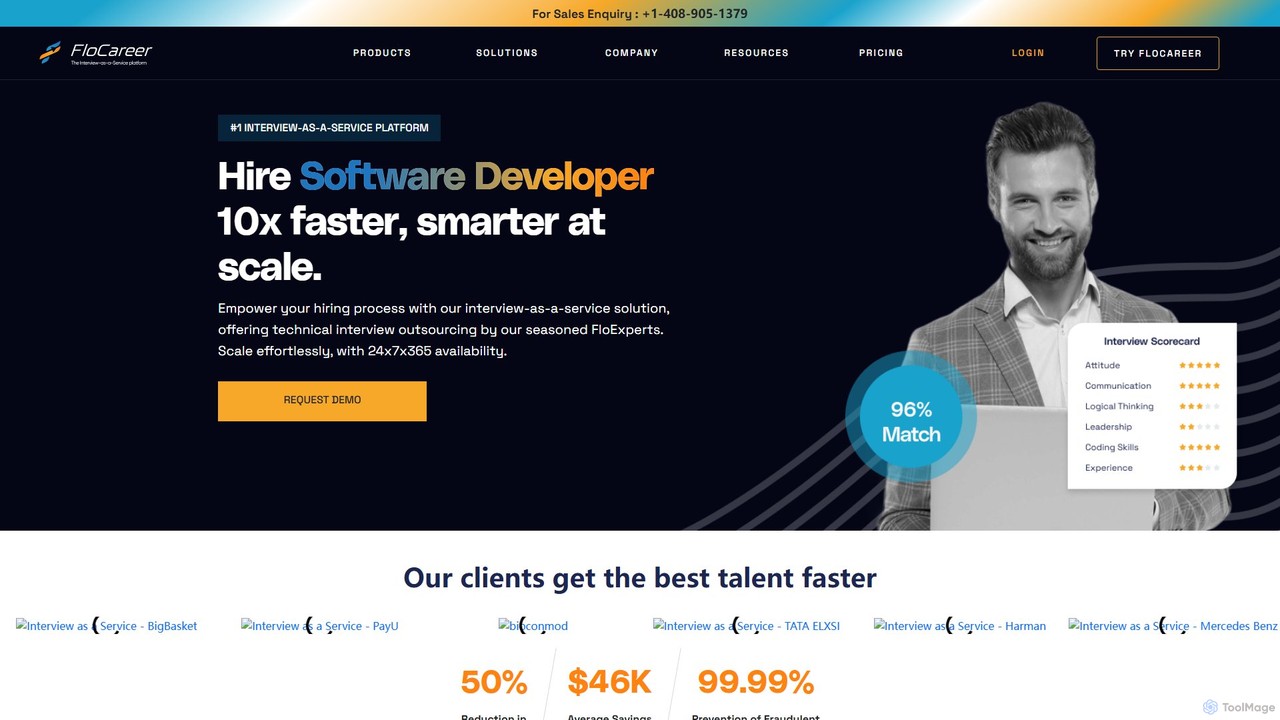
FloCareer

FloCareer

FloCareer is an AI-powered Interview-as-a-Service platform designed to streamline technical hiring. It leverages a global network of over …

128.1K

About Interviewing

AI Interviewing tools are specialized AI-powered platforms designed to streamline and enhance various stages of the interview process. These tools leverage advanced natural language processing, computer vision, and machine learning to analyze candidate responses, provide interview practice, and automate administrative tasks. Their primary value lies in improving hiring efficiency, standardizing candidate assessment, and offering data-driven insights to both recruiters and job seekers.

Core Features

  • Virtual Interview Simulation: Allows job seekers to practice interviews with AI-driven virtual interviewers, receiving instant feedback.
  • AI Feedback & Analysis: Provides detailed insights on communication style, body language, tone, and content of responses for both practice and actual interviews.
  • Automated Candidate Screening: Uses AI to analyze video or text responses from initial interviews, identifying top candidates based on predefined criteria.
  • Behavioral & Skill Assessment: Evaluates soft skills, problem-solving abilities, and job-specific competencies through AI-driven analysis of interview performance.
  • Interview Scheduling & Management: Automates the coordination of interview times, sending reminders, and managing candidate pipelines.

Applicable Scenarios

AI Interviewing tools are invaluable for HR departments seeking to scale their recruitment efforts, job seekers aiming to refine their interview skills, and hiring managers looking for objective candidate insights. They are widely used in high-volume recruitment for initial screening, in career development programs for interview coaching, and by companies focused on reducing bias in their hiring process.

How to Choose

When selecting an AI Interviewing tool, consider the accuracy and depth of its AI analysis, the customizability of interview questions and assessment criteria, and its integration capabilities with existing Applicant Tracking Systems (ATS). Data privacy and security features are crucial, as is the type and clarity of feedback provided. Evaluate whether the tool supports various interview formats (video, audio, text) and offers robust reporting for data-driven decision-making.

InterviewingUse Cases

1

AI-Powered Interview Practice for Job Seekers

Job seekers can utilize AI interviewing tools to simulate realistic interview scenarios, practicing responses to common and behavioral questions. The AI provides immediate, objective feedback on their verbal communication, body language, and content, highlighting areas for improvement. This helps candidates build confidence and refine their interview techniques before facing human interviewers, significantly increasing their chances of success.

2

Automated Initial Candidate Screening for Recruiters

Recruiters managing a large volume of applications can deploy AI interviewing tools for initial screening. Candidates complete pre-recorded video or text interviews, and the AI analyzes their responses against job requirements and desired competencies. This automates the time-consuming first-round assessment, allowing recruiters to quickly identify and prioritize the most promising candidates for further human review, streamlining the hiring funnel.

3

Standardized Behavioral Assessment in Hiring

HR managers and hiring teams can use AI interviewing tools to conduct standardized behavioral assessments across all candidates. By analyzing responses to structured questions, the AI can objectively evaluate traits like teamwork, leadership, and problem-solving skills, reducing subjective bias. This ensures a consistent and fair evaluation process, leading to more equitable hiring decisions and a stronger talent pool.

4

Enhancing Interviewer Training and Consistency

Organizations can leverage AI interviewing tools to train their hiring managers and interviewers. The tools can simulate various candidate responses and provide feedback on interviewer questioning techniques, listening skills, and bias detection. This helps interviewers develop more effective and consistent interviewing practices, ensuring a fair and structured experience for all candidates and improving the quality of hiring decisions.

5

Identifying Key Soft Skills for Specific Roles

For roles where soft skills are paramount, AI interviewing tools can be configured to specifically assess communication, adaptability, and critical thinking. The AI analyzes nuances in candidate responses, tone, and expression to provide insights into these less tangible skills. This allows hiring managers to make more informed decisions beyond technical qualifications, ensuring a better cultural and functional fit for the team.

6

Reducing Unconscious Bias in the Recruitment Process

Companies committed to diversity and inclusion can use AI interviewing tools to mitigate unconscious bias. By focusing solely on the content and structure of responses, and providing objective analysis, AI can help standardize evaluations and reduce the influence of factors like appearance or accent. This promotes a more equitable hiring environment, ensuring candidates are judged purely on their qualifications and potential.

InterviewingFrequently Asked Questions