Coda
Coda is an all-in-one collaborative workspace that blends documents, spreadsheets, and applications into a single, flexible surface. Powered …
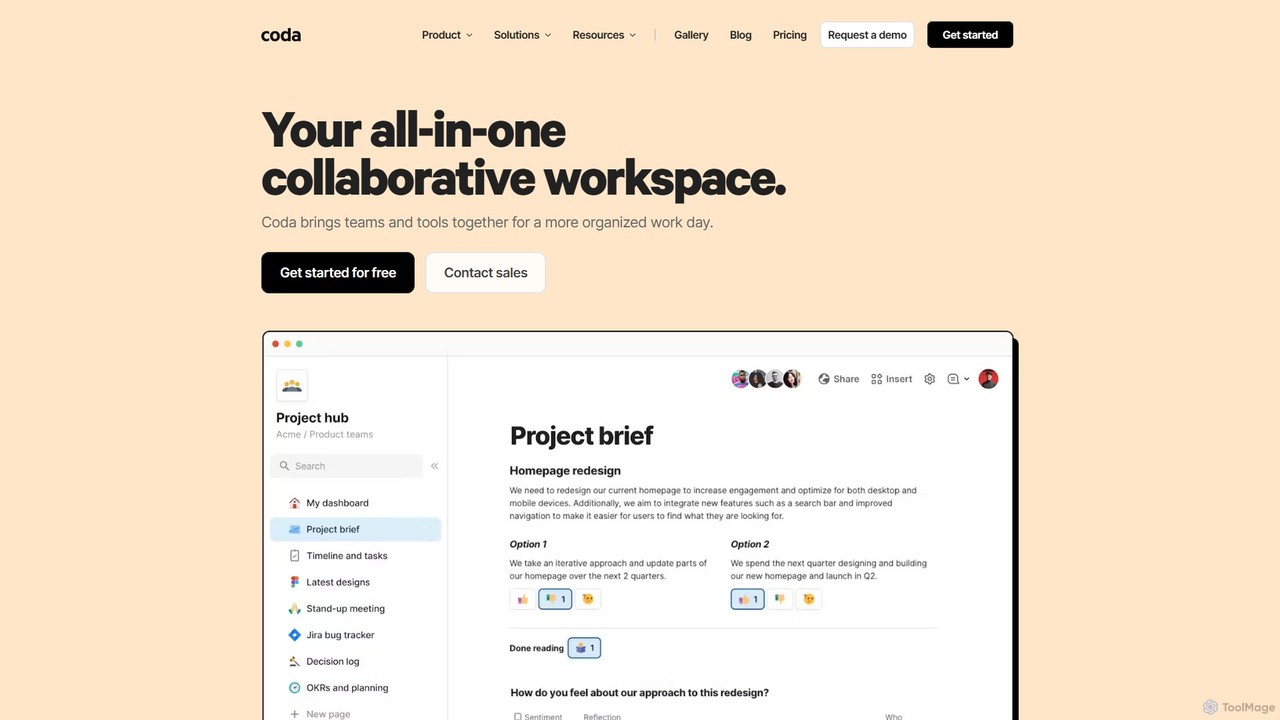
Coda is an all-in-one collaborative workspace that blends documents, spreadsheets, and applications into a single, flexible surface. Powered by Coda AI, it helps teams centralize information, automate workflows, and make faster decisions. Replace your scattered tool stack with a unified platform for writing, tracking, and building custom solutions.
About Knowledge Base
Knowledge Base AI tools are intelligent systems designed to centralize, organize, and make organizational information easily accessible using artificial intelligence. Leveraging natural language processing (NLP) and machine learning, these tools transform raw data into structured, searchable, and actionable knowledge. They empower businesses to improve internal efficiency, enhance customer self-service, and support faster, more informed decision-making by providing instant access to relevant information.
Core Features
- Intelligent Search: Provides semantic search capabilities, understanding user intent beyond keywords to deliver highly relevant results.
- Automated Content Generation: Generates summaries, answers, or even new articles based on existing data, reducing manual effort.
- Content Curation & Organization: Automatically tags, categorizes, and links related information, maintaining a well-structured knowledge repository.
- Personalized Recommendations: Offers tailored content suggestions to users based on their roles, queries, and interaction history.
- Real-time Updates & Maintenance: Identifies outdated information and suggests updates, ensuring the knowledge base remains current and accurate.
Use Cases
Knowledge Base AI tools are invaluable across various business functions. They support customer service by powering self-service portals, enabling customers to find answers instantly without agent intervention. Internally, they streamline employee onboarding and training by providing a single source of truth for company policies, procedures, and product information. Furthermore, they assist sales and marketing teams by centralizing product knowledge and competitive intelligence, ensuring consistent messaging and informed client interactions.
How to Choose
When selecting an AI Knowledge Base tool, consider its NLP capabilities for understanding complex queries and generating accurate responses. Evaluate its integration potential with existing CRM, helpdesk, or internal communication platforms to ensure seamless data flow. Scalability is crucial for growing businesses, as is the ease of content creation and management. Finally, assess security features for sensitive information and the analytics dashboard for insights into knowledge usage and gaps.

Knowledge BaseUse Cases
Enhance Customer Self-Service Support
For customer service departments, an AI Knowledge Base provides a robust self-service portal. Customers can input questions in natural language and receive instant, accurate answers from a comprehensive repository of FAQs, troubleshooting guides, and product manuals. This reduces support ticket volume, improves customer satisfaction by offering 24/7 assistance, and frees up agents to handle more complex issues.
Streamline Employee Onboarding & Training
HR and training departments can leverage AI Knowledge Bases to create a centralized, intelligent resource for new hires. Onboarding materials, company policies, IT guides, and departmental procedures are easily accessible and searchable. New employees can quickly find answers to common questions, accelerating their learning curve and reducing the burden on managers and colleagues for repetitive inquiries.
Centralize Product Documentation & FAQs
Product managers and technical writers use AI Knowledge Bases to manage and disseminate product-related information. This includes detailed feature descriptions, user guides, API documentation, and common troubleshooting steps. The AI can automatically link related articles, suggest content improvements, and ensure all documentation is consistent and up-to-date, benefiting both internal teams and external users.
Facilitate Internal Knowledge Sharing & Collaboration
For large organizations, an AI Knowledge Base acts as a single source of truth for all internal information, from project best practices to departmental guidelines. Teams can contribute, categorize, and retrieve information efficiently, breaking down silos. The AI's intelligent search ensures employees quickly find the expertise or data they need, fostering better collaboration and reducing redundant work.
Support Sales & Marketing Enablement
Sales and marketing teams can utilize an AI Knowledge Base to centralize competitive intelligence, product benefits, case studies, and marketing collateral. Sales representatives can quickly access relevant information during client calls, while marketing can ensure consistent messaging across campaigns. This empowers teams with accurate, up-to-date information, leading to more effective pitches and campaigns.
Automate Compliance & Policy Management
Legal and compliance departments can use AI Knowledge Bases to manage vast amounts of regulatory documents, internal policies, and legal guidelines. The AI can help identify relevant clauses, track policy changes, and ensure employees are aware of and adhere to the latest regulations. This reduces compliance risks and streamlines audit processes by providing an organized, searchable repository of critical information.