Business Best in category 5 results Sales Intelligence AI Tool

Popular AI tools in the Sales Intelligence field of Business include Fineguide.ai、CleeAI、Bring Me Data、Osmosis.fm、Axon, etc., helping you quickly improve efficiency.

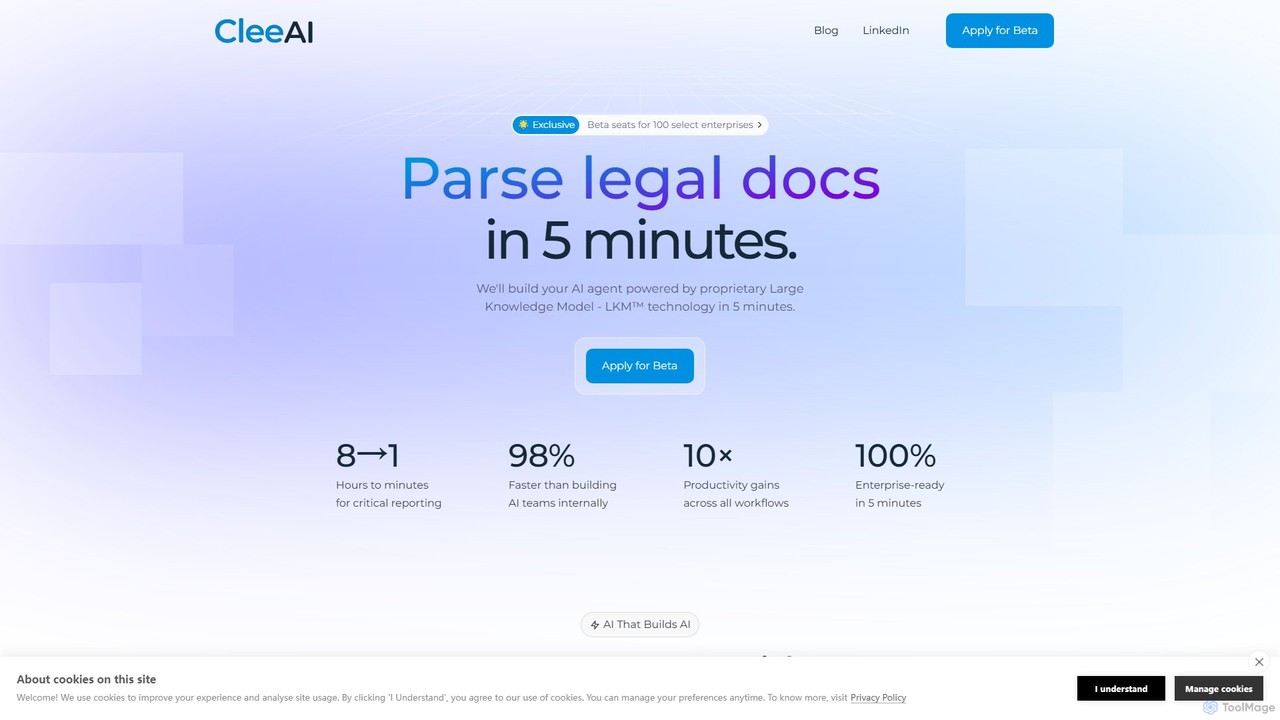
CleeAI

CleeAI

CleeAI is an enterprise AI platform that enables organizations to build and deploy custom, compliant AI agents in …

4.0K
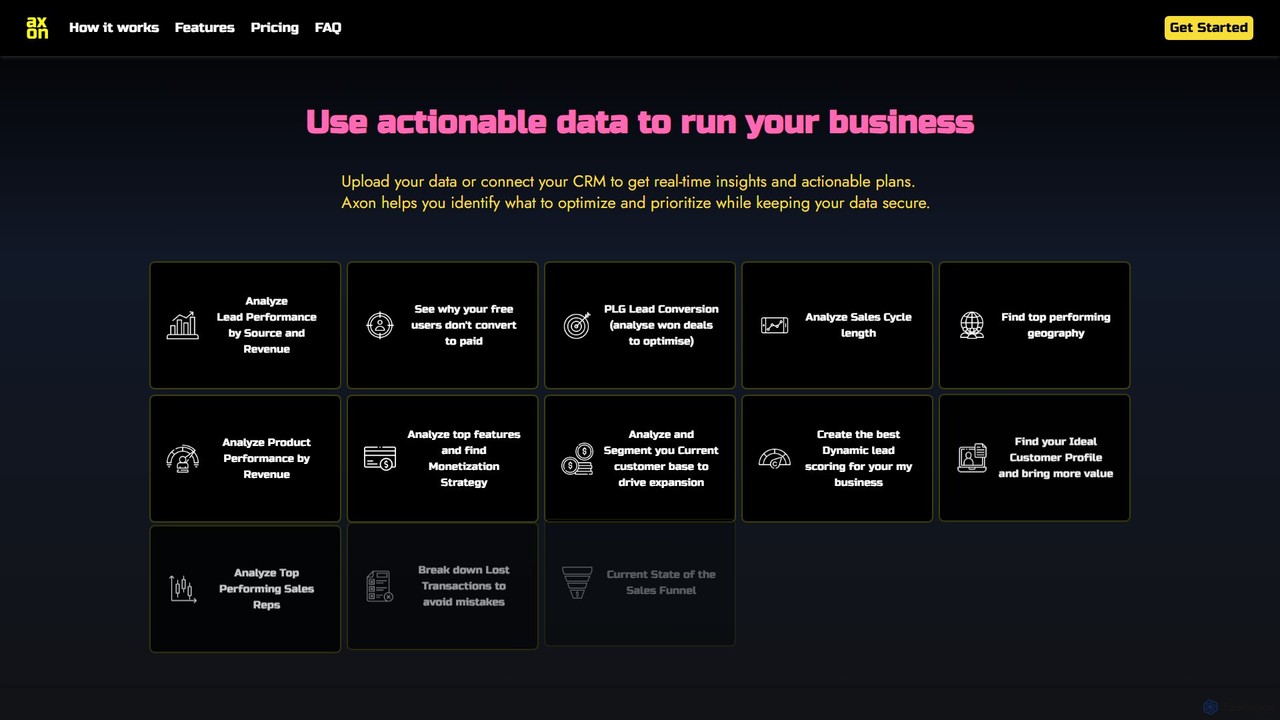
Axon

Axon

Axon is an AI-powered revenue intelligence platform designed for solopreneurs, small teams, and SMBs. It transforms your business …

3.0K
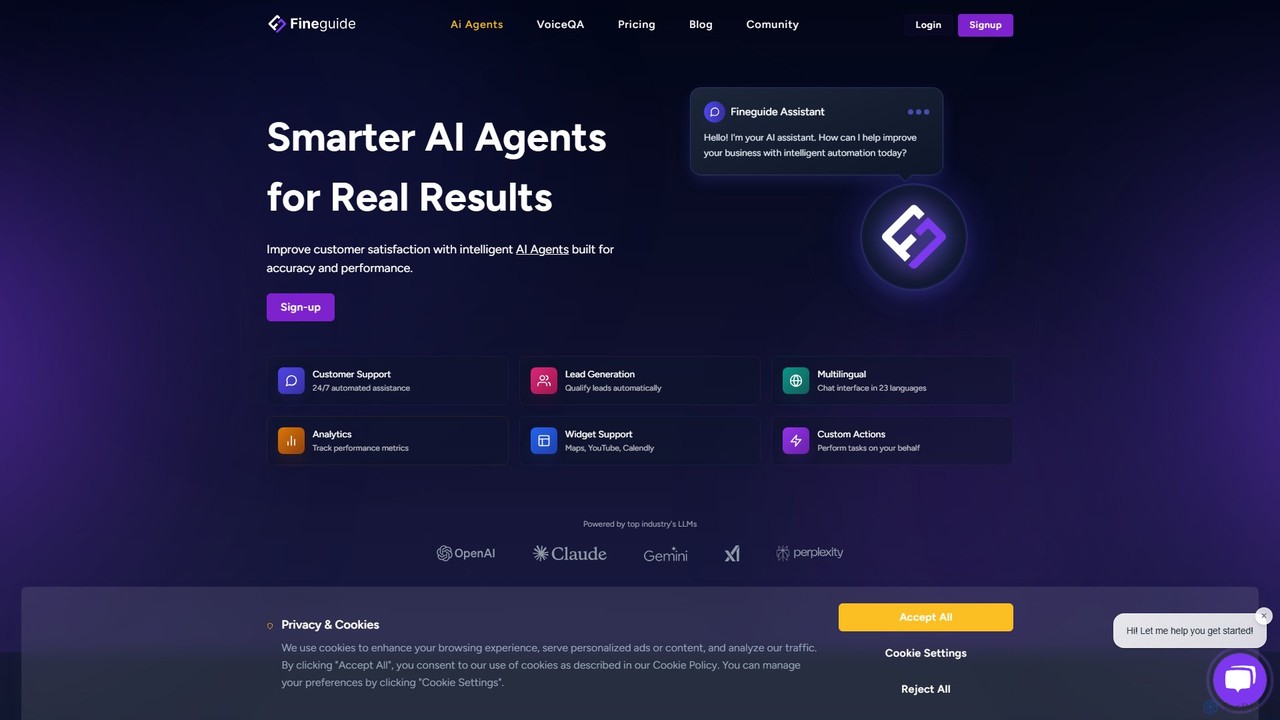
Fineguide.ai

Fineguide.ai

Fineguide.ai is an AI-powered conversation intelligence platform for customer service teams. It automatically transcribes and analyzes 100% of …

4.2K
Osmosis.fm

Osmosis.fm

Osmosis.fm is an AI-powered intelligence platform that tracks public records, meetings, and communications from financial and corporate entities. …

3.0K
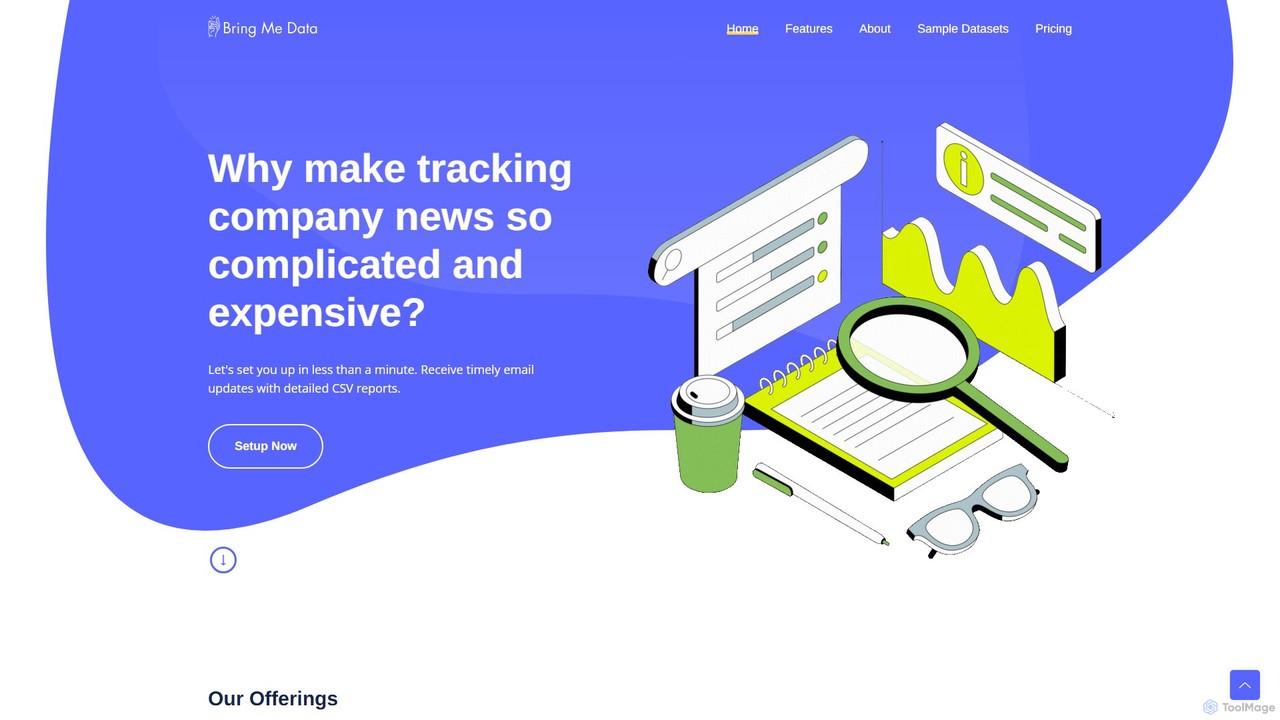
Bring Me Data

Bring Me Data

Bring Me Data is an AI-powered business intelligence platform that provides structured datasets on key corporate events. It …

3.3K

About Sales Intelligence

Sales Intelligence tools are AI-powered platforms designed to gather, analyze, and present comprehensive data about sales prospects, existing customers, and market trends. These sophisticated tools leverage advanced analytics, machine learning, and natural language processing to provide actionable insights, enabling sales teams to identify high-potential leads, understand buyer intent, and personalize their outreach strategies with unprecedented precision. By automating data collection, enrichment, and analysis, Sales Intelligence significantly enhances sales efficiency, improves conversion rates, and drives more effective revenue generation within the broader business context of strategic growth and market penetration.

Core Features

  • Lead Scoring & Prioritization: Automatically ranks and prioritizes leads based on their engagement, demographic fit, and behavioral signals, helping sales teams focus on the most promising opportunities.
  • Buyer Intent Data: Identifies companies and individuals actively researching products or services similar to yours across the web, indicating a higher propensity to buy and enabling timely outreach.
  • Contact & Company Data Enrichment: Provides detailed and up-to-date information about prospects and companies, including roles, technologies used, firmographics, and recent news, to inform personalized communication.
  • Sales Forecasting & Pipeline Analysis: Utilizes historical data and predictive analytics to estimate future sales performance, identify potential risks, and optimize resource allocation within the sales pipeline.
  • Competitor Monitoring & Market Insights: Tracks competitor activities, pricing strategies, product launches, and overall market positioning, offering valuable intelligence to refine sales pitches and identify competitive advantages.

Applicable Scenarios

Sales Intelligence tools are indispensable for sales development representatives (SDRs) and account executives (AEs) aiming to streamline their prospecting efforts, personalize communications, and accelerate deal cycles. They empower sales leaders to make data-driven decisions on territory planning, quota setting, and performance management. Furthermore, marketing teams leverage these insights to align campaigns with sales goals, target specific buyer segments more effectively, and improve the overall quality and conversion of generated leads.

Key Selection Criteria

When selecting a Sales Intelligence tool, prioritize solutions with robust data accuracy and comprehensive coverage across your target markets and industries. Evaluate its seamless integration capabilities with your existing CRM (e.g., Salesforce, HubSpot), sales engagement platforms, and marketing automation systems to ensure a unified workflow. Focus on specific features like advanced intent data, customizable lead scoring models, and comprehensive contact enrichment that directly align with your sales process and strategic objectives. Additionally, assess the user interface for intuitive navigation, the quality and responsiveness of customer support, and the scalability of the solution to accommodate your business's evolving needs and growth.

Sales IntelligenceUse Cases

1

Prioritizing High-Potential Leads for SDRs

Sales Development Representatives (SDRs) can leverage Sales Intelligence tools to automatically score and prioritize inbound and outbound leads. By analyzing factors like company size, industry, technology stack, and buyer intent signals, SDRs can quickly identify prospects most likely to convert. This allows them to focus their outreach efforts on the warmest leads, significantly reducing wasted time on unqualified prospects and improving their meeting booking rates.

2

Personalizing Outreach Campaigns for Account Executives

Account Executives (AEs) use Sales Intelligence to enrich prospect profiles with detailed firmographic, technographic, and behavioral data. Before making contact, AEs can access insights into a company's recent news, funding rounds, or technology adoption. This enables them to craft highly personalized emails and calls that resonate with the prospect's specific challenges and interests, leading to higher engagement and more effective sales conversations.

3

Identifying New Market Opportunities for Business Development

Business Development teams can utilize Sales Intelligence platforms to uncover untapped market segments and emerging trends. By analyzing industry data, competitor movements, and buyer intent signals across broader markets, they can identify regions or company types showing increased interest in solutions like theirs. This data-driven approach helps in strategic planning, market entry decisions, and expanding the total addressable market.

4

Improving Sales Forecasting Accuracy for Sales Managers

Sales managers rely on Sales Intelligence tools to enhance the accuracy of their sales forecasts and pipeline management. These platforms provide predictive analytics based on historical sales data, current pipeline health, and external market indicators. By gaining a clearer, data-backed view of potential revenue, managers can better allocate resources, set realistic goals, and proactively address potential pipeline risks, leading to more reliable revenue projections.

5

Developing Competitive Sales Strategies

Sales leaders and strategists employ Sales Intelligence to gain a deep understanding of their competitive landscape. The tools track competitor pricing, product updates, marketing campaigns, and customer reviews. This intelligence allows sales teams to refine their unique selling propositions, anticipate competitor moves, and equip their reps with compelling arguments to differentiate their offerings during sales pitches, ultimately winning more deals.

6

Streamlining Prospect Research for Sales Operations

Sales Operations teams can automate the tedious process of prospect research using Sales Intelligence. Instead of manually searching for contact details, company information, and relevant news, these tools automatically populate CRM fields and provide real-time updates. This significantly reduces the administrative burden on sales reps, allowing them to spend more time selling and less time on data entry, thereby boosting overall team productivity.

Sales IntelligenceFrequently Asked Questions