ToolMage
Sign in

Best 2 Call Center Analytics AI tools for Customer Support

Popular Call Center Analytics AI tools in Customer Support include SenseProfile and Fineguide.ai, helping you work more efficiently.

SenseProfile
Freemium

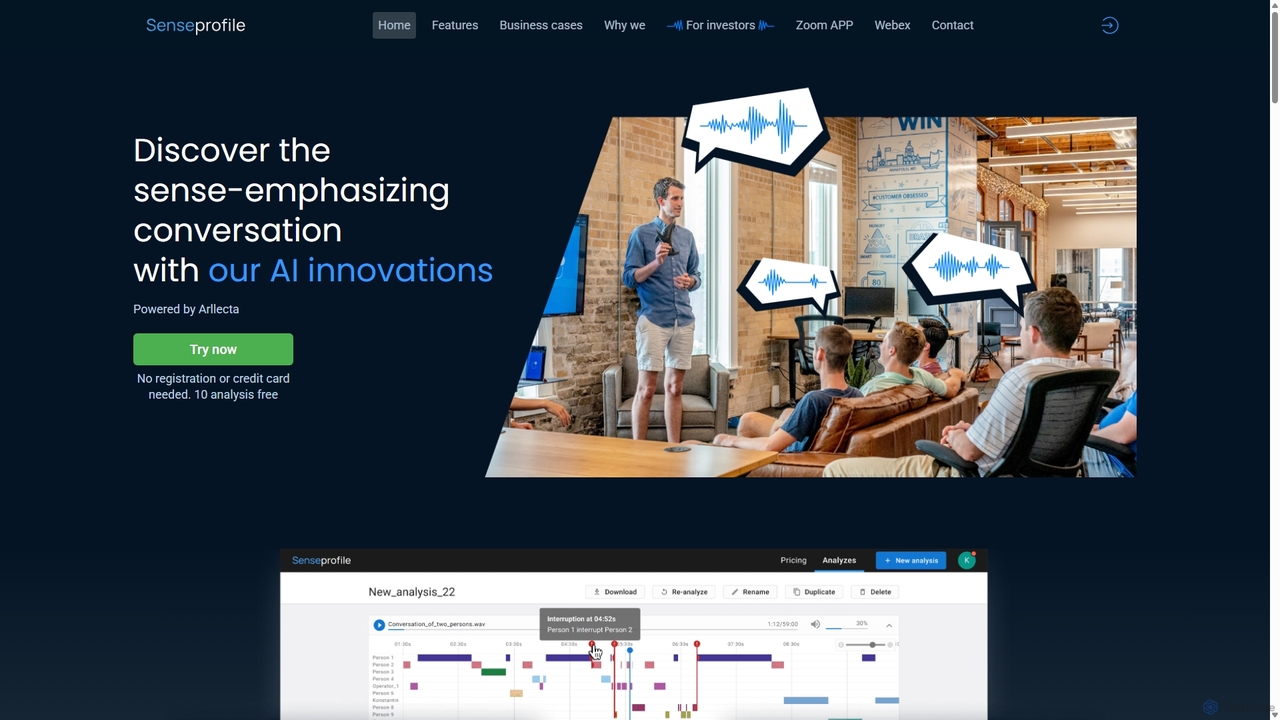
SenseProfile

SenseProfile is an AI-powered conversation intelligence platform that transcribes and analyzes business communications. It provides deep insights into meetings and calls by detecting topics, tonality, and speaker behavior, integrating seamlessly with platforms like Zoom and Webex to enhance sales, support, and compliance.

Transcription Services
Visits 5.5KFavorites 127Likes 102
Fineguide.ai
Freemium

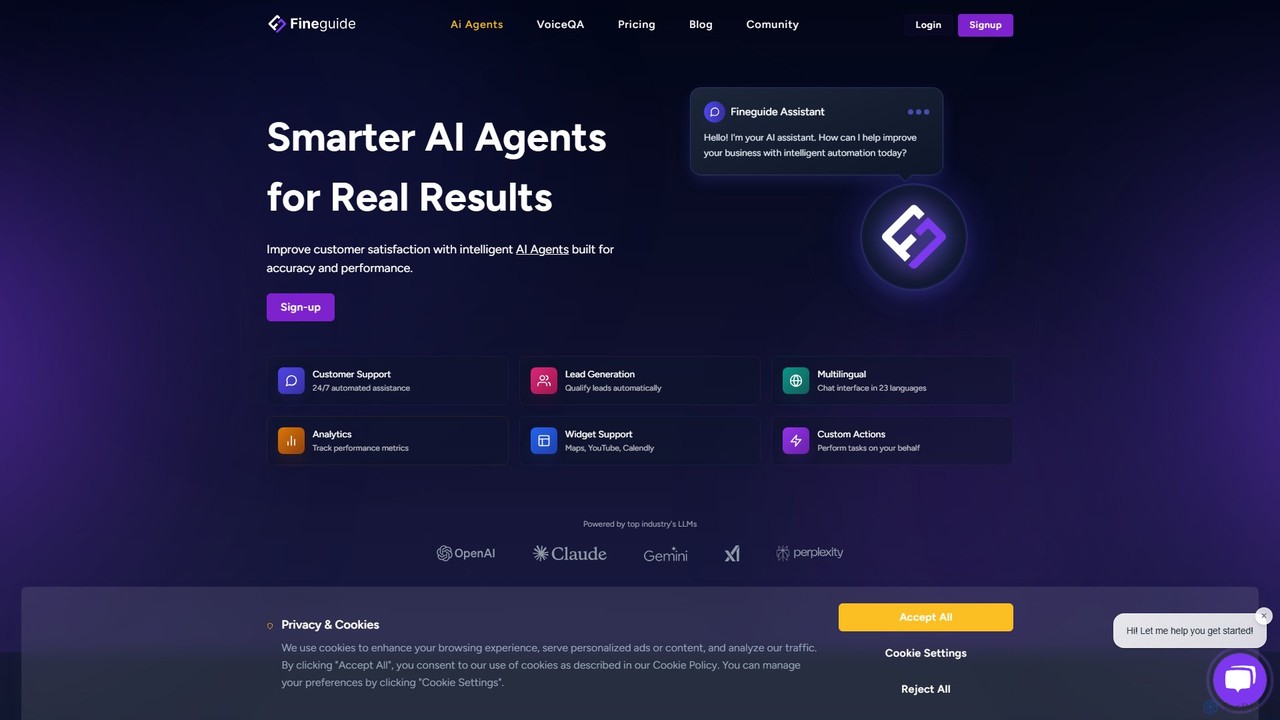
Fineguide.ai

Fineguide.ai is an AI-powered conversation intelligence platform for customer service teams. It automatically transcribes and analyzes 100% of voice calls, providing deep insights into customer interactions, agent performance, and overall service quality. By leveraging advanced speech analytics and sentiment analysis, Fineguide.ai helps businesses enhance customer experience, optimize agent training, and ensure compliance, turning every conversation into a valuable data asset.

Sales Intelligence
Visits 5.4KFavorites 124Likes 138

About Call Center Analytics

Call Center Analytics are AI-powered tools that leverage advanced algorithms to analyze customer interactions within call centers. These tools process vast amounts of data from calls, chats, and emails, using natural language processing (NLP) and machine learning to extract actionable insights. Their primary value lies in transforming raw interaction data into intelligence that improves customer experience, optimizes agent performance, and streamlines operational efficiency.

Core Features

  • Speech-to-Text Transcription: Converts spoken words from calls into searchable text for comprehensive analysis.
  • Sentiment Analysis: Identifies and quantifies customer emotions and attitudes during interactions to gauge satisfaction and identify pain points.
  • Topic & Keyword Detection: Automatically uncovers recurring themes, common issues, and trending topics discussed by customers.
  • Agent Performance Monitoring: Evaluates agent adherence to scripts, empathy, and problem-solving effectiveness based on interaction data.
  • Predictive Analytics: Forecasts customer churn risk, identifies upsell opportunities, and predicts future call volumes.

Applicable Scenarios

These tools are indispensable for large enterprises with high call volumes, business process outsourcing (BPO) providers, and customer service departments aiming for data-driven improvements. Customer service managers use them to identify training needs, optimize workflows, and enhance overall service quality. Marketing and product teams also leverage insights to understand customer feedback and inform product development.

How to Choose

When selecting Call Center Analytics tools, consider the accuracy of speech-to-text and sentiment analysis, the breadth of integration with existing CRM and communication platforms, and the scalability to handle your call volume. Evaluate the reporting and dashboard capabilities for ease of insight extraction, and ensure compliance with data privacy regulations like GDPR or CCPA. Finally, assess the real-time analysis features for immediate intervention opportunities.

Call Center Analytics use cases

1

Identify Root Causes of Customer Dissatisfaction

Customer service managers in a large telecom company utilize Call Center Analytics to pinpoint recurring issues leading to customer complaints. By analyzing sentiment and topic trends across thousands of calls, they can quickly identify specific product defects, service outages, or policy misunderstandings that are causing widespread frustration, enabling targeted resolution and reducing churn by 15%.

2

Optimize Agent Training and Performance

A BPO company uses these tools to evaluate agent performance beyond traditional metrics. The analytics platform transcribes calls, analyzes agent empathy, adherence to scripts, and problem-solving techniques. This data helps trainers create personalized coaching programs, leading to a 20% improvement in first-call resolution rates and enhanced agent efficiency.

3

Proactive Customer Churn Prediction

A subscription-based software company employs Call Center Analytics to identify customers at high risk of churning. By detecting specific keywords, negative sentiment patterns, and repeated calls about unresolved issues, the system flags these customers for proactive outreach from retention specialists, significantly reducing customer attrition.

4

Enhance Product Development with Customer Feedback

Product development teams at an electronics manufacturer leverage call center data to gather direct customer feedback. Analytics tools aggregate mentions of desired features, usability issues, and common complaints from support calls, providing invaluable insights that guide future product iterations and feature prioritization, leading to more customer-centric designs.

5

Automate Quality Assurance and Compliance Monitoring

Financial service providers use Call Center Analytics to automate the quality assurance process and ensure regulatory compliance. The system automatically reviews 100% of calls for specific disclosures, mandatory statements, or prohibited language, drastically reducing manual review time and minimizing compliance risks, ensuring adherence to industry standards.

6

Improve Sales Conversion Rates in Outbound Campaigns

An outbound sales team integrates Call Center Analytics to refine their sales pitches. By analyzing successful and unsuccessful sales calls, the tools identify effective phrases, objection handling techniques, and customer engagement patterns. This data helps agents optimize their approach, leading to a measurable increase in conversion rates and more efficient sales cycles.

Call Center Analytics FAQ

What are AI-powered Call Center Analytics?

AI-powered Call Center Analytics are sophisticated tools that use artificial intelligence, including natural language processing (NLP) and machine learning, to analyze customer interactions across various channels like phone calls, chats, and emails. They go beyond basic reporting to uncover deeper insights into customer sentiment, common issues, agent performance, and operational efficiencies, transforming raw data into actionable intelligence for better decision-making.

How do Call Center Analytics differ from traditional call monitoring?

Traditional call monitoring typically involves human supervisors manually reviewing a small sample of calls, which is time-consuming and prone to bias. Call Center Analytics, however, uses AI to automatically process and analyze 100% of interactions, providing comprehensive, objective data on sentiment, topics, and agent performance at scale. This allows for real-time insights, predictive capabilities, and a much deeper understanding of customer interactions than manual methods.

What are the key benefits of implementing Call Center Analytics?

Implementing Call Center Analytics offers several key benefits. It significantly improves customer satisfaction by identifying and addressing pain points faster, enhances agent performance through targeted training and feedback, and boosts operational efficiency by automating quality assurance and streamlining workflows. Additionally, it provides valuable market intelligence for product development and helps reduce customer churn by predicting at-risk customers.

What features should I look for in a Call Center Analytics solution?

When choosing a solution, prioritize accurate speech-to-text transcription, robust sentiment analysis, and advanced topic detection to understand customer interactions fully. Look for comprehensive agent performance monitoring, real-time alerting capabilities, and strong integration with your existing CRM and communication systems. Scalability, data security, compliance features, and customizable reporting dashboards are also crucial for long-term success.

Who primarily benefits from using Call Center Analytics?

Call Center Analytics primarily benefits customer service managers, team leaders, and quality assurance teams by providing data-driven insights to improve service quality and agent coaching. Operations managers gain visibility into efficiency bottlenecks, while marketing and product development teams can leverage customer feedback for strategic planning. Ultimately, any organization with significant customer interaction volumes stands to gain from these tools.