SenseProfile
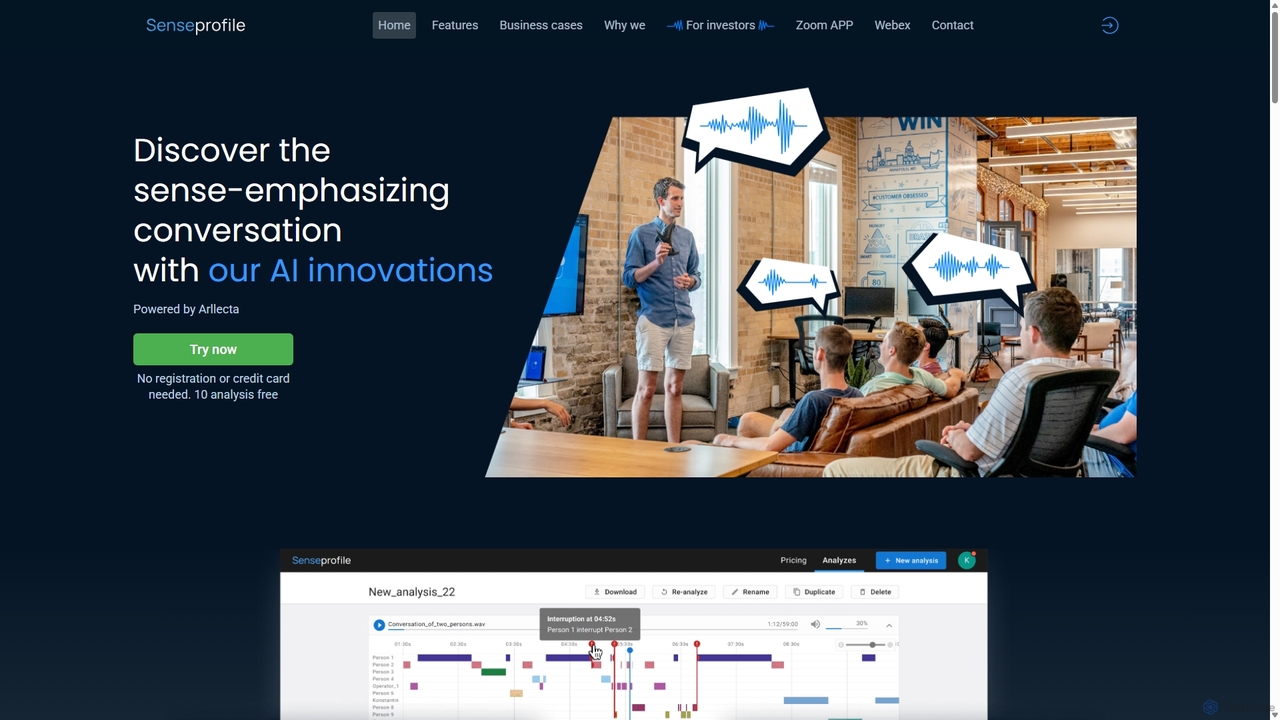
SenseProfile is an AI-powered conversation intelligence platform that transcribes and analyzes business communications. It provides deep insights into …
SenseProfile is an AI-powered conversation intelligence platform that transcribes and analyzes business communications. It provides deep insights into meetings and calls by detecting topics, tonality, and speaker behavior, integrating seamlessly with platforms like Zoom and Webex to enhance sales, support, and compliance.

Ambient
Ambient is an AI-powered meeting assistant that automatically joins your calls, records, transcribes, and generates intelligent summaries. It …
Ambient is an AI-powered meeting assistant that automatically joins your calls, records, transcribes, and generates intelligent summaries. It captures action items, key decisions, and important topics from your meetings on platforms like Zoom, Google Meet, and Microsoft Teams, saving you hours on manual note-taking and ensuring no detail is missed.
About Transcription Services
Transcription Services are AI-powered tools that automatically convert audio and video files into written text. These tools utilize advanced Automatic Speech Recognition (ASR) and Natural Language Processing (NLP) to achieve high accuracy, identify different speakers, and apply correct punctuation. They provide immense value by creating searchable, editable records of meetings, interviews, and media content, drastically reducing the time and cost associated with manual transcription. Many services also offer advanced features like timestamping and custom vocabularies for industry-specific terminology.
Core Features
- Automatic Speech Recognition (ASR): Accurately converts spoken words from audio or video into text.
- Speaker Diarization: Identifies and labels different speakers throughout the conversation.
- Timestamping: Aligns specific words or phrases in the text with their exact timing in the source file.
- Custom Vocabulary: Allows adding specific names, jargon, or technical terms to improve recognition accuracy.
- Multi-Language Support: Transcribes content in numerous languages and can handle various accents.
Use Cases
These services are widely used across various sectors. Journalists and podcasters use them to transcribe interviews quickly. Researchers analyze qualitative data from recorded sessions. Content creators generate subtitles for videos to improve accessibility and engagement. In a business context, they are essential for documenting meetings, customer support calls, and training sessions, creating a searchable knowledge base.
How to Choose
When selecting a transcription service, consider several factors. Evaluate the stated accuracy rate and its performance with different accents or in noisy environments. Check for essential features like speaker diarization and the export formats you need (e.g., .txt, .srt). For business use, verify the provider's security protocols and compliance with data regulations like GDPR. Finally, compare pricing models—per-minute rates versus subscriptions—to find the most cost-effective option for your needs.
Transcription ServicesUse Cases
Creating Meeting Minutes and Action Items
A project manager needs to document a one-hour client meeting with multiple stakeholders. Instead of manually re-listening and typing, they upload the meeting recording to an AI transcription service. The tool generates a full transcript in minutes, using speaker diarization to label who said what. The manager can then quickly search for keywords like 'deadline' or 'next steps' to accurately create meeting minutes and assign action items. This reduces a 90-minute task to less than 15 minutes, ensuring accuracy and faster follow-up.
Generating Subtitles for Video Content
A content creator wants to make their 10-minute YouTube video more accessible and engaging. They upload the video file to a transcription service, which automatically generates a time-stamped transcript. With a few clicks, they can export this transcript as an SRT or VTT file, the standard formats for subtitles. This not only helps hearing-impaired viewers but also boosts SEO and engagement, as many users watch videos without sound. The entire process is completed in under 5 minutes, avoiding the high cost and delay of manual subtitling services.
Transcribing Academic and Market Research Interviews
A UX researcher has conducted twenty 30-minute user interviews for a new product study. To analyze the qualitative data, they need transcripts of all conversations. They batch-upload all audio files to a transcription service. The AI accurately transcribes each interview, separating the researcher's questions from the participant's answers. This provides them with searchable text documents, allowing them to quickly identify key themes, pain points, and user quotes, accelerating the data analysis phase from weeks to just a few days.
Documenting Customer Support and Sales Calls
A call center manager uses an AI transcription service integrated with their VoIP system to monitor quality and ensure compliance. Every customer call is automatically recorded and transcribed. The manager can then search across all transcripts for keywords related to customer dissatisfaction ('unhappy,' 'cancel') or compliance phrases. This allows for targeted agent coaching and provides a verifiable, searchable record of interactions without needing to manually listen to hundreds of hours of calls, improving both training effectiveness and operational efficiency.
Assisting Journalists with Interview Transcription
A journalist on a tight deadline has just completed a 45-minute interview with a key source. To write their article, they need to pull accurate quotes quickly. They upload the audio recording to a transcription service and receive a full text transcript in less than 10 minutes. This allows them to immediately start searching for key phrases, fact-checking details, and copying direct quotes into their story. The AI tool acts as a rapid assistant, transforming the slow, manual transcription process and enabling the journalist to publish their story hours earlier.
Enhancing Accessibility for Educational Content
A university wants to make all its recorded lectures compliant with accessibility standards (WCAG). An administrator uses an AI transcription service to process an entire semester's worth of video lectures. The service generates accurate transcripts for each video, which are then provided to students as downloadable documents. This not only serves students with hearing impairments but also benefits non-native speakers and provides a searchable study aid for everyone. The automated process makes large-scale accessibility initiatives feasible and cost-effective.