ToolMage
Sign in

Best 3 Startup Funding AI tools for Business

Popular Startup Funding AI tools in Business include Index Ventures, Felicis, and Web3.com Ventures, helping you work more efficiently.

Web3.com Ventures

Web3.com Ventures

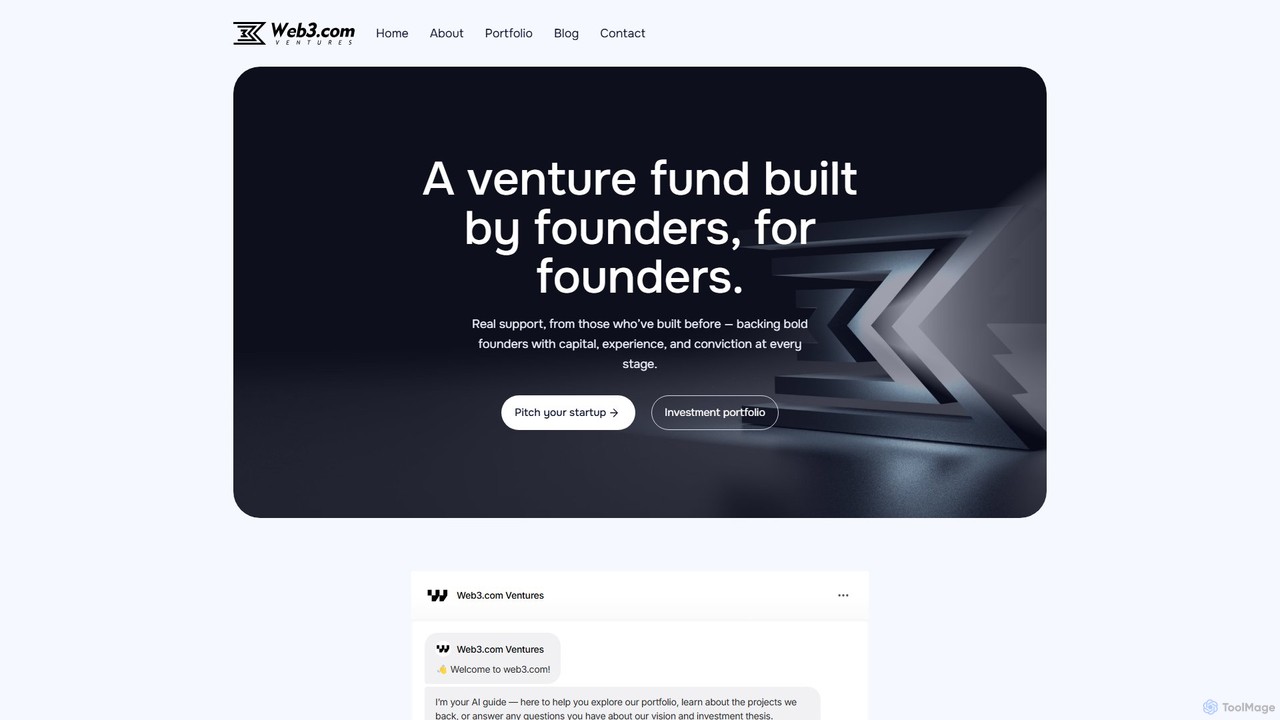
Web3.com Ventures is a founder-led venture capital firm that provides capital, experience, and strategic support to early-stage startups. They focus on investing in foundational technologies across AI, decentralized infrastructure, and Zero-Knowledge (ZK) systems, aiming to back the next generation of internet builders.

Startup Funding
Visits 7.7KFavorites 107Likes 102
Felicis

Felicis

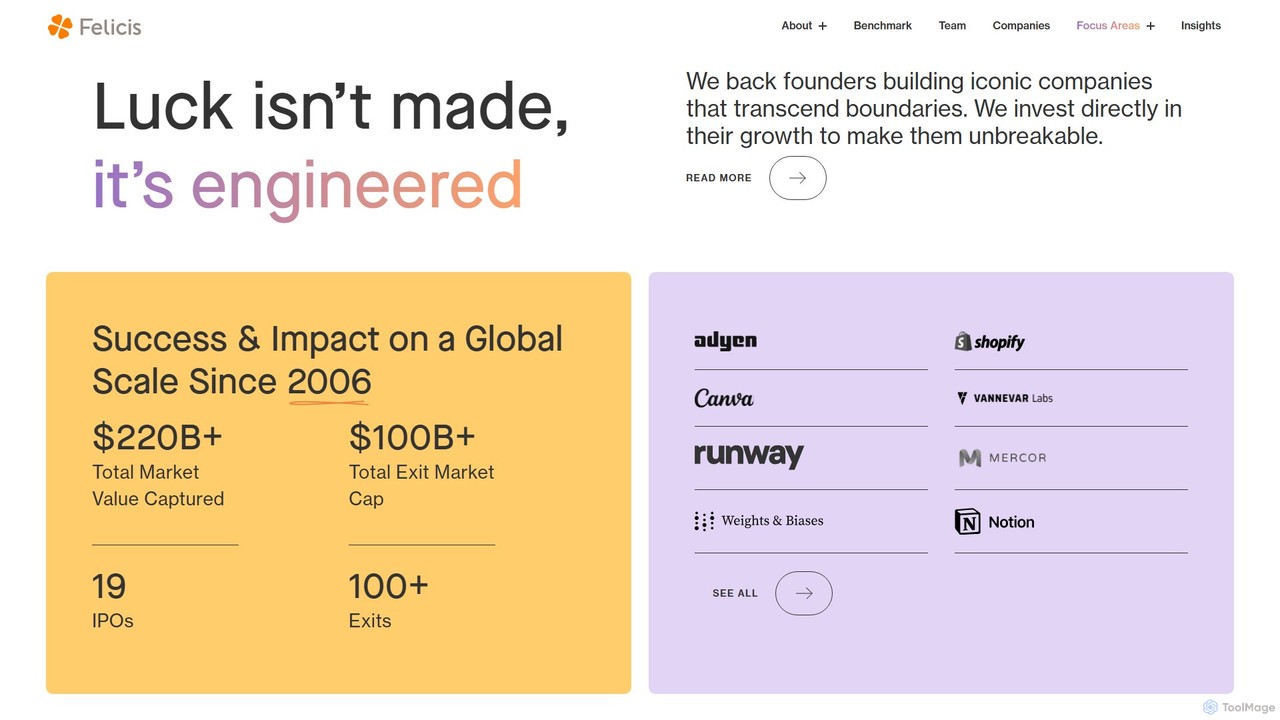
Felicis is a founder-focused venture capital firm that invests in and partners with visionary founders to build iconic companies. Specializing in sectors like AI, Health & Bio, Infrastructure, and Security, Felicis provides capital, strategic guidance, and deep operational support to help startups achieve breakthrough growth and long-term success.

Ai Investment
Visits 28.9KFavorites 149Likes 139
Index Ventures

Index Ventures

Index Ventures is a global venture capital firm that partners with visionary entrepreneurs, from seed to IPO. With a strong focus on technology, AI, and SaaS, they provide capital, strategic guidance, and a global network to help build the next generation of iconic companies.

Startup Funding
Visits 120.4KFavorites 143Likes 122

About Startup Funding

Startup Funding tools are AI-powered platforms designed to streamline and optimize the complex process of securing capital for new ventures. These tools leverage advanced algorithms to connect founders with potential investors, analyze market data, and automate various aspects of fundraising, from pitch deck creation to investor outreach. They provide critical support for entrepreneurs seeking seed, angel, or venture capital, enhancing efficiency and increasing the likelihood of successful funding rounds within the broader business ecosystem.

Core Features

  • Investor Matching: AI algorithms identify and recommend suitable investors based on industry, stage, and investment thesis.
  • Pitch Deck Optimization: Tools analyze pitch decks for clarity, completeness, and investor appeal, suggesting improvements.
  • Financial Modeling & Valuation: AI-driven models assist in creating robust financial projections and company valuations.
  • Deal Flow Management: Centralized platforms to track investor communications, manage documents, and monitor fundraising progress.
  • Market Intelligence: Provide insights into funding trends, competitor analysis, and investor preferences.

Applicable Scenarios

Early-stage startup founders seeking seed or angel investment use these tools to efficiently identify and engage with relevant investors, ensuring their pitch materials are compelling and tailored. Growth-stage companies leverage them to manage complex Series A/B rounds, track multiple investor conversations, and refine their financial narratives.

How to Choose

When selecting a Startup Funding tool, consider its investor network size and relevance to your industry, the depth of its financial modeling capabilities, and its integration with other business planning software. Evaluate the platform's user-friendliness, the quality of its pitch deck analysis, and its pricing structure relative to the value it provides in accelerating your fundraising efforts.

Startup Funding use cases

1

Identifying Ideal Angel Investors for a Seed Round

An early-stage tech startup founder needs to raise seed capital. Using a Startup Funding AI tool, they input their industry, business model, and funding requirements. The AI then analyzes a vast database of angel investors, identifying those with a history of investing in similar sectors and stages, providing contact information and insights into their investment preferences, significantly streamlining the initial outreach process.

2

Optimizing a Pitch Deck for Venture Capitalists

A Series A startup is preparing to present to venture capitalists. They upload their pitch deck to an AI funding tool. The AI analyzes the deck for common pitfalls, suggests improvements in narrative flow, data visualization, and key metrics presentation, and even provides feedback on the conciseness and impact of each slide, ensuring the presentation resonates strongly with potential investors.

3

Automating Investor Outreach and Follow-ups

A busy entrepreneur is managing multiple investor conversations. An AI Startup Funding tool helps automate personalized email outreach to a curated list of investors, schedules follow-up reminders, and tracks engagement metrics (e.g., email opens, link clicks). This frees up the founder's time, ensuring no potential investor falls through the cracks and communications are timely and consistent.

4

Generating Robust Financial Projections for Due Diligence

A startup is entering the due diligence phase with a potential investor. They utilize the financial modeling features of an AI funding platform. By inputting key assumptions like revenue growth, operational costs, and market size, the tool generates detailed, defensible financial projections and valuation models, providing investors with transparent and data-backed insights into the company's future potential.

5

Gaining Market Insights on Funding Trends

A founder wants to understand the current investment landscape before launching their fundraising efforts. An AI Startup Funding tool provides real-time market intelligence, showing recent funding rounds in their sector, average valuation multiples, and active investors. This data helps the founder strategically position their company and set realistic fundraising goals.

6

Managing and Tracking the Entire Fundraising Pipeline

A startup is actively fundraising and needs to keep track of numerous investor interactions, documents, and deadlines. An AI-powered platform acts as a centralized CRM for fundraising, allowing the team to log meetings, share documents securely, assign tasks, and visualize their entire deal flow pipeline, ensuring a structured and organized approach to securing capital.

Startup Funding FAQ

What are AI Startup Funding tools?

AI Startup Funding tools are software platforms that use artificial intelligence to assist entrepreneurs in securing capital for their businesses. They leverage machine learning to analyze data, automate tasks, and provide insights across various stages of the fundraising process, from investor discovery to deal closing. These tools aim to make fundraising more efficient, targeted, and successful for startups.

How do AI tools help in finding investors?

AI tools significantly enhance investor discovery by using algorithms to match startups with suitable investors. They analyze factors like investor portfolios, industry focus, investment stage preferences, and geographic location. By cross-referencing this with a startup's profile, the AI can generate highly relevant investor recommendations, saving founders countless hours of manual research and increasing the chances of connecting with the right capital partners.

Can AI tools help with pitch deck creation and optimization?

Yes, many AI Startup Funding tools offer features for pitch deck creation and optimization. They can analyze existing pitch decks for structure, content, clarity, and visual appeal, providing data-driven feedback and suggestions for improvement. Some tools even assist in generating content or identifying missing key information that investors typically look for, helping founders craft a more compelling and effective presentation.

What are the key benefits of using AI for startup fundraising?

The key benefits of using AI for startup fundraising include increased efficiency in investor identification and outreach, improved quality and relevance of pitch materials, more accurate financial modeling and valuation, and better management of the overall fundraising pipeline. AI tools help founders save time, reduce manual effort, make data-driven decisions, and ultimately increase their chances of securing funding by connecting them with the right investors more effectively.

How do Startup Funding tools differ from general business planning software?

While general business planning software might include financial projections and market analysis, Startup Funding tools are specifically tailored for the unique challenges of raising capital. They offer specialized features like investor matching, pitch deck analysis, deal flow management, and market intelligence focused on investment trends. General business planning software provides a broader overview for operations, whereas funding tools are hyper-focused on the investor-facing aspects of a startup's financial strategy within the broader business context.