LEXIGO
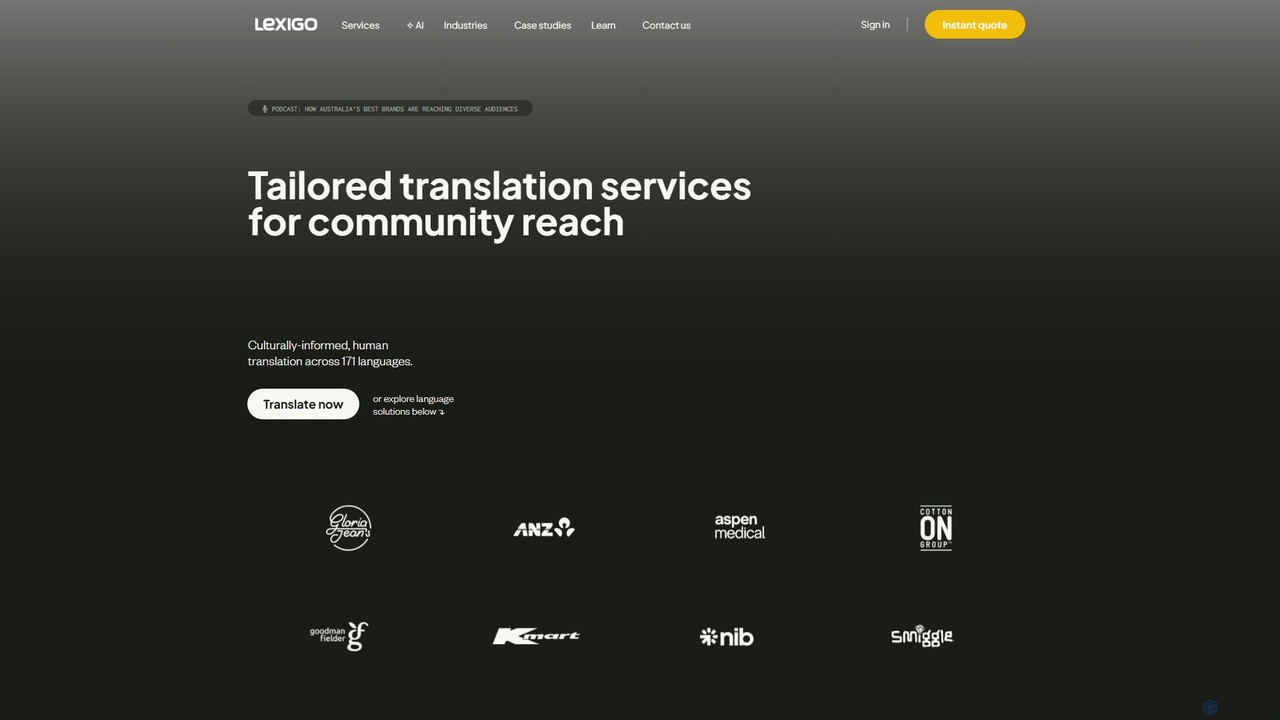
LEXIGO is a professional translation and localization agency that combines advanced AI technology with a global network of …
LEXIGO is a professional translation and localization agency that combines advanced AI technology with a global network of expert human translators. It offers culturally-informed services in over 171 languages for businesses, enterprises, and government agencies, ensuring accurate and effective multicultural communication.
pdftranslator
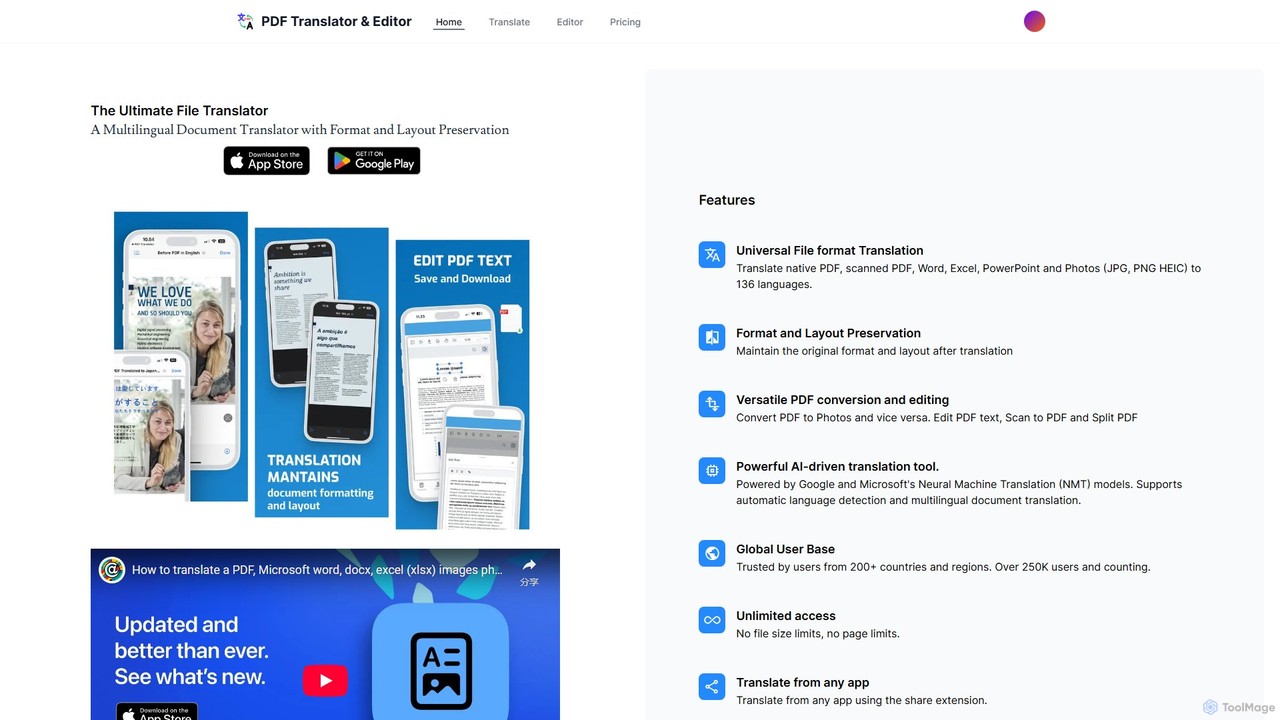
An AI-powered platform for translating and editing documents in over 136 languages. It supports various formats like PDF, …
An AI-powered platform for translating and editing documents in over 136 languages. It supports various formats like PDF, Word, and images, while meticulously preserving the original layout. Features include OCR for scanned documents, PDF text editing, and cross-platform availability on web and mobile.
About Translation
AI Translation tools are applications that use artificial intelligence to automatically convert text or speech from one language to another. These tools leverage advanced Neural Machine Translation (NMT) models, which analyze the context of full sentences to produce more accurate and natural-sounding translations. They are designed to break down language barriers for businesses, enabling seamless global communication, content localization, and international customer support. Unlike older systems, modern AI translators can handle complex grammar, idioms, and industry-specific terminology with greater proficiency.
Core Features
- Text & Document Translation: Translates plain text, websites, and entire documents (e.g., PDF, Word, PowerPoint) while preserving the original formatting.
- Real-time Speech Translation: Provides instant voice-to-voice or voice-to-text translation for live conversations, meetings, and events.
- Glossary & Terminology Management: Allows users to create custom dictionaries to ensure consistent and accurate translation of brand names, jargon, and technical terms.
- Context-Aware Engine: Analyzes surrounding text to choose the most appropriate translation, understanding nuances and avoiding common errors.
- API Integration: Offers APIs for developers to embed translation functionality directly into websites, applications, and business workflows.
Use Cases
AI Translation tools are widely used in international business for localizing marketing materials, websites, and product documentation. Legal and financial sectors use them for rapid translation of contracts and reports for internal review. In customer service, they enable support teams to communicate with customers worldwide in their native languages via chat or email.
How to Choose
When selecting an AI Translation tool, evaluate the accuracy and fluency for your specific language pairs. For business use, prioritize providers with strong data security and confidentiality policies. Consider the tool's ability to integrate with your existing software (e.g., CMS, helpdesk) via APIs. Also, assess the availability of customization features like glossaries to handle specialized vocabulary.

TranslationUse Cases
Localizing Marketing Content for Global Campaigns
A marketing manager needs to launch a new product campaign across Europe and Asia. Instead of hiring multiple translation agencies, which is slow and costly, they use an AI translation tool. They upload their website copy, ad slogans, and social media posts. The tool's document translation feature preserves the design layout of their brochures. Using the custom glossary, they ensure the product name and key marketing phrases are translated consistently across all languages, maintaining brand integrity.
Enabling Real-time Multilingual Customer Support
A global e-commerce company wants to offer 24/7 support to customers worldwide. Their support team is primarily English-speaking. By integrating a translation API into their live chat and helpdesk software, an agent can communicate seamlessly with a customer from Japan. The API instantly translates the customer's Japanese messages into English for the agent and the agent's English replies back into Japanese. This eliminates language barriers, improves first-contact resolution rates, and enhances global customer satisfaction.
Accelerating Legal and Technical Document Review
A legal team needs to conduct due diligence on a foreign company and must review dozens of contracts and technical patents written in German. Using a secure, enterprise-grade AI translation tool, they upload the documents in bulk. The tool quickly translates the content while preserving the original layout, including tables and numbered clauses. This allows the lawyers and technical experts to get a rapid, accurate understanding of the documents' content, identifying key areas for closer, human-led review and saving hundreds of hours of manual translation work.
Facilitating International Team Collaboration
A project manager oversees a global team with members in Brazil, France, and South Korea. Communication in their shared chat channels can be challenging. By integrating a translation bot, messages sent by any team member are automatically translated into each user's preferred language. A developer in Korea can type in Korean, and their French colleague sees the message instantly in French. This fosters a more inclusive and efficient work environment, ensuring that no one is left out of a conversation due to language differences.
Conducting Academic Research Across Languages
A university researcher is studying a niche topic and finds that many key research papers are published in languages they don't speak, such as Russian and Chinese. Using an AI translation tool with a browser extension, they can instantly translate the abstracts and full text of online articles. This allows them to quickly assess the relevance of a paper and incorporate findings from a global body of research into their work. The tool helps them overcome language barriers to access a much wider pool of academic knowledge.
Automating Software and App Localization
A software development team is preparing their mobile app for a global launch in 10 languages. Manually managing translation files (like .json or .xml) is error-prone and time-consuming. They use a translation service with an API to automate the process. Their continuous integration (CI) system automatically sends new text strings from the app's user interface to the translation API. The translated strings are then pulled back and integrated into the app builds for each language. This automates the localization workflow, ensuring faster releases and consistent UI text across all versions.