
ToolMage
Sign in

Best 1 Cross Language AI tools for Communication

Popular Cross Language AI tools in Communication include aiphone, helping you work more efficiently.

aiphone
Freemium

aiphone

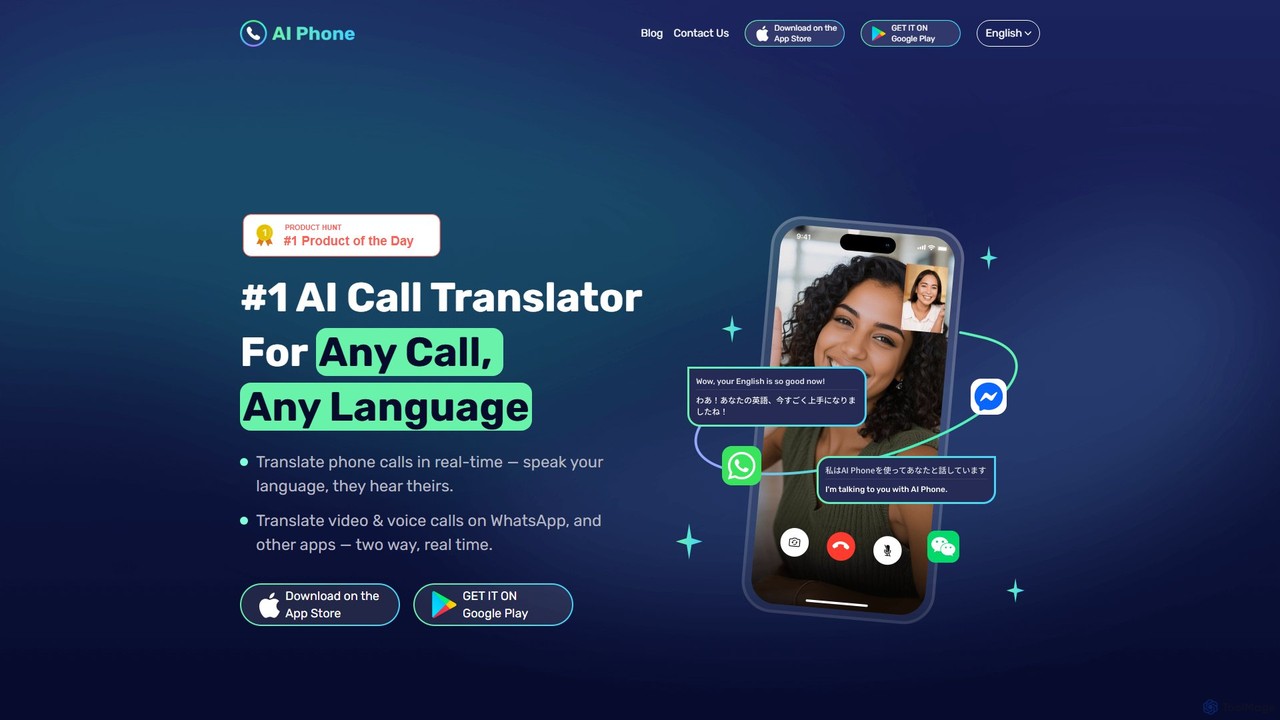
aiphone is an AI-powered call translator app that breaks down language barriers. It provides real-time, two-way translation for phone calls, video calls (WhatsApp, etc.), and in-person conversations. Supporting over 91 languages, it's an essential tool for travelers, immigrants, global businesses, and anyone needing to communicate across different languages.

Communication
Visits 40.6KFavorites 118Likes 110

About Cross Language

Cross Language AI tools are designed to bridge communication gaps by enabling seamless interaction and content creation across different human languages. These tools leverage advanced natural language processing (NLP) and machine learning algorithms to accurately translate, interpret, and generate multilingual content. They empower individuals and businesses to overcome linguistic barriers, fostering global collaboration and expanding reach in diverse markets. This category is crucial within the broader field of AI communication tools, specifically addressing the challenge of linguistic diversity.

Core Features

  • Machine Translation: Automatically converts text or speech between languages while preserving meaning and context.
  • Real-time Interpretation: Provides instant spoken language translation for live conversations, meetings, or presentations.
  • Multilingual Content Generation: Creates original text directly in multiple target languages from a single input or prompt.
  • Localization Services: Adapts content, including cultural nuances and regional specifics, for target audiences and markets.
  • Cross-lingual Information Retrieval: Enables searching, analyzing, and extracting data across documents in various languages.

Applicable Scenarios

Global businesses utilize these tools for international market expansion, translating marketing materials, legal documents, and customer support interactions. Content creators leverage them to localize videos, articles, and social media posts for diverse audiences. International teams rely on real-time interpretation for effective cross-border meetings and collaborations, ensuring clear understanding among participants.

How to Choose

Consider the accuracy and fluency of translation for your specific language pairs and domains (e.g., medical, legal). Evaluate the range of supported languages and the tool's ability to handle specialized terminology. Assess integration capabilities with existing workflows and platforms. Check for real-time processing speed, data security features, and customization options for specific needs.

Cross Language use cases

1

Automating Global Customer Support

E-commerce companies use cross-language AI to translate customer inquiries and agent responses in real-time across chat, email, and ticketing systems. This allows support teams to assist international customers in their native language, improving satisfaction and reducing response times by up to 50% without needing multilingual staff for every language.

2

Localizing Marketing Campaigns

Marketing teams leverage AI tools to adapt advertising copy, website content, and social media posts for specific regional markets. By inputting source content, the AI generates culturally relevant and linguistically accurate versions for multiple target languages, accelerating campaign launches and increasing engagement by reaching local audiences effectively.

3

Facilitating International Business Meetings

Multinational corporations deploy real-time interpretation tools during virtual and in-person meetings. Participants speak in their native language, and the AI provides instant audio or text translation for others, ensuring clear communication and understanding among diverse teams, thereby streamlining decision-making processes and fostering global collaboration.

4

Translating Technical Documentation

Manufacturing firms and software developers utilize cross-language AI to translate user manuals, product specifications, and software interfaces into various languages. This ensures global accessibility for their products, reduces manual translation costs, and maintains consistency across all localized technical documents, supporting international product launches and compliance.

5

Enabling Cross-border Legal Communication

Legal professionals employ these tools for translating contracts, patents, and court documents between different legal systems and languages. AI-powered translation ensures accuracy and consistency in complex legal terminology, significantly speeding up due diligence processes and facilitating international legal collaborations while maintaining confidentiality.

6

Generating Multilingual Educational Content

Online learning platforms and educators use AI to create courses, lectures, and quizzes in multiple languages simultaneously. By inputting original content, the AI generates localized versions, making educational resources accessible to a global student body and expanding the reach of learning initiatives without extensive manual translation efforts.

Cross Language FAQ

What are Cross Language AI tools?

Cross Language AI tools are advanced software applications that use artificial intelligence to facilitate communication and content creation across different human languages. They primarily focus on tasks like translation, interpretation, and multilingual content generation, helping to break down linguistic barriers in various contexts, from business to personal use.

How do Cross Language AI tools work?

These tools typically work by employing sophisticated natural language processing (NLP) models, often based on neural networks and deep learning. They analyze the source text or speech, understand its context, grammar, and meaning, and then generate an equivalent output in the target language. Many systems continuously learn and improve from vast datasets, enhancing accuracy and fluency over time.

What is the difference between Cross Language tools and general Communication AI tools?

While both fall under the broader "Communication" category, Cross Language tools specifically address linguistic diversity by focusing on translation, interpretation, and multilingual content generation. General Communication AI tools might include chatbots, sentiment analysis, or speech-to-text, which can operate within a single language or have cross-language capabilities as a secondary feature, whereas for Cross Language tools, it's their primary and core function.

What are the key benefits of using Cross Language AI tools?

The main benefits include significantly increased efficiency in translation and localization processes, reduced costs compared to traditional human translation, and enhanced global reach for businesses and content creators. They also improve understanding in international collaborations, enable faster market entry, and foster more inclusive communication across diverse linguistic groups.

Can Cross Language AI tools handle specialized terminology and cultural nuances?

Modern Cross Language AI tools, especially those with domain-specific training or customization options, are increasingly capable of handling specialized terminology (e.g., medical, legal, technical). While still evolving, many also incorporate mechanisms to adapt to cultural nuances and idiomatic expressions, though human review is often recommended for highly sensitive, creative, or critical content to ensure utmost accuracy and appropriateness.