Huntr
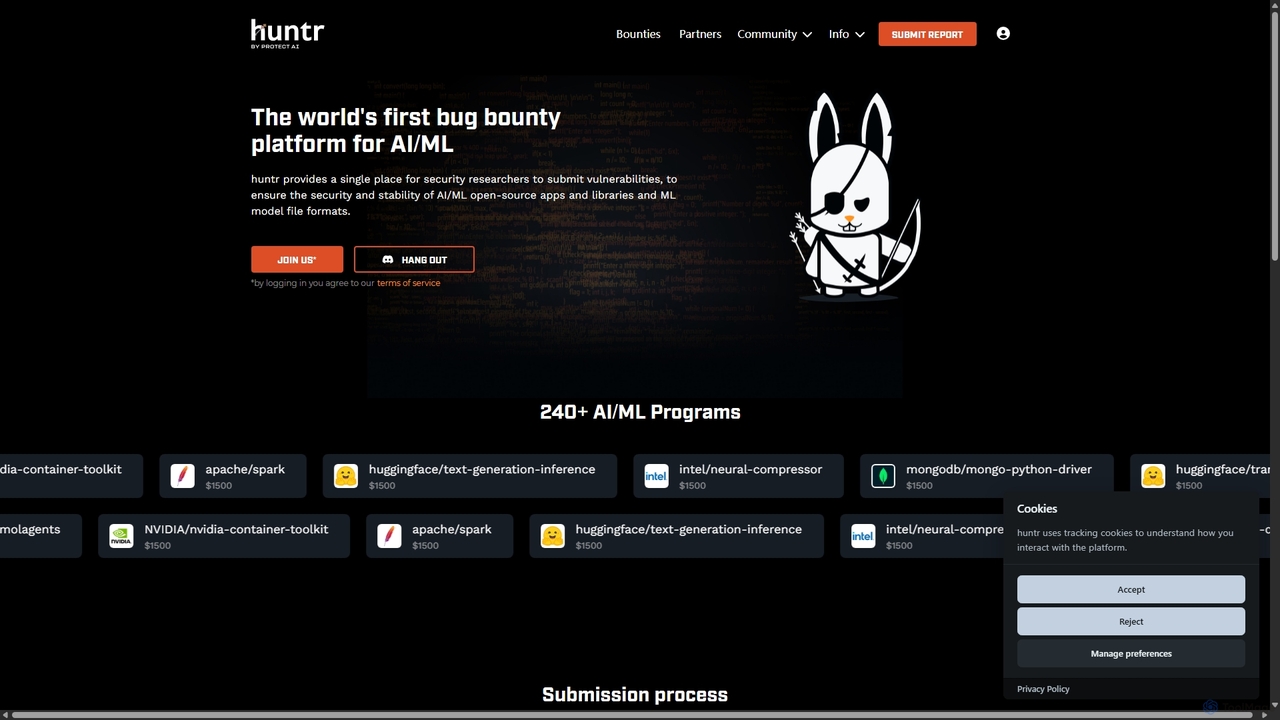
Huntr is the world's first bug bounty platform dedicated to securing the AI/ML ecosystem. It connects security researchers …
Huntr is the world's first bug bounty platform dedicated to securing the AI/ML ecosystem. It connects security researchers with open-source AI projects, enabling them to discover and report vulnerabilities in AI applications, libraries, and model file formats. Researchers earn financial rewards for validated findings, helping to ensure the safety and stability of critical AI technologies like PyTorch, TensorFlow, and Hugging Face Transformers.
About Bug Bounty Platforms
Bug Bounty Platforms are services that connect organizations with a global community of ethical hackers and security researchers. These platforms provide a structured framework for discovering, reporting, and rewarding the identification of security vulnerabilities in software, websites, and networks. By leveraging crowdsourced security talent, companies can proactively uncover weaknesses before malicious actors exploit them. This approach complements traditional security testing by offering continuous, diverse, and real-world attack perspectives.
Core Features
- Vulnerability Submission & Triage: A centralized system for researchers to submit findings and for platform experts to validate, prioritize, and remove duplicates.
- Reward Management: Securely handles the entire process of paying bounties to researchers, often including mediation and various payment options.
- Program Scoping & Rules: Tools for companies to clearly define which assets are in scope for testing and establish the rules of engagement.
- Researcher Reputation System: Leaderboards, points, and public profiles that motivate researchers and help companies identify top talent.
- Integration & Reporting: APIs and dashboards that integrate with development workflows (like Jira) and provide detailed security metrics.
Use Cases
Bug Bounty Platforms are widely used by technology companies (SaaS, fintech, e-commerce), government agencies, and any organization with a significant digital footprint. Security teams and DevOps engineers utilize these platforms to implement continuous security testing, while compliance officers use the findings to validate security controls and meet regulatory requirements.
How to Choose
When selecting a Bug Bounty Platform, consider the size and quality of its researcher community, as this directly impacts the diversity of testing. Evaluate the platform's triage services—whether they are fully managed or self-service—to match your team's capacity. Also, compare pricing models (subscription vs. percentage of bounty) and the platform's ability to support both private (invite-only) and public programs.

Bug Bounty PlatformsUse Cases
Proactive Security Testing for a New Web Application
A startup's DevOps team is preparing to launch a new SaaS product. Before the public release, they need to identify and patch potential security vulnerabilities to protect user data and build trust. They launch a private, invite-only bug bounty program on a platform, inviting a select group of vetted researchers to test the application in a staging environment. The researchers discover several critical vulnerabilities, including a SQL injection and a cross-site scripting (XSS) flaw. The team patches these issues before launch, preventing potential data breaches and significant reputational damage.
Continuous Security Auditing for Mature Products
An enterprise security team manages a portfolio of mature software products with frequent updates. To complement their internal scanning and penetration testing, they run a public bug bounty program. This provides continuous, real-world testing from a diverse pool of global researchers. When a valid vulnerability is triaged by the platform, an integration automatically creates a ticket in their Jira backlog. This workflow ensures a steady stream of security feedback is fed directly to the development teams, reducing the window of exposure for new vulnerabilities introduced in updates.
Securing Mobile Apps Before App Store Submission
A mobile development agency is finalizing an iOS and Android banking app for a client. Due to the sensitive nature of financial data, the app must undergo rigorous security testing before being submitted to the App Store and Google Play. The agency creates a time-boxed, private bug bounty program focused specifically on the mobile app's API and client-side security. Researchers identify insecure data storage on the device and issues with certificate pinning. The developers fix these critical flaws, helping the app meet the stringent security requirements for approval and protecting future users.
Validating Security for Compliance Certifications
A Chief Information Security Officer (CISO) is preparing their company for a SOC 2 audit. To demonstrate a mature and proactive vulnerability management process, the CISO leverages their ongoing public bug bounty program. They provide auditors with reports generated by the platform, showing metrics like the number of vulnerabilities discovered, average time to remediation, and the diversity of bugs found. This concrete evidence of continuous security testing and response helps satisfy auditor requirements, streamlining the compliance process and showcasing a commitment to security.
Engaging with the Security Research Community
A developer relations team wants to build a positive reputation within the cybersecurity community. They establish a public bug bounty program with clear, fair rules and a responsive communication process. They actively engage with researchers on the platform, provide timely feedback on submissions, and pay bounties promptly. By featuring top researchers on a public leaderboard and acknowledging their contributions, the company not only strengthens its security but also builds a brand as a security-conscious and researcher-friendly organization, attracting more talent to test their products.
Focused Testing on New High-Risk Features
A product manager is overseeing the rollout of a new payment processing feature. Given the high-risk nature of handling financial transactions, they need to ensure it is thoroughly tested for security flaws. In addition to internal QA, they launch a short-term, high-reward bonus campaign on their existing bug bounty platform. This campaign specifically targets the new feature's code and logic, attracting specialized researchers to focus their efforts. This targeted approach results in the discovery of several edge-case vulnerabilities that automated scanners missed, allowing the team to deploy the feature with greater confidence.