
Community Best in category 1 results Citizen Science AI Tool

Popular AI tools in the Citizen Science field of Community include Flora Incognita, etc., helping you quickly improve efficiency.

Free
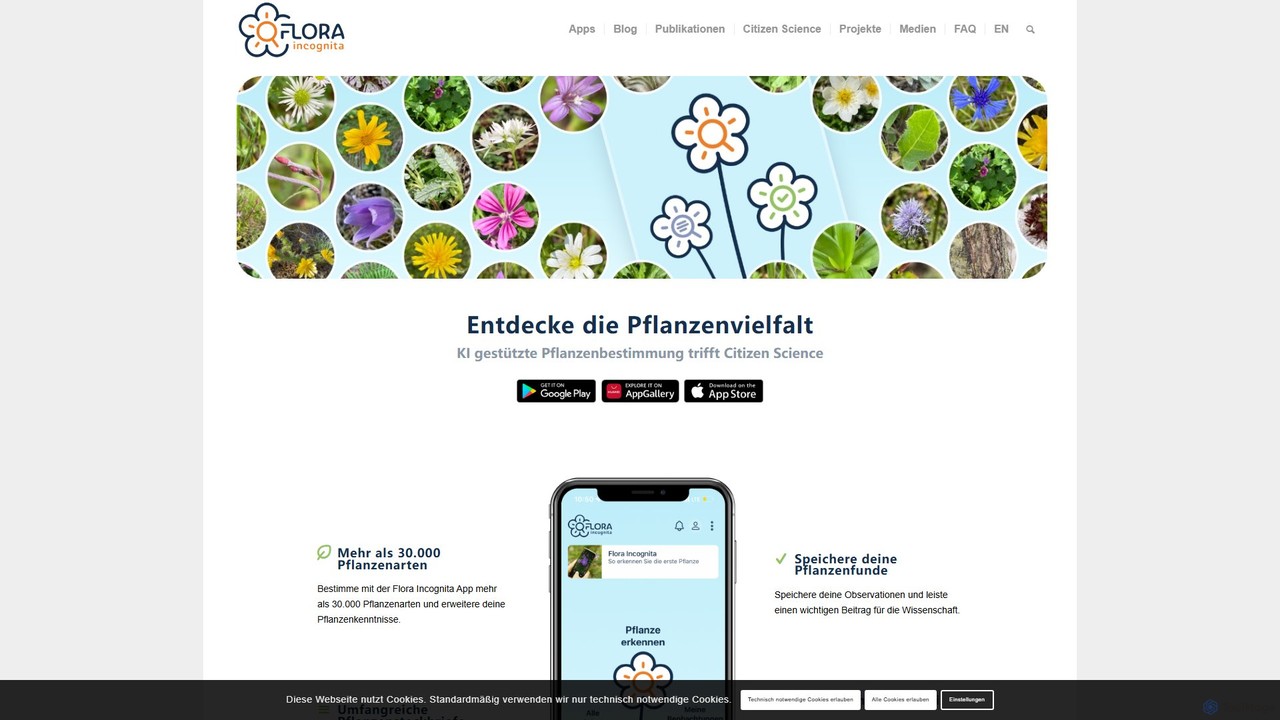
Flora Incognita

Flora Incognita

An AI-powered mobile app for highly accurate plant identification. Developed by German research institutions, it identifies over 30,000 …

19.6K

About Citizen Science

Citizen Science tools are AI-powered platforms that enable public participation in scientific research projects. These tools leverage collective intelligence and distributed data collection to gather vast amounts of information, often in fields like environmental monitoring, biodiversity, and astronomy. They empower individuals to contribute meaningfully to scientific discovery, fostering a deeper understanding of the world around us and accelerating research outcomes.

Core Features

  • Data Collection Interfaces: User-friendly mobile apps or web forms for submitting observations, measurements, or classifications.
  • Geospatial Mapping: Tools to visualize and contribute location-based data, often integrated with GPS.
  • Data Validation & Quality Control: AI-assisted mechanisms to review, filter, and ensure the accuracy of submitted citizen data.
  • Project Management & Collaboration: Features for researchers to manage projects, communicate with volunteers, and track contributions.
  • Data Visualization & Analysis: Interactive dashboards and simple analytical tools to explore collected data and observe trends.

Use Cases

Citizen Science tools are utilized across various scientific disciplines. For instance, environmental agencies deploy them to collect real-time pollution data from local communities, while ornithologists use them to track bird migration patterns globally. They are also invaluable for educational institutions to engage students in hands-on scientific inquiry.

How to Choose

When selecting a Citizen Science tool, consider the specific research goals and the type of data to be collected. Evaluate the platform's ease of use for volunteers, its data validation capabilities, and its integration options with existing scientific databases. Also, assess the community engagement features and the level of support provided for project management.

Citizen ScienceUse Cases

1

Monitor Local Environmental Quality

Local residents use mobile apps to collect and submit data on air quality, water pollution, or noise levels in their neighborhoods. This data, often geotagged and timestamped, contributes to larger environmental studies, helping researchers identify pollution hotspots, track changes over time, and inform policy decisions for urban planning and public health. The collective effort provides a granular view that professional scientists alone might not achieve.

2

Track Biodiversity and Species Distribution

Birdwatchers, botanists, and nature enthusiasts log sightings of various species, including birds, insects, and plants, using specialized Citizen Science apps. They record location, date, time, and often upload photos for verification. This crowdsourced data helps ecologists map species distribution, monitor population changes, detect invasive species, and understand the impacts of climate change on ecosystems, significantly expanding the scope of biodiversity research.

3

Contribute to Astronomical Discoveries

Amateur astronomers and space enthusiasts utilize Citizen Science platforms to analyze telescope images, classify galaxies, or search for new celestial objects like exoplanets or supernovae. By reviewing vast datasets that would overwhelm professional scientists, volunteers can identify anomalies or patterns, contributing to significant astronomical discoveries and helping to categorize millions of cosmic phenomena, accelerating the pace of space research.

4

Digitize Historical Documents for Research

Volunteers participate in projects to transcribe handwritten historical documents, old maps, or natural history collection labels into digital formats. Using online Citizen Science tools, they decipher faded texts and input data, making previously inaccessible information searchable and analyzable for historians, genealogists, and scientists. This process significantly accelerates the digitization of archives, preserving cultural heritage and opening new avenues for academic research.

5

Contribute to Public Health Research

Individuals track and report personal health data, such as symptom occurrences, sleep patterns, or environmental exposures, through secure Citizen Science health apps. This anonymized, aggregated data provides valuable insights for public health researchers studying disease outbreaks, chronic conditions, or the impact of lifestyle factors. It enables large-scale epidemiological studies that can lead to better understanding of health trends and more effective public health interventions.

6

Map Urban Features and Infrastructure

Citizens use mapping-focused Citizen Science tools to report on urban features, such as damaged infrastructure, accessibility issues, or the location of public amenities like parks and recycling bins. This data helps city planners, local governments, and community organizations identify areas needing improvement, prioritize maintenance, and enhance urban living quality. It provides real-time, ground-level insights that complement official surveys and foster community engagement in urban development.

Citizen ScienceFrequently Asked Questions