
ToolMage
Sign in

Best 1 Discussion Platform for Community

Popular Discussion Platform in Community include Socratic Lab, helping you work more efficiently.

Socratic Lab
Freemium

Socratic Lab

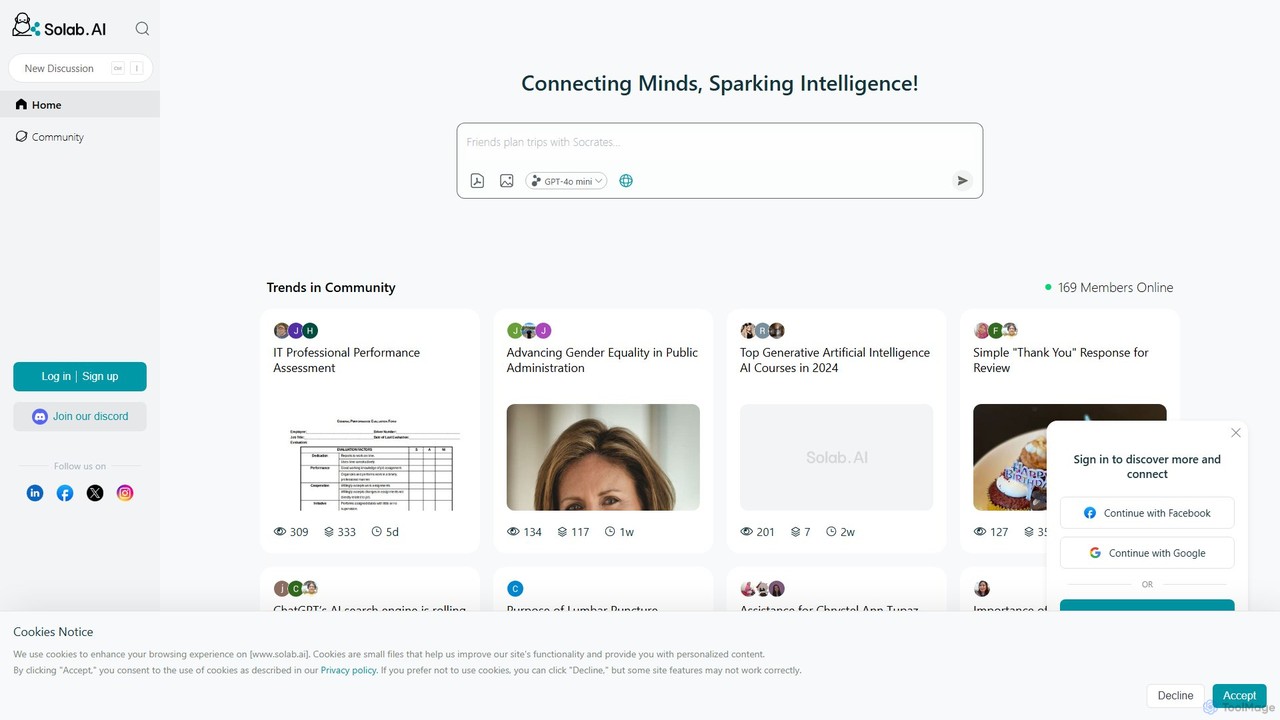
Socratic Lab is an AI-powered collaborative discussion platform designed to connect minds and spark intelligence. It leverages AI assistants like GPT-4o to facilitate structured, Socratic-style dialogues within a vibrant community. Users can explore diverse topics, engage in deep conversations, and collectively build a shared knowledge base, making it ideal for researchers, students, and lifelong learners.

Discussion Platform
Visits 7.4KFavorites 119Likes 128

About Discussion Platform

Discussion Platforms are AI-powered tools designed to facilitate structured and dynamic online conversations within communities. These platforms leverage AI to enhance moderation, summarize discussions, and personalize user experiences, making online interactions more productive and engaging. They serve as central hubs for knowledge sharing, collaborative problem-solving, and community building, transforming how groups communicate and make decisions.

Core Features

  • AI-Powered Moderation: Automatically identifies and flags inappropriate content, spam, or off-topic discussions.
  • Intelligent Summarization: Generates concise summaries of long threads or entire discussions, saving users time.
  • Personalized Content Feeds: Curates relevant discussions and topics based on user interests and past interactions.
  • Sentiment Analysis: Analyzes the emotional tone of comments to help moderators understand community sentiment.
  • Automated Q&A: Provides instant answers to common questions by drawing information from past discussions or knowledge bases.

Use Cases

These platforms are utilized across various sectors, from professional organizations seeking to foster internal collaboration to online communities aiming for more organized and meaningful member interactions. They are particularly valuable for large-scale forums, educational platforms, and customer support communities where managing vast amounts of user-generated content is a challenge.

How to Choose

When selecting a discussion platform, consider its AI capabilities for moderation and summarization, integration options with existing community tools, scalability to accommodate your user base, and customization features for branding and user experience. Evaluate the platform's ability to handle diverse content types and its data privacy policies.

Discussion Platform use cases

1

Streamlining Large Online Forum Moderation

For administrators of large online forums with thousands of daily posts, AI discussion platforms automate the identification of spam, hate speech, and off-topic content. This allows human moderators to focus on nuanced issues and community engagement, significantly reducing the time spent on manual review and ensuring a healthier discussion environment. The platform can flag content for review, apply pre-defined rules, and even suggest responses, leading to a 70% reduction in moderation workload.

2

Summarizing Extensive Project Discussion Threads

Project managers overseeing complex projects often face lengthy discussion threads across various teams. An AI discussion platform can automatically generate concise summaries of these threads, highlighting key decisions, action items, and unresolved issues. This enables team members to quickly catch up on discussions they missed, ensuring everyone is aligned without having to read through hundreds of messages, saving hours of review time per week.

3

Enhancing Customer Support Community Engagement

Companies using a community forum for customer support can leverage AI discussion platforms to improve user experience. The AI can identify frequently asked questions, suggest relevant answers from past discussions, and even route complex queries to human agents. This reduces response times for common issues, empowers users to find solutions independently, and frees up support staff for more critical tasks, boosting customer satisfaction by 20%.

4

Personalizing Learning Paths in Educational Communities

In online educational platforms, students often struggle to find relevant discussions. AI discussion platforms can analyze a student's learning progress, interests, and questions to recommend specific discussion threads, study groups, or expert Q&A sessions. This personalized approach helps students engage more deeply with course material and connect with peers and instructors on topics most relevant to their learning journey, improving retention and engagement.

5

Facilitating Structured Brainstorming and Idea Generation

Teams engaged in brainstorming sessions can use AI discussion platforms to structure their ideas and identify emerging themes. The AI can categorize suggestions, detect duplicate ideas, and even perform sentiment analysis on proposed concepts. This helps teams quickly synthesize diverse inputs, prioritize promising ideas, and move from ideation to decision-making more efficiently, leading to more innovative and actionable outcomes.

6

Managing Internal Knowledge Sharing for Enterprises

Large enterprises often struggle with internal knowledge silos. An AI discussion platform can serve as a central hub where employees ask questions, share insights, and collaborate on solutions. The AI can index discussions, create a searchable knowledge base from resolved queries, and recommend experts based on discussion history, ensuring that valuable institutional knowledge is captured, easily accessible, and continuously updated across departments.

Discussion Platform FAQ

What are AI-powered Discussion Platforms?

AI-powered Discussion Platforms are specialized online forums or community tools that integrate artificial intelligence to enhance user interaction and content management. They leverage AI for tasks like automated content moderation, intelligent summarization of lengthy discussions, personalized content recommendations, and sentiment analysis. These capabilities aim to create more organized, engaging, and productive environments for online communities, fostering better communication and knowledge exchange.

How do AI Discussion Platforms differ from traditional forums?

AI Discussion Platforms significantly differ from traditional forums primarily through their intelligent automation and personalization features. Traditional forums rely heavily on manual moderation and user navigation, whereas AI platforms automate content filtering, summarize discussions, and offer personalized feeds based on user interests. This leads to more efficient information discovery, reduced moderation workload, and a more dynamic, tailored user experience compared to static, manually managed forums.

What are the key benefits of using an AI Discussion Platform for a community?

The key benefits of using an AI Discussion Platform for a community include improved content quality through automated moderation, enhanced user engagement via personalized recommendations, and significant time savings with intelligent summarization. These platforms help maintain a positive and productive environment by quickly addressing inappropriate content, make it easier for members to find relevant information, and reduce the burden on community managers, ultimately fostering a more vibrant and self-sustaining community.

What features should I look for when choosing an AI Discussion Platform?

When choosing an AI Discussion Platform, prioritize features such as robust AI moderation capabilities (spam, hate speech detection), intelligent summarization for threads and topics, personalized content feeds, and comprehensive analytics for community insights. Also, consider integration options with your existing tools (CRM, LMS), scalability to support your community's growth, customization for branding, and strong data privacy and security measures to protect user information.

Can AI Discussion Platforms help with knowledge management within an organization?

Yes, AI Discussion Platforms are highly effective for knowledge management within organizations. They can serve as central repositories for internal discussions, project updates, and problem-solving dialogues. The AI can automatically index these conversations, extract key decisions, and build a searchable knowledge base. This ensures that valuable institutional knowledge is captured, easily accessible to all employees, and continuously updated, reducing information silos and improving collaborative problem-making across departments.