Community Best in category 1 results Entertainment AI Tool

Popular AI tools in the Entertainment field of Community include Personality Forge, etc., helping you quickly improve efficiency.

Personality Forge

Personality Forge

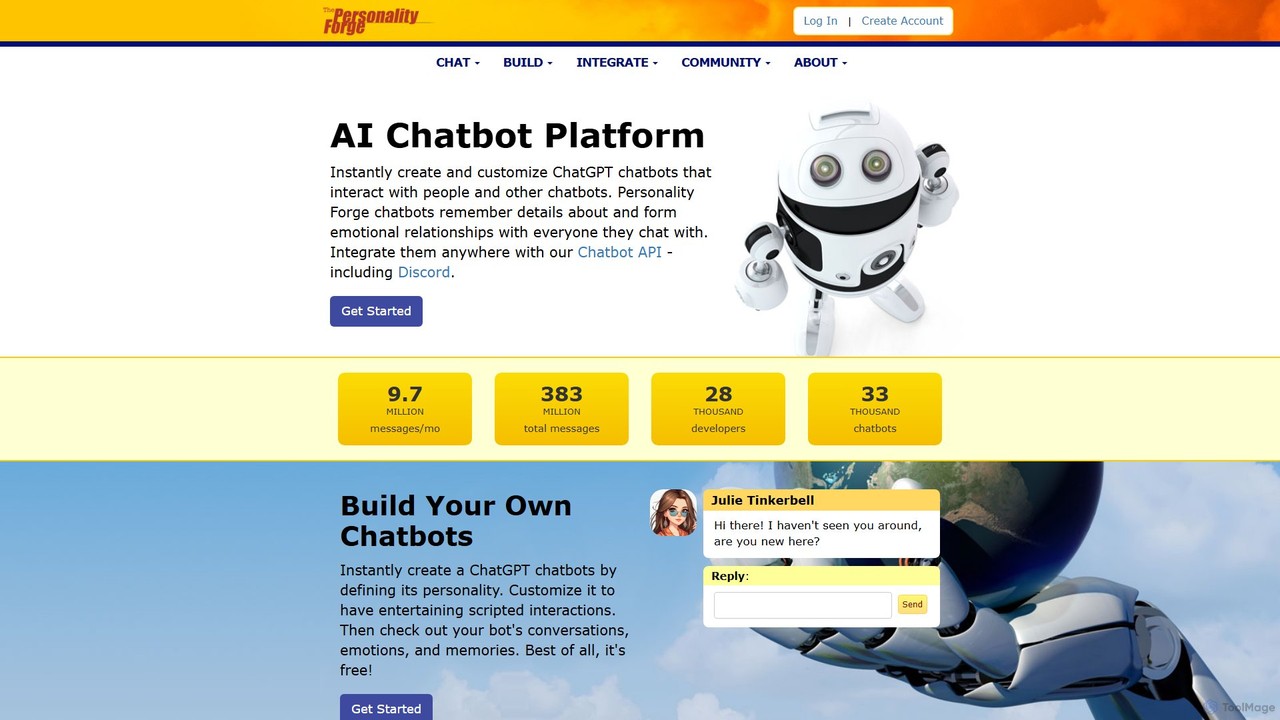
An advanced AI chatbot platform for creating and customizing chatbots with unique personalities, emotional memory, and conversational depth. …

4.1K

About Entertainment

AI Entertainment tools are applications that leverage artificial intelligence to create, personalize, and deliver engaging recreational experiences. These tools often utilize generative models and natural language processing to produce dynamic content, interactive characters, or personalized media streams. Their primary value lies in offering novel forms of amusement, fostering user engagement within digital communities, and providing endlessly adaptive content. Unlike traditional media, these tools can react in real-time to user input, creating a unique experience for each individual.

Core Features

  • Interactive Storytelling: Generates branching narratives and dynamic plots that respond to user choices.
  • AI Game Companions & Opponents: Creates intelligent non-player characters (NPCs) that learn from and adapt to player behavior.
  • Personalized Content Generation: Produces custom memes, jokes, music, or art tailored to individual or group preferences.
  • AI-Driven Role-Playing: Acts as a virtual game master, managing scenarios and characters in role-playing games.

Use Cases

These tools are widely used in online gaming communities to create smarter NPCs, on social platforms for generating engaging group-specific content, and in interactive fiction apps that enable collaborative storytelling. They also serve individuals seeking unique creative outlets or personalized relaxation experiences.

How to Choose

When selecting an AI Entertainment tool, consider the primary type of content you want (e.g., text, games, visuals). Evaluate the level of interactivity and personalization offered. For community use, check for multiplayer support and sharing capabilities. Finally, assess the platform compatibility (web, mobile, API) and the pricing model to ensure it fits your needs.

EntertainmentUse Cases

1

Hosting an AI-Driven Role-Playing Game

A group of friends uses an AI Game Master (GM) for their weekly role-playing session. Instead of one person spending hours preparing a story, they input a basic premise like 'a cyberpunk detective story.' The AI generates the setting, describes scenes, voices non-player characters (NPCs), and dynamically adapts the plot based on the players' unexpected decisions. This allows for spontaneous adventures, reduces preparation time to nearly zero, and enables even the designated GM to participate as a player, fostering a more collaborative and surprising gameplay experience for the entire group.

2

Generating Personalized Memes for a Community

A community manager for a large Discord server about a specific hobby uses an AI meme generator to boost engagement. They feed the AI with inside jokes, recent discussion topics, and member names. The tool then produces a stream of relevant, humorous memes that resonate deeply with the community. This not only sparks conversation and reactions but also strengthens the group's identity and makes new members feel included more quickly by exposing them to the community's unique culture in a fun, accessible format.

3

Creating AI Companions in Virtual Worlds

A user in a social VR platform designs a personal AI companion to inhabit their virtual space. Using the tool, they define the companion's personality traits, backstory, and conversational style. The AI companion can then engage in unscripted conversations, remember past interactions, and even participate in virtual activities. This provides a persistent, interactive element to the user's virtual experience, offering entertainment, companionship, and a way to make the digital world feel more alive and responsive.

4

Developing Interactive Stories with Branching Narratives

An aspiring writer uses an AI interactive fiction tool to create a complex 'choose your own adventure' story. They write the initial scenes and define key plot points and character motivations. The AI then assists by generating descriptive prose, crafting realistic dialogue options, and managing the intricate web of branching paths that result from player choices. This allows the creator to focus on high-level storytelling while the AI handles the heavy lifting of content generation, resulting in a deeply replayable and personalized narrative experience for readers.

5

Designing Adaptive AI Opponents for Games

An indie game developer wants to create a more engaging single-player experience. They integrate an AI entertainment tool to power the game's enemies. Instead of following predictable, scripted patterns, the AI opponents observe the player's tactics. If the player frequently uses a specific attack, the AI learns to counter it. This adaptive behavior ensures that the game's difficulty scales with the player's skill, providing a consistently challenging and rewarding experience that encourages strategic thinking and replayability.

6

Crafting Unique Soundscapes for Relaxation

A user seeking to improve their focus while working or studying uses an AI-powered soundscape generator. They can select a base theme, such as 'rainy forest' or 'space station,' and the AI generates an endless, non-repeating audio stream. The user can provide real-time feedback, like 'more wind' or 'less birdsong,' and the AI adjusts the audio mix accordingly. This creates a perfectly tailored and dynamic ambient environment that helps block out distractions and enhance concentration without the monotony of a fixed audio loop.

EntertainmentFrequently Asked Questions