Microlaunch
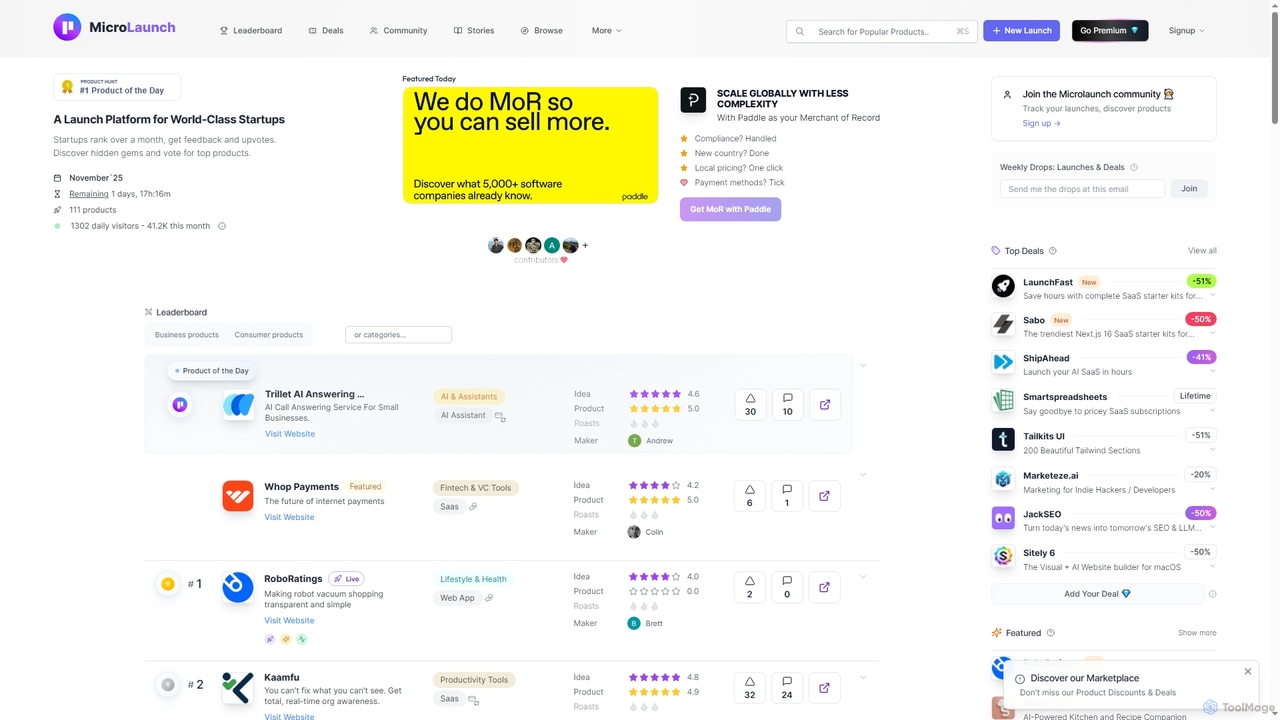
A launch platform and marketplace for startups and tech founders. It helps new products gain visibility, user feedback, …
A launch platform and marketplace for startups and tech founders. It helps new products gain visibility, user feedback, and initial sales through a 30-day launch campaign, featured placements, and community engagement.
About Feedback
AI Feedback tools are specialized platforms designed to automate the collection, analysis, and interpretation of user input and opinions. Leveraging advanced natural language processing (NLP) and machine learning, these tools transform unstructured text data into structured, actionable insights. They empower businesses and creators to understand user needs, improve products, and foster engagement within their community by demonstrating responsiveness and data-driven decision-making. This category is essential for continuous improvement cycles and enhancing overall user satisfaction.
Core Features
- Multi-channel Collection: Gathers feedback from diverse sources like websites, apps, social media, emails, and surveys.
- Sentiment Analysis: Automatically detects the emotional tone (positive, negative, neutral) and intensity of user comments.
- Topic Clustering & Categorization: Groups similar feedback points to identify recurring themes, pain points, and emerging trends.
- Actionable Insights & Reporting: Generates comprehensive reports, dashboards, and recommendations based on analyzed feedback data.
- Workflow Integration: Connects seamlessly with CRM, project management, and customer support systems for efficient follow-up.
Applicable Scenarios
Product managers utilize these tools to prioritize feature development based on aggregated user requests and bug reports. Marketing teams leverage feedback to refine campaign messaging and assess brand perception. Customer success departments use insights to proactively address common issues, personalize support, and enhance overall customer satisfaction.
How to Choose
When selecting an AI Feedback tool, consider the breadth of supported feedback channels, the accuracy and depth of AI analysis (e.g., sentiment, topic detection, intent recognition), and its integration capabilities with your existing tech stack. Evaluate the clarity and customizability of reporting features for actionable insights, as well as the scalability to handle growing volumes of user input and diverse data types.

FeedbackUse Cases
Automated Customer Review Analysis
An e-commerce manager uses an AI feedback tool to process thousands of product reviews daily. The tool automatically identifies common complaints about product features, shipping issues, or positive feedback on quality. This allows the manager to quickly pinpoint areas for product improvement or operational adjustments, saving hours of manual review reading and enabling data-driven decisions to enhance customer satisfaction.
Enhance Product Development with User Insights
Product teams use AI feedback tools to automatically collect and categorize feature requests, bug reports, and usability issues from various sources like app stores, forums, and support tickets. This allows them to identify high-priority improvements and validate new features with real user data, ensuring development aligns with user needs and reduces churn. The AI quickly surfaces critical issues, saving countless hours of manual review.
Real-time User Experience (UX) Feedback
A product development team integrates an AI feedback tool into their beta testing platform. As users submit comments, bug reports, and feature requests, the AI instantly analyzes the text for sentiment and categorizes issues. This real-time insight allows the team to prioritize critical bugs, understand user frustrations immediately, and iterate on features much faster, significantly accelerating the product development lifecycle.
Improve Customer Service Responsiveness
Customer support teams deploy AI feedback tools to monitor customer interactions across channels, automatically flagging urgent issues or common complaints. AI-driven sentiment analysis helps agents prioritize critical cases and provides quick access to relevant knowledge base articles or automated responses, leading to faster resolution times and higher customer satisfaction. This proactive approach reduces support backlog and improves service quality.
Employee Engagement Survey Insights
An HR department uses an AI feedback tool to analyze open-ended responses from annual employee engagement surveys. Instead of manually reading thousands of comments, the AI identifies key themes like 'work-life balance concerns,' 'appreciation for leadership,' or 'need for better training.' This provides HR with objective, aggregated insights to develop targeted initiatives for improving employee satisfaction and retention, fostering a healthier workplace community.
Optimize Content Strategy for Audience Engagement
Content creators and marketers utilize AI feedback platforms to analyze audience reactions to their content on social media, blogs, and forums. By understanding which topics resonate most, identifying areas of confusion or dissatisfaction, and tracking sentiment trends, they can refine their content strategy, tailor future posts, and build a more engaged and loyal community. This leads to higher reach and better content performance.
Social Media Sentiment Monitoring
A marketing team uses an AI feedback tool to continuously monitor brand mentions and comments across various social media platforms. The AI analyzes the sentiment of these mentions, quickly alerting the team to any negative trends or emerging crises. This enables proactive reputation management, allowing the team to respond promptly to customer concerns, engage with positive feedback, and refine their social media strategy based on real-time public perception.
Gather Employee Feedback for Workplace Improvement
HR departments and team leaders implement AI feedback solutions to collect anonymous suggestions, concerns, and ideas from employees through internal surveys, suggestion boxes, or communication platforms. These tools can analyze large volumes of text to identify trends in workplace culture, operational bottlenecks, or training needs, fostering a more positive and productive work environment by addressing key employee concerns efficiently.
Customer Support Ticket Categorization
A customer service manager employs an AI feedback tool to automatically categorize incoming support tickets based on the customer's initial description and sentiment. The AI can identify if a ticket is a 'billing inquiry,' 'technical bug,' or 'feature request' and route it to the appropriate specialist. This automation significantly reduces manual triage time, ensures tickets are handled by the right experts, and improves overall customer satisfaction by speeding up resolution times.
Refine Marketing Campaigns with Real-time Reactions
Marketing professionals use AI feedback tools to track public sentiment and reactions to new campaigns or product launches in real-time across social media, news outlets, and review sites. This allows for immediate adjustments to messaging, targeting, or creative elements based on audience perception, maximizing campaign effectiveness and return on investment (ROI). The ability to quickly pivot based on live feedback is a significant advantage.
Content Performance Feedback Analysis
Content creators and publishers use AI feedback tools to analyze comments, likes, and shares on their articles, videos, or podcasts. The AI identifies which topics resonate most with the audience, what questions are frequently asked, and the overall sentiment towards specific content pieces. This data-driven approach helps creators refine their content strategy, produce more engaging material, and build a more responsive and satisfied audience community.
Streamline Event Planning and Post-Event Evaluation
Event organizers leverage AI feedback tools to collect attendee opinions before, during, and after events. From pre-event surveys to live social media monitoring and post-event questionnaires, AI helps quickly summarize key takeaways, identify areas for improvement, and gauge overall satisfaction. This data-driven approach informs future event planning, ensuring a better experience for participants and optimizing resource allocation.