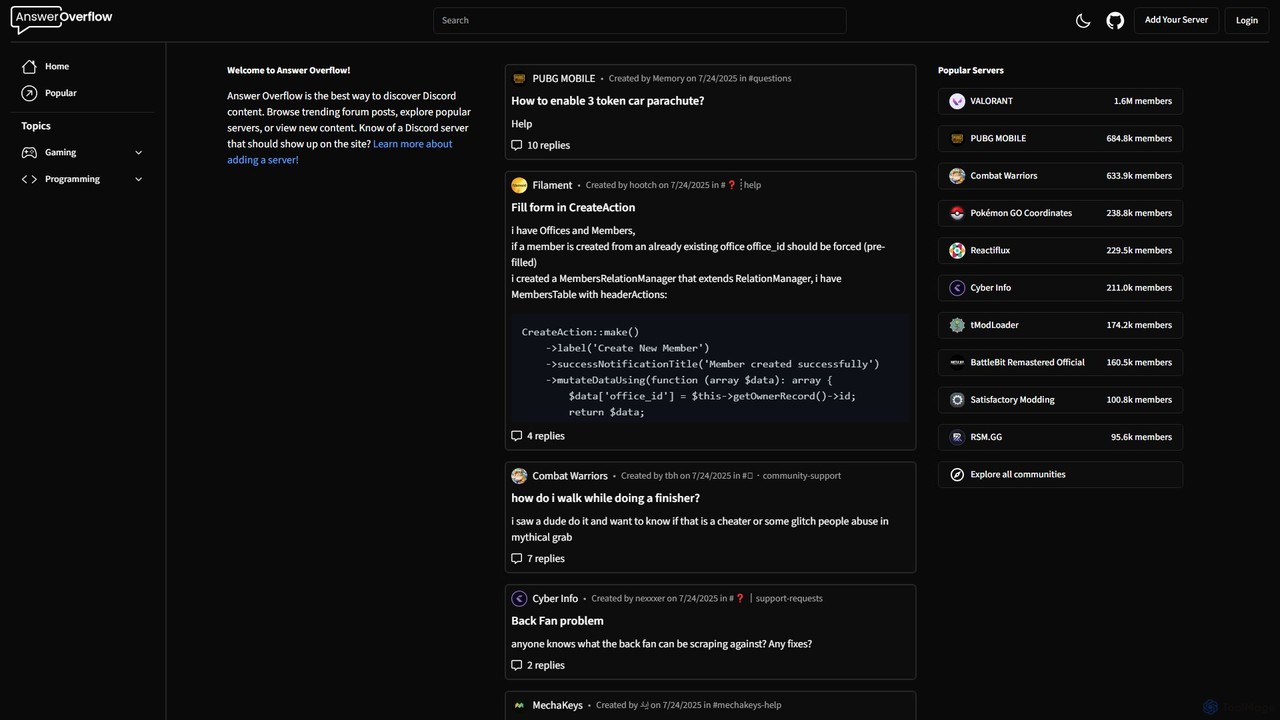
Knowledge Base tools are AI-powered platforms designed to centralize, organize, and make information easily accessible and searchable for users, often within a community or organization. As a vital part of community tools, they leverage artificial intelligence for intelligent content creation, automated categorization, and personalized information retrieval. These systems enhance self-service capabilities, reduce support load, and foster a more informed and collaborative environment by providing instant access to accurate and relevant information.
Core Features
- Intelligent Search: Utilizes natural language processing (NLP) to understand user queries and deliver highly relevant answers from the knowledge base, even with ambiguous phrasing.
- Automated Content Generation: Employs generative AI to draft articles, FAQs, and documentation based on existing data or prompts, significantly speeding up content creation.
- Dynamic Content Organization: Automatically categorizes and tags content, suggesting optimal structures and identifying outdated information for review.
- Personalized Recommendations: Delivers tailored content suggestions to users based on their roles, past interactions, and search history, improving information discovery.
- Multi-channel Integration: Seamlessly connects with chatbots, support systems, and internal communication platforms to provide consistent information access across various touchpoints.
Applicable Scenarios
Knowledge Base tools are indispensable for organizations aiming to improve information management and user support. Customer service departments use them to empower self-service portals, reducing ticket volumes. Internal teams leverage them for employee onboarding and training, ensuring quick access to company policies and procedures. Software companies deploy them to provide comprehensive product documentation and troubleshooting guides to users.
How to Choose
When selecting an AI Knowledge Base tool, evaluate its AI capabilities for search and content generation, ensuring it aligns with your needs for automation and intelligence. Consider its integration ecosystem, especially with existing CRM, helpdesk, or communication platforms. Assess the ease of content creation and management, looking for intuitive interfaces and robust version control. Finally, review scalability and pricing models to match your organization's growth and budget requirements.