
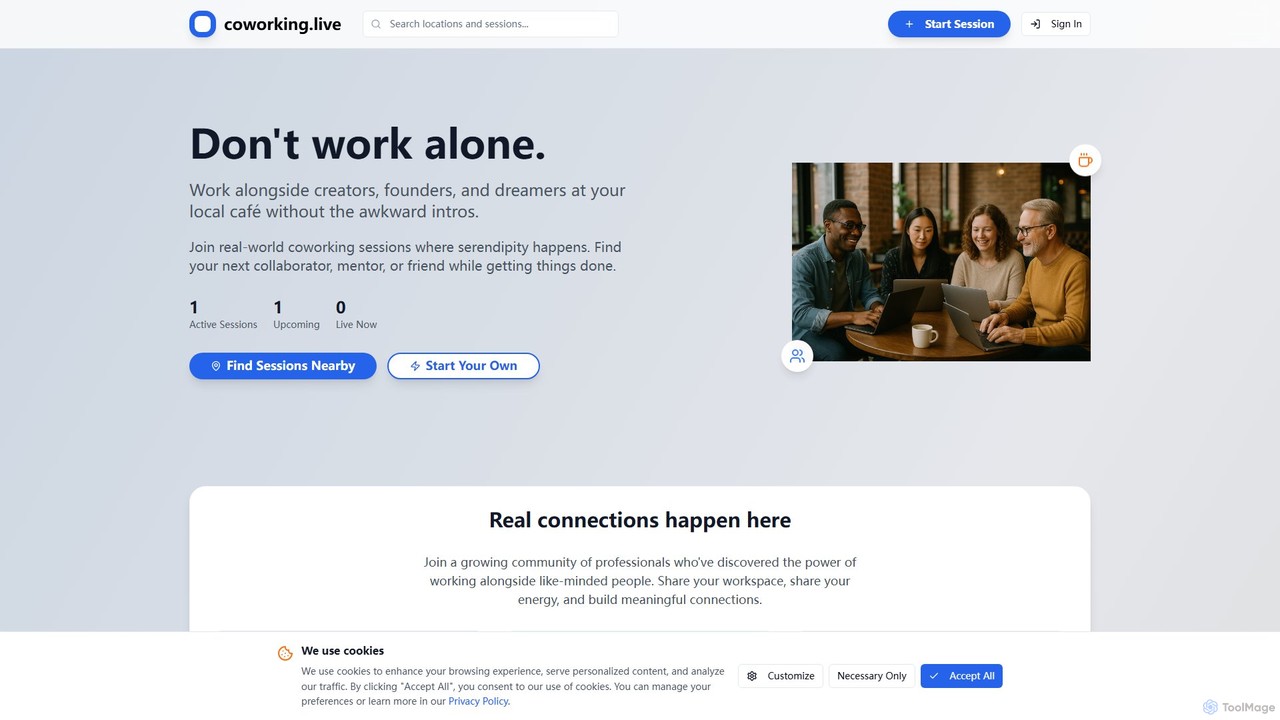
Coworking Live Sessions
A platform that connects professionals for in-person coworking sessions at local venues. It helps users find like-minded individuals …
A platform that connects professionals for in-person coworking sessions at local venues. It helps users find like-minded individuals to work alongside, boosting productivity, fostering real connections, and combating the isolation of remote work.
About Local Events
AI Local Events tools are specialized platforms that use artificial intelligence to discover, promote, and manage events within a specific geographical area. These tools analyze location data, user preferences, and social trends to connect people with relevant local happenings. They empower organizers to reach a highly targeted audience and help individuals find engaging activities in their community. By automating discovery and marketing, these tools make local events more visible and accessible.
Core Features
- Geospatial Discovery: Utilizes location data and mapping to identify and display events happening within a user-defined radius.
- Personalized Recommendations: Employs machine learning algorithms to suggest events based on a user's past activities, stated interests, and online behavior.
- Automated Local Promotion: Generates and distributes promotional content, such as social media posts and event listings, to targeted local audiences and community groups.
- Attendance Forecasting: Analyzes historical data, weather patterns, and competing events to predict potential turnout and help with resource planning.
Use Cases
These tools are ideal for local businesses, community managers, non-profit organizations, and municipal governments. For example, a coffee shop can use them to promote a live music night to nearby residents, or a city council can publicize a public hearing to ensure community participation. They are also valuable for individuals seeking to explore their local culture and social scene.
How to Choose
When selecting an AI Local Events tool, consider its geographic data accuracy and coverage. Evaluate the sophistication of its recommendation engine and the effectiveness of its automated marketing channels. Also, assess its analytics capabilities for tracking promotion success and event attendance. Finally, check for integrations with local social media platforms and community forums.
Local EventsUse Cases
Promoting a Weekly Event for a Local Business
A restaurant owner wants to increase attendance at their weekly trivia night. They use an AI Local Events tool to automatically create and schedule social media posts targeting users within a 5-mile radius who have shown interest in 'trivia', 'pubs', or 'nightlife'. The AI analyzes local engagement patterns to post at optimal times. As a result, the restaurant sees a 30% increase in weekly attendance and can track which promotional channels are most effective, optimizing their marketing budget.
Organizing a Community Cleanup Drive
A non-profit community organizer plans a park cleanup event. They use an AI tool to analyze local data, including weather forecasts and schedules of other major local events, to identify the optimal date and time with the highest potential for volunteer turnout. The tool then helps draft and distribute announcements to local community forums, neighborhood social media groups, and local news outlets. This data-driven approach helps maximize participation and ensures the event doesn't conflict with other community activities.
Creating a Dynamic Tourist Event Calendar
A city's tourism board uses an AI platform to aggregate all public events—concerts, festivals, gallery openings, and farmers' markets—from various online sources into a single, interactive map and calendar. The AI automatically categorizes each event and translates descriptions for international tourists. It also provides personalized recommendations to visitors based on their hotel location and interests expressed on the tourism website. This creates a dynamic and user-friendly guide that enhances the tourist experience and promotes local culture.
Personalized Event Discovery for New Residents
A person who has just moved to a new city uses an AI-powered local events app to discover activities and meet people. After setting up their profile with interests like 'hiking', 'live jazz', and 'tech meetups', the app's recommendation engine scans for relevant events within a 10-mile radius. It sends them weekly push notifications with a curated list of upcoming events, including details on how to get there via public transport. This helps the new resident quickly integrate into the local community and build a social network.
Analyzing Local Event Trends for a Venue
The manager of a concert venue uses an AI analytics tool to understand local entertainment trends. The tool analyzes social media conversations, ticket sales data from similar local venues, and demographic information. It identifies a growing interest in 'indie folk' music among the 25-35 age group in their city. Based on this insight, the manager books several up-and-coming indie folk bands, leading to sold-out shows and positioning the venue as a key player in the local music scene.
Generating Hyperlocal Real Estate Content
A real estate agent uses an AI tool to create compelling neighborhood guides for potential buyers. The tool automatically pulls data on upcoming local events like school fairs, farmers' markets, and community festivals for specific neighborhoods. It then generates a summary paragraph for the agent's website and property listings, highlighting the vibrant community life. This provides valuable, up-to-date information to clients and helps showcase a property's location as a key selling point, differentiating the agent's listings from competitors.