ToolMage
Sign in

Best 1 Platform for Community

Popular Platform in Community include UUKI, helping you work more efficiently.

UUKI
Freemium

UUKI

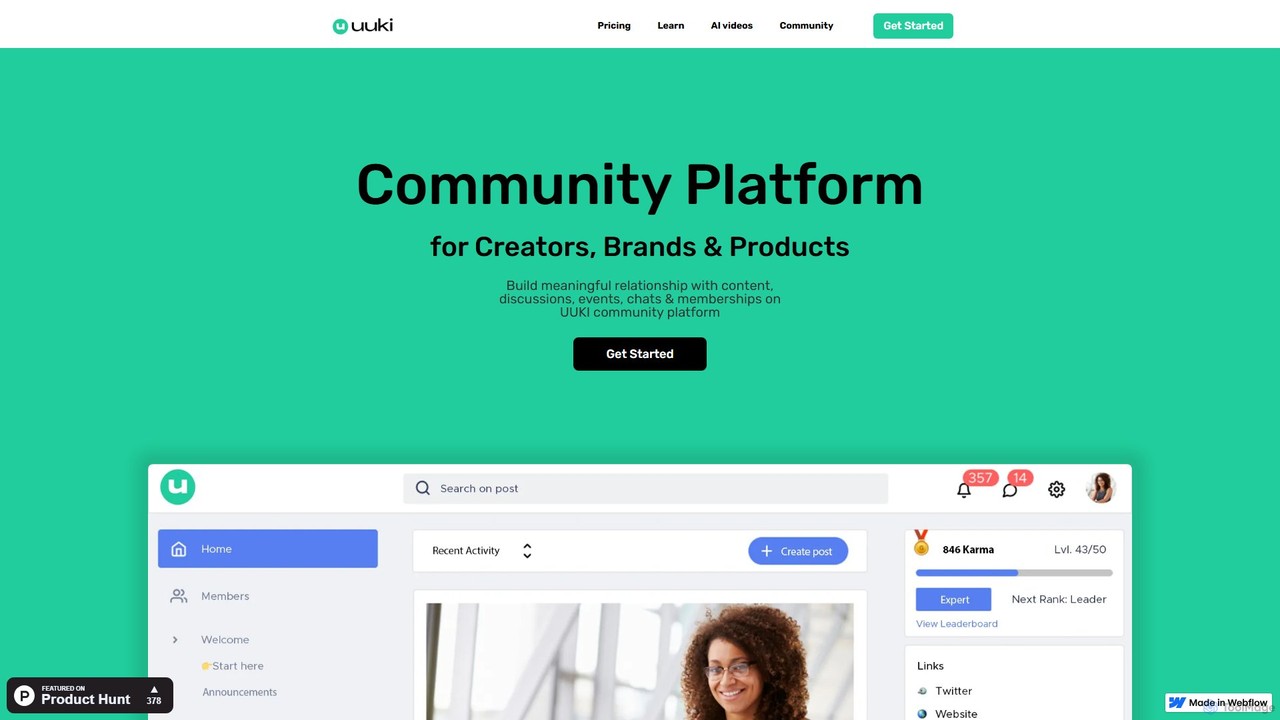
UUKI is an all-in-one community platform designed for creators, brands, and Web3 projects. It enables users to build, engage, and monetize their audience through features like online courses, live events, memberships, and discussions, with strong support for customization and Web3 integrations.

Platform
Visits 17KFavorites 101Likes 91

About Platform

AI Community Platforms are integrated software solutions for building, managing, and scaling online communities. These tools provide a centralized, branded space where members can interact through forums, direct messages, and live events. They empower creators and businesses to foster engagement, share exclusive content, and build lasting relationships away from the noise of social media. AI enhances these platforms by automating content moderation, providing analytics on member behavior, and personalizing the user experience.

Core Features

  • Unified Member Directory: Manage member profiles, access levels, and subscription tiers in one place.
  • Content & Discussion Spaces: Create dedicated channels for forums, knowledge bases, and topic-specific conversations.
  • Event & Course Hosting: Schedule and host virtual events, webinars, or even deliver structured online courses directly within the community.
  • Monetization Tools: Integrate payment gateways to offer paid memberships, subscriptions, and exclusive content access.
  • AI-Powered Analytics: Gain insights into community health, identify key contributors, and track engagement trends automatically.

Use Cases

These platforms are ideal for content creators building paid membership groups, brands establishing customer support and feedback hubs, and educational institutions creating collaborative learning environments. They serve any organization aiming to build a dedicated, interactive space for its audience, fostering loyalty and direct communication.

How to Choose

When selecting a community platform, evaluate its scalability to support future growth. Assess the range of features, such as event management or course creation tools, to ensure they meet your needs. Consider its integration capabilities with other software like CRMs or email marketing tools, and review the level of branding customization available to create a unique community experience.

Featured tool rankings

Platform use cases

1

Launch a Paid Creator Community

A financial education creator wants to offer premium content and direct access to their audience. They use a community platform to build a members-only space. Inside, they host weekly live Q&A sessions, share exclusive market analysis reports, and create discussion forums for different investment topics. By integrating a payment system, they can offer tiered subscriptions (e.g., Basic, Premium, VIP), automating the billing process and access management. This creates a recurring revenue stream and a loyal community hub independent of social media algorithms.

2

Create a Brand Customer Hub

A software company aims to reduce support tickets and gather user feedback more effectively. They deploy a community platform as a customer hub. This space includes a knowledge base with tutorials, a forum for users to help each other, and a dedicated section for feature requests. Customers can vote on feature requests, helping the product team prioritize development. AI-powered search helps users find answers in the knowledge base quickly, deflecting common support queries. This not only improves customer satisfaction but also provides invaluable, direct feedback for product improvement.

3

Host an Online Learning Community

An online academy offers various courses on digital marketing. To enhance the learning experience, they use a community platform to supplement their video lessons. Each course has a dedicated channel where students can ask questions, share their projects, and interact with instructors. The platform's event feature is used to schedule live workshops and guest speaker sessions. This transforms a passive learning experience into an active, collaborative one, increasing course completion rates and student satisfaction. It also allows the academy to build a long-term relationship with its alumni.

4

Organize a Non-Profit Volunteer Network

A national environmental non-profit needs to coordinate volunteers across different regions for cleanup events and campaigns. They use a community platform to create a central hub for all volunteers. The platform features regional groups for local discussions, a shared calendar for upcoming events, and a resource library with training materials. Organizers can post announcements, track event RSVPs, and share success stories to keep morale high. This centralized system replaces scattered email chains and social media groups, making volunteer management more efficient and fostering a stronger sense of shared purpose among participants.

5

Build a Niche Hobbyist Community

A group of vintage watch enthusiasts decides to create a dedicated online space, moving away from fragmented discussions on general forums and social media. They use a community platform to build a private hub. Members can create detailed profiles showcasing their collections, participate in forums dedicated to specific brands, and use a marketplace feature to safely trade watches. The platform's robust search allows members to easily find historical information and technical guides. This creates a high-value, focused environment that attracts serious collectors and becomes the go-to resource for the hobby.

6

Facilitate a Corporate Alumni Network

A large consulting firm wants to maintain relationships with its former employees. They establish a private alumni network using a community platform. The platform serves as a professional networking hub, featuring a member directory searchable by industry and location, a job board for exclusive opportunities, and forums for sharing industry insights. The firm also hosts exclusive virtual networking events and webinars for the alumni. This initiative helps with corporate branding, facilitates re-hiring of experienced talent, and creates a valuable network for both the company and its former employees.

Platform FAQ

What is an AI Community Platform?

An AI Community Platform is an all-in-one software solution that enables organizations to create their own branded online community. Unlike a simple forum or social media group, it integrates various tools like discussion boards, event management, membership subscriptions, and content hosting into a single, controlled environment. AI features enhance these platforms by automating tasks like content moderation, analyzing engagement data to reveal trends, and personalizing content for members to improve their experience.

How to choose the right community platform?

To choose the right platform, consider these factors:

  • Core Features: Does it support the key activities you envision, such as online courses, live events, or forums? Make a list of must-have features.
  • Monetization Model: If you plan to charge for access, check its payment gateway integrations, subscription options, and transaction fees.
  • Customization and Branding: How much control do you have over the look and feel? A good platform should allow you to match it to your brand identity.
  • Scalability: Consider its ability to handle a growing number of members and content without performance issues. Check pricing tiers for future growth.
  • User Experience: Is the platform intuitive and easy to navigate for both you and your members? Request a demo or trial to test it out.
What's the difference between a community platform and a social media group?

The key difference lies in ownership, control, and focus. With a community platform, you own the space, the member data, and control the user experience without competing with algorithms or ads. It's a branded, distraction-free environment. A social media group operates on a third-party platform where you have limited control, no data ownership, and your content is always competing for attention. Community platforms are designed for deeper engagement and building a long-term asset, while social media groups are better for broad, top-of-funnel reach.

What role does AI play in community platforms?

AI plays a significant supporting role in modern community platforms, primarily by enhancing efficiency and member experience. Key AI functions include:

  • Automated Moderation: AI can automatically flag or remove spam, hate speech, and inappropriate content, reducing the manual workload for community managers.
  • Engagement Analytics: AI algorithms analyze discussion trends, identify influential members, and measure community health, providing actionable insights.
  • Personalization: Some platforms use AI to recommend relevant content, discussions, or connections to members based on their activity and interests.
  • Smart Search: AI-powered search helps members find information within the community's knowledge base and discussions more quickly and accurately.
Can I monetize my community with these platforms?

Yes, monetization is a core feature of most community platforms. They are specifically designed to help creators and businesses generate revenue directly from their audience. Common monetization methods include:

  • Paid Memberships: Charging a recurring fee (monthly or annually) for access to the community and its content.
  • Tiered Access: Creating different subscription levels with varying perks, such as access to exclusive channels, courses, or direct interaction.
  • Selling Digital Products: Offering standalone products like online courses, e-books, or paid workshops directly within the platform.
  • Paid Events: Charging for access to exclusive virtual events, webinars, or conferences hosted on the platform.

These platforms typically integrate with payment processors like Stripe or PayPal to handle transactions securely.