Expify
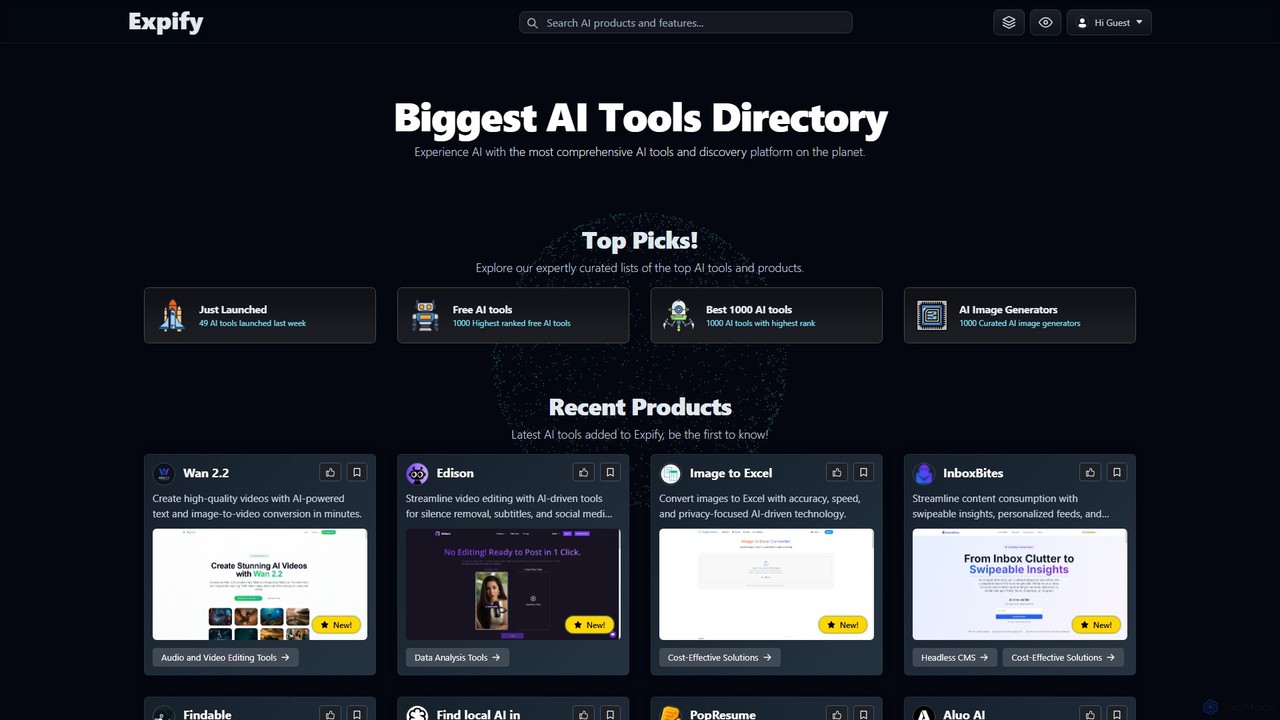
Expify is a comprehensive AI tools directory and discovery platform, designed to help users explore, compare, and evaluate …
Expify is a comprehensive AI tools directory and discovery platform, designed to help users explore, compare, and evaluate a vast range of AI solutions. It features curated lists, expert reviews, and a vibrant community, making it the ultimate hub for developers, marketers, and creators to find the perfect AI tools for their needs.
About Tech Communities
Tech Communities are online platforms where developers, engineers, and technology professionals gather to ask questions, share knowledge, and collaborate. These platforms are structured around specific technologies, programming languages, or frameworks, featuring robust Q&A systems, code sharing capabilities, and peer-review mechanisms. They serve as essential resources for solving complex technical problems, continuous learning, and staying current with industry advancements. Unlike general forums, Tech Communities prioritize verifiable, accurate answers and foster a culture of collaborative problem-solving.
Core Features
- Structured Q&A: A format for asking specific technical questions and receiving curated, peer-vetted answers.
- Code Sharing & Highlighting: Integrated tools to properly format, share, and discuss code snippets within posts.
- Reputation System: Gamified mechanics that reward users for providing helpful answers and contributions, indicating expertise.
- Knowledge Base & Articles: A repository of tutorials, articles, and best practices contributed by community members.
- Topical Organization: Content is categorized by tags or specific forums (e.g., Python, AWS, Machine Learning) for easy navigation.
Use Cases
Tech Communities are indispensable for software developers, data scientists, system administrators, cybersecurity experts, and students in tech fields. They are used daily for debugging code, understanding new APIs, getting feedback on architectural designs, and exploring solutions for complex system integration challenges. For example, a developer might use a community to solve a specific framework bug, while a sysadmin might seek advice on configuring a cloud service.
How to Choose
When selecting a Tech Community, consider the following: First, the specific technology or programming language focus—ensure it aligns with your needs. Second, the community's culture and moderation style; some are strictly moderated for Q&A, while others are more open for discussion. Third, the activity level; an active community provides faster and more diverse responses. Finally, evaluate the quality of existing answers and the expertise of top contributors.

Tech CommunitiesUse Cases
Solving a Specific Coding Bug
A junior software developer encounters a cryptic error in their application. After failing to find a solution in the documentation, they post the issue on a tech community like Stack Overflow. They provide a minimal, reproducible code example, the full error message, and what they've already tried. Within hours, an experienced developer provides a correct solution, explains the underlying cause of the bug, and suggests a more efficient coding practice. This not only solves the immediate problem but also deepens the junior developer's understanding.
Evaluating a New Technology or Framework
A tech lead is considering adopting a new framework for a project. Official documentation highlights the benefits, but they need real-world insights on limitations and integration challenges. They browse communities like Reddit (e.g., r/javascript) or Dev.to to read discussions and articles from developers who have used the framework in production. They can ask specific questions about performance at scale or compatibility with their existing tech stack, receiving unbiased feedback that informs a better architectural decision.
Getting Feedback on an Open-Source Project
An indie developer creates a new open-source tool and wants to gather user feedback and attract contributors. They post about their project on platforms like Hacker News or relevant subreddits, providing a link to the GitHub repository and a clear description of the problem it solves. The community responds with constructive criticism, feature suggestions, and bug reports. This early feedback is crucial for refining the project, improving documentation, and building a user base around their work.
Accelerating the Learning Process
A student learning data science is struggling with a complex machine learning concept. While textbooks provide theory, they need to see practical applications. They join a data science community where they can find real-world case studies, review code from experienced practitioners, and ask clarifying questions. By participating in discussions and attempting to answer simpler questions, they actively test their knowledge and receive corrections, significantly speeding up their learning curve compared to passive study alone.
Staying Current with Industry Trends
A senior engineer needs to stay informed about emerging technologies and best practices in cloud infrastructure. Instead of sifting through countless news sites, they follow curated communities like Hacker News. Here, the community upvotes the most significant articles, research papers, and project releases. The comment sections provide expert analysis, critiques, and contextual information that is often more valuable than the article itself, helping the engineer quickly grasp the implications of new trends for their work.
Validating a Business or Product Idea
An entrepreneur has an idea for a new SaaS product targeted at developers. Before investing in development, they need to validate if the problem they are solving is a real pain point. They can engage in relevant tech communities by asking open-ended questions about the workflows their product aims to improve. By observing discussions and gathering direct feedback, they can gauge interest, identify potential competitors, and refine their product concept based on the genuine needs of their target audience, reducing the risk of building something nobody wants.