SaaS AI Tools
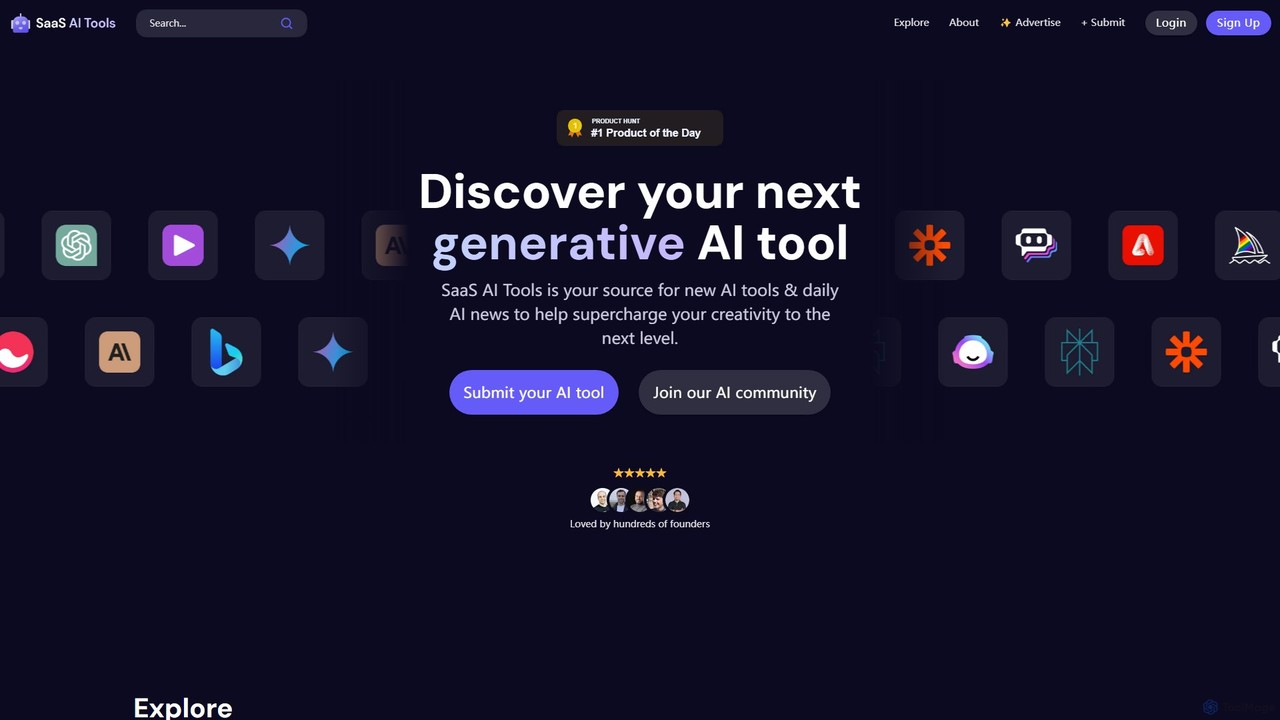
SaaS AI Tools is a comprehensive directory dedicated to generative AI tools, helping founders, creators, and businesses discover …
SaaS AI Tools is a comprehensive directory dedicated to generative AI tools, helping founders, creators, and businesses discover the latest AI solutions. Curated by Bren Kinfa, it features over 7,000 tools across various categories, along with daily AI news and a vibrant community. It's a go-to resource for staying ahead in the rapidly evolving AI and SaaS landscape.
About Tech
Tech communities are specialized online platforms where developers, engineers, and technology enthusiasts connect to share knowledge and collaborate. These platforms are often built around Q&A forums, code repositories, and topic-specific discussion boards. They serve as essential hubs for solving technical problems, learning new skills, and contributing to software projects. Within the broader category of online communities, Tech communities are distinguished by their focus on technical accuracy, peer review, and collaborative problem-solving.
Core Features
- Technical Q&A: Structured forums for asking and answering specific coding, hardware, or software questions.
- Knowledge Sharing: Platforms for members to publish articles, tutorials, and case studies.
- Code Collaboration: Integration with version control systems for discussing and reviewing code snippets or entire projects.
- Peer Networking: Opportunities to connect with professionals and experts in specific technology domains.
- Project Discussions: Dedicated spaces for open-source projects or software development teams to coordinate efforts.
Use Cases
Tech communities are vital for software developers debugging code, data scientists discussing new algorithms, and system administrators troubleshooting server issues. They are also used by students learning to code, hobbyists working on personal projects, and companies seeking feedback on their developer-focused products.
How to Choose
When selecting a Tech community, consider the primary technology focus (e.g., Python, JavaScript, cloud computing). Evaluate the community's activity level and the quality of moderation. Also, assess the platform's features, such as the quality of the search function, code formatting capabilities, and integration with other development tools.

TechUse Cases
Solving a Specific Coding Problem
A junior developer is facing a persistent bug in their Python application that they cannot solve after hours of debugging. They navigate to a popular tech community focused on programming. They draft a detailed question, including the problematic code snippet, the error message, and the troubleshooting steps they have already tried. Within an hour, an experienced developer provides a clear explanation of the issue—an incorrect data type—and suggests a corrected code snippet. This interaction not only solves the immediate problem but also teaches the junior developer a valuable lesson, saving significant project time.
Contributing to an Open-Source Project
A software engineer uses an open-source library and discovers a minor bug. Instead of just working around it, they decide to contribute a fix. They join the project's dedicated community space (e.g., a Discord server or GitHub Discussions). They search to see if the bug has been reported. Finding it hasn't, they create a new issue, clearly describing how to reproduce it. After a brief discussion with the project maintainers, they fork the repository, fix the bug, write a unit test, and submit a pull request. The contribution is accepted, improving the library for all users and adding a valuable line to the engineer's portfolio.
Learning a New Technology Framework
A web developer wants to learn a new JavaScript framework like Svelte. They join the official Svelte community forum and Discord server. They start by reading pinned posts and beginner guides. As they build their first project, they encounter a question about state management. They post their question in the 'help' channel, and community members quickly point them to relevant documentation and provide example code. This direct access to experienced users accelerates their learning curve far more effectively than just reading documentation alone, providing context and practical advice.
Networking and Career Development
A mid-level data scientist aims to transition into a leadership role. She becomes an active member of a prominent data science community. She regularly contributes by answering questions about statistical modeling and sharing insightful articles on new MLOps trends. Her consistent, high-quality contributions establish her as a knowledgeable expert. This visibility leads to networking opportunities with senior professionals in her field, invitations to speak at small online meetups, and eventually, a connection that helps her land a lead data scientist position at another company.
Validating a New Technical Idea
An entrepreneur has an idea for a new developer tool but is unsure about its technical feasibility. Before investing in a prototype, she joins several communities for developers and system architects. She posts a high-level description of the problem her tool aims to solve and asks for feedback on potential technical approaches. Experienced architects and developers weigh in, pointing out potential pitfalls with her initial concept, suggesting alternative technologies, and confirming that the problem is indeed a real pain point. This early feedback from the community allows her to refine her technical strategy and build a much stronger product, saving months of potentially wasted effort.
Staying Updated with Industry Trends
A cloud engineer wants to keep her skills sharp and stay ahead of emerging technologies in the DevOps space. She actively follows and participates in a tech community focused on cloud-native technologies. She reads weekly digests curated by the community, follows discussions on new tools like open-source observability platforms, and participates in debates about best practices for infrastructure as code. This continuous engagement provides her with a filtered, expert-vetted stream of information that is more practical and current than traditional training courses, ensuring her expertise remains relevant and valuable.