ToolMage
Sign in

Best 1 Travel AI tools for Community

Popular Travel AI tools in Community include Voyana AI, helping you work more efficiently.

Voyana AI
Freemium

Voyana AI

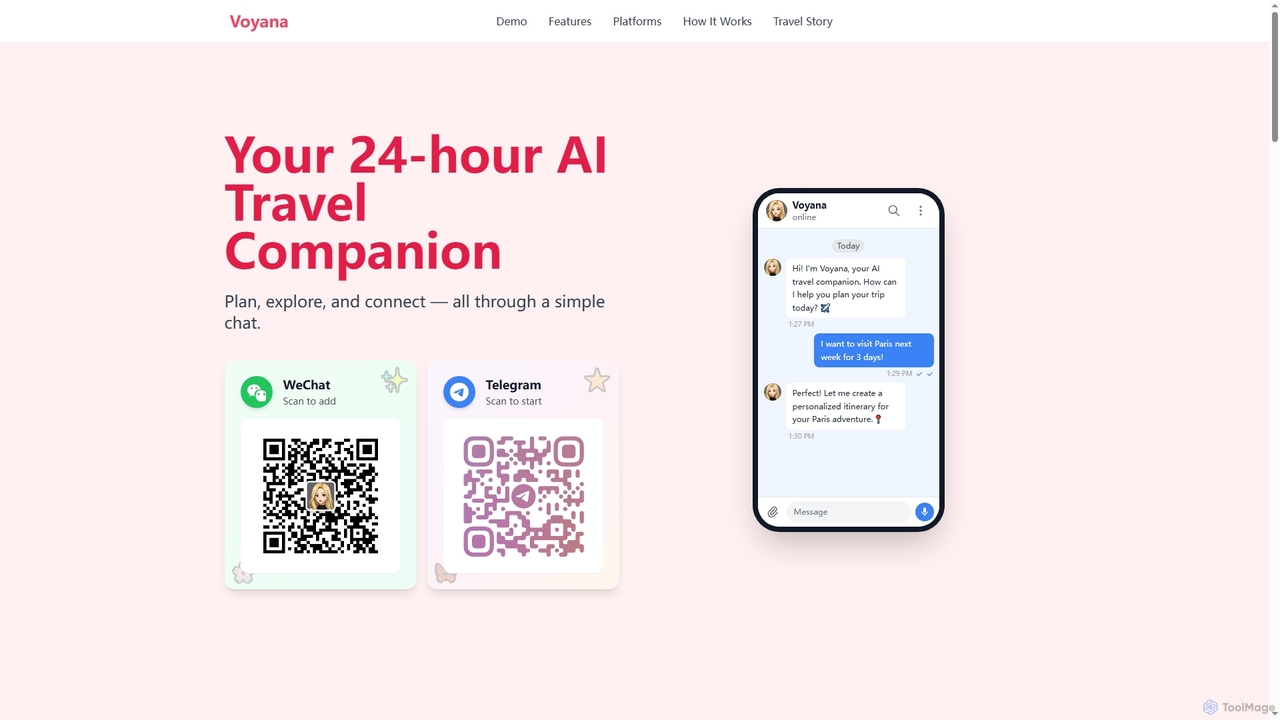
Voyana AI is your 24/7 AI travel companion designed to simplify trip planning, provide real-time assistance, and connect you with like-minded travelers. Available on WeChat and Telegram, it offers personalized itineraries, instant answers to travel questions, and a unique travel buddy matching service, making every journey smoother and more enjoyable.

Travel
Visits 8.3KFavorites 103Likes 119

About Travel

AI Travel tools are applications that leverage artificial intelligence to simplify and personalize every stage of a journey. These tools analyze user preferences, budget, and interests to generate optimized itineraries, predict flight and hotel prices, and offer real-time assistance. They transform travel planning from a manual research task into an intelligent, automated experience. As part of the Community category, these tools often facilitate group planning and help travelers connect with local cultures and experiences.

Core Features

  • Personalized Itinerary Generation: Creates custom, day-by-day travel plans based on individual interests, pace, and budget.
  • Price Prediction & Optimization: Uses machine learning to forecast the best time to book flights and accommodations for maximum savings.
  • Real-time In-Trip Assistance: Offers on-the-go features like language translation, smart navigation, and dynamic local recommendations.
  • Automated Booking & Logistics: Streamlines the process of booking flights, hotels, and activities in a coordinated manner.
  • Local Experience Discovery: Uncovers unique attractions, restaurants, and events based on real-time data and user profiles.

Use Cases

AI Travel tools are ideal for solo adventurers, families planning vacations, and business travelers managing complex logistics. They are particularly useful for planning multi-destination trips, discovering off-the-beaten-path experiences, and finding the most cost-effective travel options without extensive manual research.

How to Choose

When selecting an AI Travel tool, consider the depth of its personalization features and how well it aligns with your travel style. Evaluate its integration with booking platforms, the availability of offline maps and information, and the user-friendliness of its interface. Also, check for collaborative features if you frequently travel in groups.

Travel use cases

1

Crafting a Personalized Multi-City European Tour

A history enthusiast plans a two-week trip to Europe covering Rome, Florence, and Paris. Instead of spending days researching, they input their interests (art museums, ancient ruins, local cuisine) and budget into an AI travel planner. The tool instantly generates a day-by-day itinerary, optimizing travel between cities via high-speed train, booking centrally located hotels, and pre-scheduling museum tickets to avoid long queues. The result is a highly personalized and efficient travel plan created in minutes.

2

Finding the Best Time to Book Flights

A budget-conscious student wants to fly home for the holidays but needs the cheapest fare possible. They use an AI travel tool with a price prediction feature. The tool analyzes historical pricing data and market trends to forecast whether the ticket price is likely to rise or fall. The student sets a price alert and receives a notification a few weeks later, advising them to book now before an expected price increase, saving them a significant amount on their ticket.

3

Navigating a Foreign City with a Language Barrier

A traveler is exploring Tokyo for the first time and does not speak Japanese. They use an AI travel app on their phone. When ordering at a restaurant, they use the camera translation feature to instantly read the menu in English. Later, when lost, they use the voice translation feature to ask a local for directions to the nearest subway station. The AI facilitates seamless communication, turning a potentially stressful situation into a manageable and enriching experience.

4

Automating Business Trip Logistics and Expenses

A consultant needs to arrange a multi-city business trip. Using an AI travel tool integrated with their company's policies, they input the meeting locations and dates. The AI automatically books policy-compliant flights and hotels, creating an efficient schedule. During the trip, the consultant simply photographs receipts with their phone. The AI's OCR technology extracts the data, categorizes the expenses (e.g., meals, transport), and prepares a draft expense report, saving hours of administrative work.

5

Discovering Authentic Local Experiences

A traveler wants to avoid tourist traps and experience a city like a local. They use an AI travel tool that analyzes local blogs, social media check-ins, and event listings in real-time. Based on their profile (e.g., 'loves live jazz' and 'prefers street food'), the AI recommends a small, highly-rated jazz club in a non-touristy neighborhood and a popular night market that isn't in the guidebooks. This allows the traveler to have a more authentic and memorable cultural experience.

6

Collaborative Planning for a Group Trip

A group of friends is planning a ski trip. Using a collaborative AI travel tool, one person creates a trip plan and shares it. Everyone can then add their flight details, vote on accommodation options presented by the AI, and suggest activities. The tool automatically finds lodging that fits the group size and budget. It also helps create a balanced itinerary that includes ski time, dining, and nightlife, catering to the different preferences within the group and simplifying the complex coordination process.

Travel FAQ

What are AI Travel tools?

AI Travel tools are digital platforms that use artificial intelligence to help users plan, book, and manage their trips. They go beyond simple search functions by using machine learning to understand user preferences and provide personalized recommendations for itineraries, flights, hotels, and activities. Key features often include automated itinerary generation, price prediction, and real-time in-trip assistance like language translation.

How do I choose the right AI travel tool?

To choose the right tool, consider your primary need. Are you looking for itinerary planning, flight price tracking, or in-trip assistance? Evaluate these key factors:

  • Customization: How well can the tool adapt to your specific interests, budget, and travel pace?
  • Integrations: Does it allow you to book flights, hotels, and tours directly within the app or does it redirect you?
  • User Interface: Is the platform intuitive and easy to use, especially on a mobile device?
  • Offline Access: Can you access your itinerary, maps, and important information without an internet connection?
What's the difference between an AI Travel planner and a standard booking site?

A standard booking site (like Expedia or Booking.com) acts as a search engine, presenting you with a list of options for flights or hotels based on your filters. An AI Travel planner takes it a step further by acting as a virtual travel agent. It doesn't just list options; it curates and builds a complete, cohesive itinerary, often suggesting activities and optimizing logistics between locations. The focus shifts from individual bookings to creating a holistic travel experience.

Can AI Travel tools help me save money?

Yes, many AI travel tools are designed to help users save money. They achieve this through several features:

  • Price Prediction: Analyzing historical data to recommend the best time to book flights and hotels.
  • Deal Finding: Constantly scanning for price drops, special offers, and package deals that you might miss.
  • Route Optimization: Suggesting the most cost-effective travel dates or transportation methods for multi-destination trips.
  • Budget-Friendly Suggestions: Recommending free activities or affordable dining options based on your budget settings.
Are AI Travel tools suitable for group trips?

Yes, many modern AI travel tools are excellent for group trips. They address common challenges in group planning by offering collaborative features. These can include shared itineraries that everyone can view and edit, polling features to vote on hotels or activities, and automated expense splitting. By centralizing communication and decision-making, these tools simplify the coordination required for a successful group journey, directly tying into their role within the Community category.