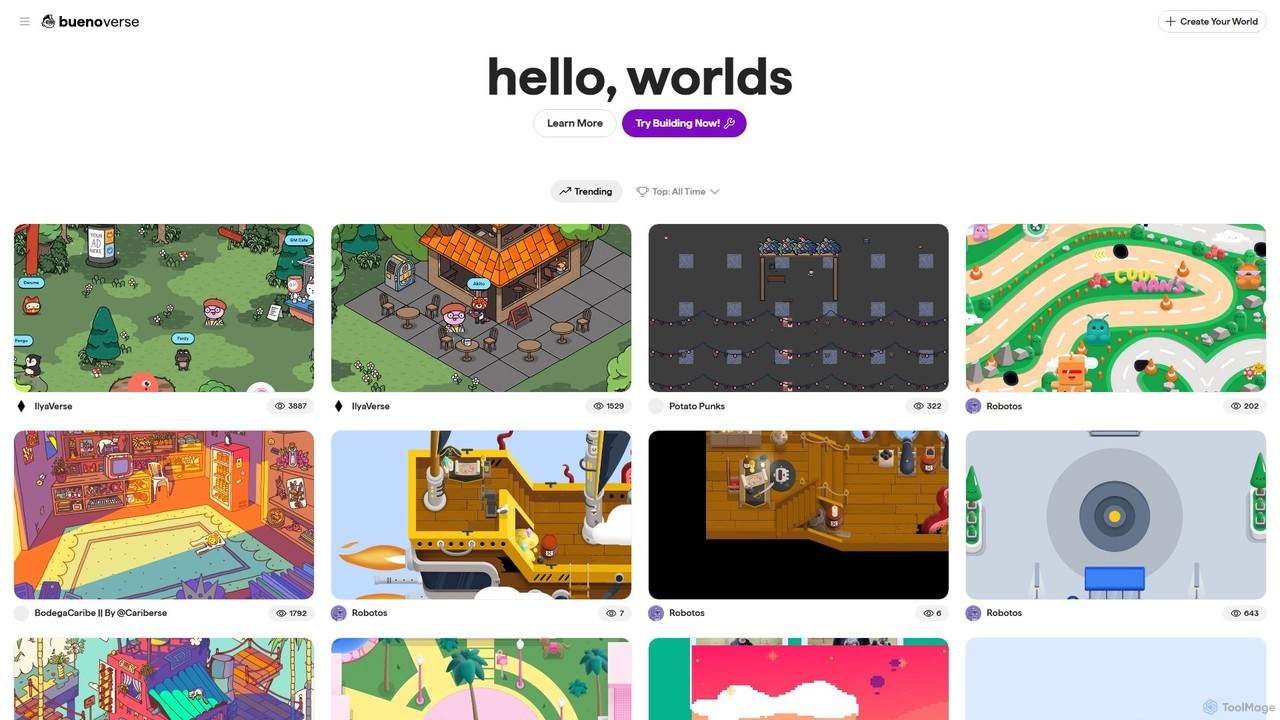
Virtual Worlds are AI-powered platforms that create immersive, interactive digital environments where users can socialize, collaborate, and explore. These tools leverage advanced AI to generate dynamic content, manage complex interactions, and personalize user experiences, moving beyond static digital spaces. They enable rich, persistent digital realities for entertainment, education, and professional applications, fostering vibrant online communities and redefining digital presence.
Core Features
- AI-driven NPC Behavior: Intelligent non-player characters that respond dynamically to user actions and environment changes.
- Procedural Content Generation: Automated creation of vast and varied landscapes, objects, and scenarios within the virtual space.
- Natural Language Interaction: AI chatbots and voice assistants for seamless communication with virtual entities and other users.
- Personalized Experiences: Adaptive content delivery and recommendations based on individual user preferences and activities.
- Real-time Moderation: AI systems that monitor and ensure a safe, inclusive environment by detecting and addressing inappropriate behavior.
Use Cases
From enhancing gaming realism to facilitating global remote collaboration, AI-powered virtual worlds are transforming how we interact digitally. They are utilized by game developers for dynamic storytelling, educators for experiential learning, and businesses for engaging virtual events and digital workspaces.
How to Choose
When selecting a Virtual World platform, consider the level of immersion and graphical fidelity, the robustness of its content creation and customization tools, and the strength of its community features and moderation policies. Evaluate its scalability for user concurrency and integration capabilities with existing hardware or software ecosystems.