SnapMeasureAI
SnapMeasureAI is an advanced AI platform offering three core solutions: precise 3D body measurements from photos to reduce …
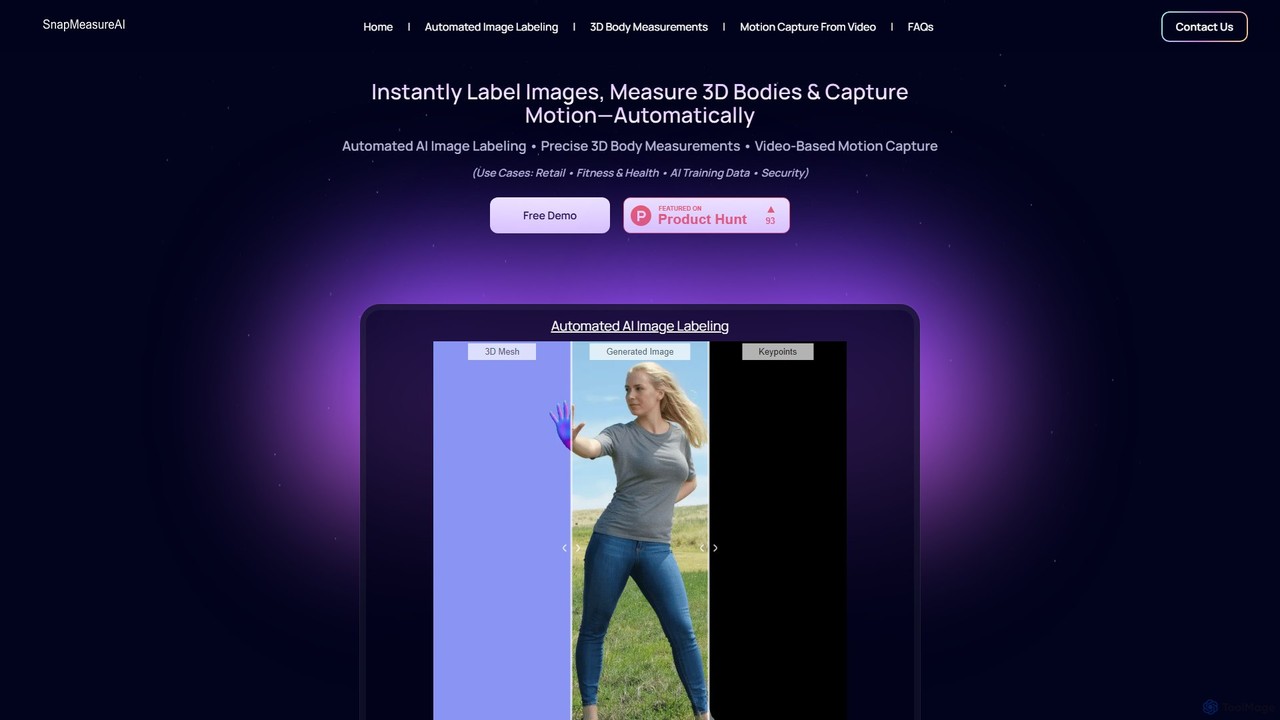
SnapMeasureAI is an advanced AI platform offering three core solutions: precise 3D body measurements from photos to reduce retail returns, automated generation of perfectly labeled image datasets for AI training, and markerless 3D motion capture from standard videos for animation and analysis.
About 3D Modeling
AI 3D Modeling tools are a class of software that uses artificial intelligence to automatically generate or modify three-dimensional models. Leveraging techniques like generative adversarial networks (GANs) and neural radiance fields (NeRFs), these tools can create complex 3D assets from simple text prompts, 2D images, or even video footage. This significantly accelerates workflows in game development, virtual reality, and product design by reducing manual modeling time. As a specialized application within Computer Vision, they focus on synthesizing 3D geometry and textures rather than just analyzing existing visual data.
Core Features
- Text-to-3D Generation: Creates 3D models directly from descriptive text prompts.
- Image-to-3D Conversion: Transforms a single 2D image or a set of photos into a 3D object.
- Generative Texturing: Automatically generates and applies realistic or stylized textures to 3D meshes.
- AI-Powered Sculpting & Refinement: Assists in modifying and enhancing the topology of 3D models with intelligent suggestions.
- Scene Generation: Populates entire 3D environments with objects based on high-level descriptions.
Use Cases
These tools are widely used by game developers for rapid asset prototyping, by product designers for creating quick visualizations, and by architects for conceptual modeling. VFX artists and animators also use them for generating initial concepts and environmental elements, streamlining the creative process.
How to Choose
When selecting an AI 3D Modeling tool, consider the supported input types (text, image, video), the quality and resolution of the output mesh, and the available export formats (e.g., OBJ, FBX, glTF). Also, evaluate the level of user control for refining generated models and its integration capabilities with standard 3D software like Blender or Unity.

3D ModelingUse Cases
Rapid Prototyping for Game Assets
A solo game developer needs to populate a fantasy world with dozens of unique environmental props like ancient ruins, magical plants, and stylized rocks. Instead of spending weeks manually modeling each asset, they use a text-to-3D tool. By inputting prompts like 'mossy stone altar with glowing runes' or 'twisted, bioluminescent mushroom,' they can generate a variety of base models in minutes. These models are then imported into Blender for minor adjustments and optimization, reducing the asset creation time by over 70% and allowing the developer to focus on gameplay mechanics.
3D Product Visualization for E-commerce
An online furniture store wants to offer a 3D view of its products. The marketing team uses an image-to-3D AI tool. They upload a series of high-quality photos of a chair taken from different angles. The AI processes these images and generates a detailed 3D model, complete with accurate textures. This model is then embedded on the product page, allowing customers to rotate and inspect the chair from all sides. This enhances the online shopping experience and has been shown to increase conversion rates by providing a more realistic product preview.
Conceptual Design for Architecture
An architect is in the early stages of designing a futuristic residential building. To quickly explore different forms and facade ideas, they use an AI 3D modeling tool. They input textual descriptions like 'a twisting skyscraper with organic, leaf-like balconies' or upload a simple 2D sketch of the building's silhouette. The AI generates several 3D massing models representing these concepts. These initial models are used in client presentations to communicate the design intent visually and gather feedback long before detailed CAD work begins, saving significant time and resources in the conceptual phase.
Creating Custom 3D Avatars
A user wants to create a personalized avatar for use in VR chat and other metaverse platforms. They use an AI 3D modeling application that specializes in character creation. By uploading a single portrait photo, the AI analyzes their facial features and generates a base 3D head model that resembles them. The user can then further customize the avatar by adding different hairstyles, outfits, and accessories using a library of assets, or by providing text prompts like 'give them cyberpunk glasses'. This process makes avatar creation accessible to non-artists and much faster than traditional character modeling.
Generating 3D Models for 3D Printing
A hobbyist wants to 3D print a unique miniature figurine for their tabletop game. Lacking advanced modeling skills, they turn to an AI 3D generator. They type a detailed description: 'a dwarf warrior with a braided beard, holding a large axe, wearing heavy plate armor'. The AI generates a 3D model that matches the description. The user then uses the tool's refinement features to ensure the model is 'watertight' and suitable for printing. After exporting the model as an STL file, they can send it directly to their 3D printer, bringing their custom creation to life without needing to learn complex 3D sculpting software.
Creating Backgrounds for VR/AR Experiences
A developer building an AR application needs a variety of 3D backgrounds and environments. To speed up the process, they use an AI scene generation tool. They provide a prompt like 'a serene Japanese garden with a koi pond, stone lanterns, and a small wooden bridge'. The AI generates a complete 3D scene with all the requested elements arranged logically. This generated environment can be used as a starting point, which the developer can then customize and optimize for performance in their AR app. This method allows for the rapid creation of diverse virtual spaces for users to explore.