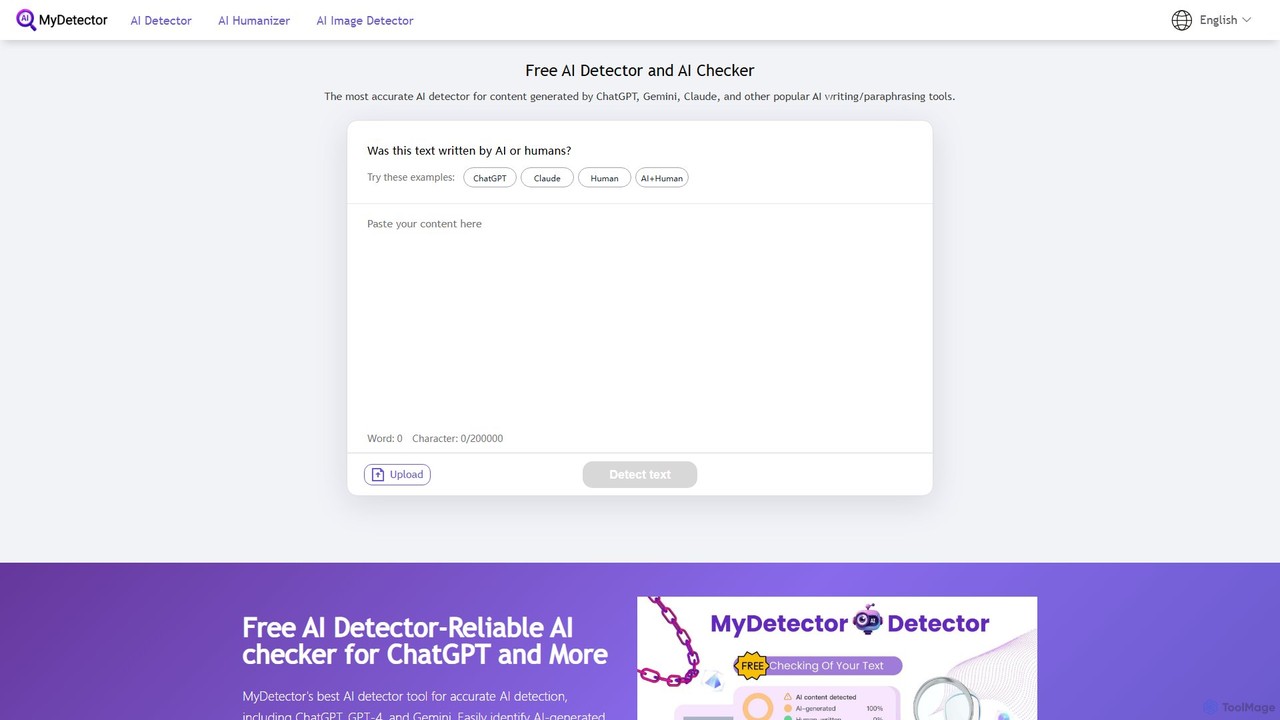
AI Detection tools are specialized software designed to identify specific characteristics or patterns within various forms of content, often to verify authenticity, originality, or compliance. These tools leverage advanced artificial intelligence, including natural language processing, machine learning, and computer vision, to analyze text, images, audio, and video for anomalies or known signatures. Within the broader context of content creation, they are crucial for maintaining quality, ensuring ethical standards, and protecting intellectual property by flagging AI-generated content, plagiarism, deepfakes, or copyright infringements, thereby upholding trust and credibility in digital media. They serve as a vital safeguard in an era of rapidly evolving generative AI technologies.
Core Features
- AI Content Identification: Detects whether text, images, or other media have been generated by artificial intelligence models, helping to distinguish human-created from machine-generated content across various platforms.
- Plagiarism Checking: Compares submitted content against vast databases of existing works, including web pages, academic papers, and publications, to identify instances of unoriginal or copied material, ensuring academic and professional integrity.
- Deepfake Verification: Analyzes video and audio content for subtle inconsistencies or digital artifacts that indicate manipulation by AI, crucial for verifying media authenticity in news, social media, and legal contexts.
- Sentiment Analysis: Evaluates text to determine the emotional tone and sentiment expressed (positive, negative, neutral, mixed), providing valuable insights for understanding audience feedback, brand perception, and public opinion.
- Copyright Infringement Scanning: Scans digital assets across various online platforms and databases to detect unauthorized use or distribution of copyrighted images, videos, or textual content, protecting creators' intellectual property rights.
Applicable Scenarios
Content creators, publishers, educators, legal professionals, and marketing teams extensively utilize detection tools to safeguard content integrity and ensure compliance in a dynamic digital landscape. For instance, a news organization might use deepfake detection to verify the authenticity of video evidence before publication, preventing the spread of misinformation and maintaining journalistic standards. Academic institutions routinely employ plagiarism checkers to ensure the originality of student submissions and research papers, fostering academic honesty. Similarly, marketing teams leverage sentiment analysis to gauge public reaction to new campaigns or product launches, enabling data-driven strategy adjustments. Content platforms also use AI detection to filter out machine-generated spam, low-quality submissions, or potentially harmful content, ensuring a better user experience.
How to Choose
When selecting an AI detection tool, consider its accuracy and reported false positive/negative rates, which are critical for reliable results and minimizing erroneous flags. Evaluate the specific types of content it supports (e.g., text, image, video, audio) and its ability to integrate seamlessly with your existing content creation and management workflows, such as CMS or editing suites. Look into the comprehensiveness of its reporting features, the frequency of its database updates, and its capacity to adapt to new and evolving AI generation models, which is crucial for long-term effectiveness. Finally, assess the pricing structure, whether it's subscription-based or usage-based, to align with your budget and operational scale, ensuring cost-efficiency without compromising on detection quality.