InkSpot
InkSpot is an AI-powered writing assistant that helps users eliminate clichés, improve clarity, and create more original, compelling …
InkSpot is an AI-powered writing assistant that helps users eliminate clichés, improve clarity, and create more original, compelling content. It offers real-time detection, AI-powered suggestions, and multi-platform support to enhance writing efficiency and quality.
henshu
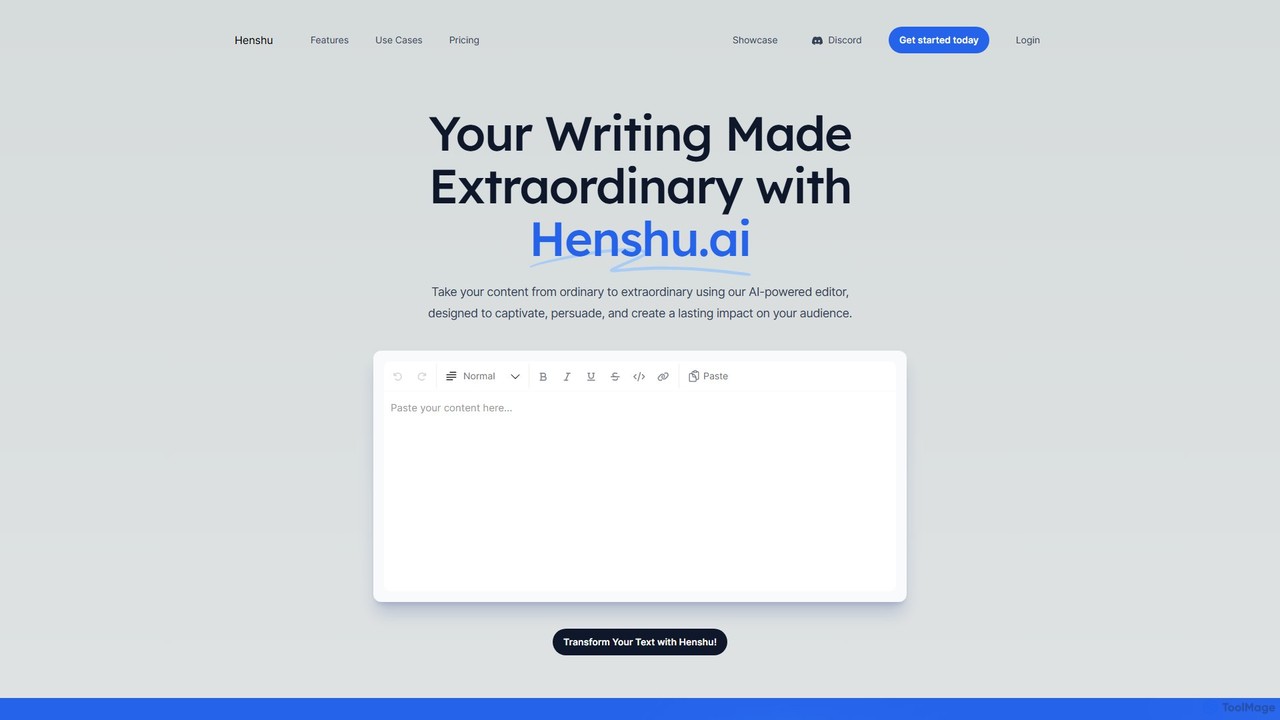
henshu is an AI-powered editor designed to transform your writing from ordinary to extraordinary. It refines text for …
henshu is an AI-powered editor designed to transform your writing from ordinary to extraordinary. It refines text for persuasion, clarity, and impact, offering instant style and tone transformations. Ideal for marketers, YouTubers, and bloggers aiming to captivate their audience with impeccably crafted content.
About Editing
AI Editing tools are a specialized category of AI-powered applications designed to refine, enhance, and optimize existing digital content across various formats, serving as a crucial component within the broader Content Creation ecosystem. Leveraging advanced machine learning algorithms, these tools automate complex revision tasks, from grammar correction and style refinement in text to sophisticated image manipulation and video post-production. They empower content creators, marketers, and businesses to significantly improve the quality, consistency, and efficiency of their output, transforming raw or draft content into polished, professional assets.
Core Features
- Text Refinement: Automatically corrects grammar, spelling, and punctuation errors, while also suggesting stylistic improvements for clarity, conciseness, and tone, ensuring high-quality written communication.
- Image Enhancement & Manipulation: Applies intelligent filters, precisely removes backgrounds, upscales resolution without quality loss, and adjusts lighting, color balance, or composition with AI-driven precision.
- Video Post-production Automation: Streamlines video editing workflows by automating tasks such as scene cutting, color grading, audio synchronization, object removal, and generating subtitles or captions.
- Audio Processing & Restoration: Reduces background noise, enhances speech clarity, performs intelligent mixing, and can even transcribe spoken content, optimizing audio for podcasts, voiceovers, and presentations.
- Content Summarization & Rephrasing: Condenses long-form text, audio, or video content into concise summaries, extracts key information, or rephrases sentences and paragraphs to improve readability or target specific audiences.
Applicable Scenarios
These tools are invaluable for a diverse range of professionals and industries. Content marketers utilize them to perfect blog posts and social media updates, ensuring brand consistency and engagement. E-commerce businesses leverage AI editing for batch processing product photos, removing backgrounds, and enhancing visual appeal. Video producers and podcasters use them to accelerate post-production, from noise reduction to automated captioning, significantly reducing manual effort and turnaround times.
How to Choose
When selecting an AI editing tool, consider the specific content type you primarily work with (e.g., text, image, video, audio) and the depth of editing capabilities required. Evaluate its integration capabilities with your existing creative software and platforms, the accuracy and flexibility of its underlying AI models, and its overall user-friendliness. Additionally, assess the pricing structure, the availability of advanced features like real-time collaboration or batch processing, and the tool's ability to maintain your brand's unique style and voice.

EditingUse Cases
Automate Social Media Content Refinement
Social media managers often need to quickly publish engaging content. AI editing tools can automatically check grammar, optimize headlines for impact, and rephrase sentences to fit character limits, ensuring every post is polished and professional before publishing, saving significant time in daily content review.
Batch Process E-commerce Product Images
E-commerce businesses handle hundreds or thousands of product images. AI editing tools allow for automated background removal, consistent lighting adjustments, and resolution upscaling across entire product catalogs, ensuring a uniform, high-quality visual presentation that enhances customer perception and reduces manual graphic design effort.
Enhance Podcast Audio Quality and Accessibility
Podcasters and audio content creators can use AI editing to automatically reduce background noise, remove filler words, and normalize audio levels for a professional sound. Additionally, AI can generate accurate transcripts and captions, making content accessible to a wider audience and improving SEO for audio content.
Streamline Video Marketing Post-Production
Marketing teams frequently produce short promotional videos. AI editing tools can automate initial cuts, apply consistent color grading, synchronize audio with video, and even identify and remove unwanted objects or segments, drastically speeding up the post-production process and allowing for more rapid content deployment.
Optimize Blog Posts for Readability and SEO
Content writers aim for clear, engaging, and search-engine-friendly articles. AI editing tools can analyze text for readability scores, suggest improvements for sentence structure and vocabulary, identify keyword stuffing, and propose relevant long-tail keywords, ensuring blog posts are both user-friendly and highly discoverable.
Rapidly Localize and Adapt Global Content
Global enterprises need to adapt content for diverse markets. AI editing tools can not only translate text but also refine the translated content for cultural nuances, adjust tone, and ensure grammatical correctness in multiple languages, accelerating the localization process for marketing materials, website copy, and documentation.