ToolMage
Sign in

Best 1 Engagement Tools for Content Creation

Popular Engagement Tools in Content Creation include LiveReacting, helping you work more efficiently.

LiveReacting
Freemium

LiveReacting

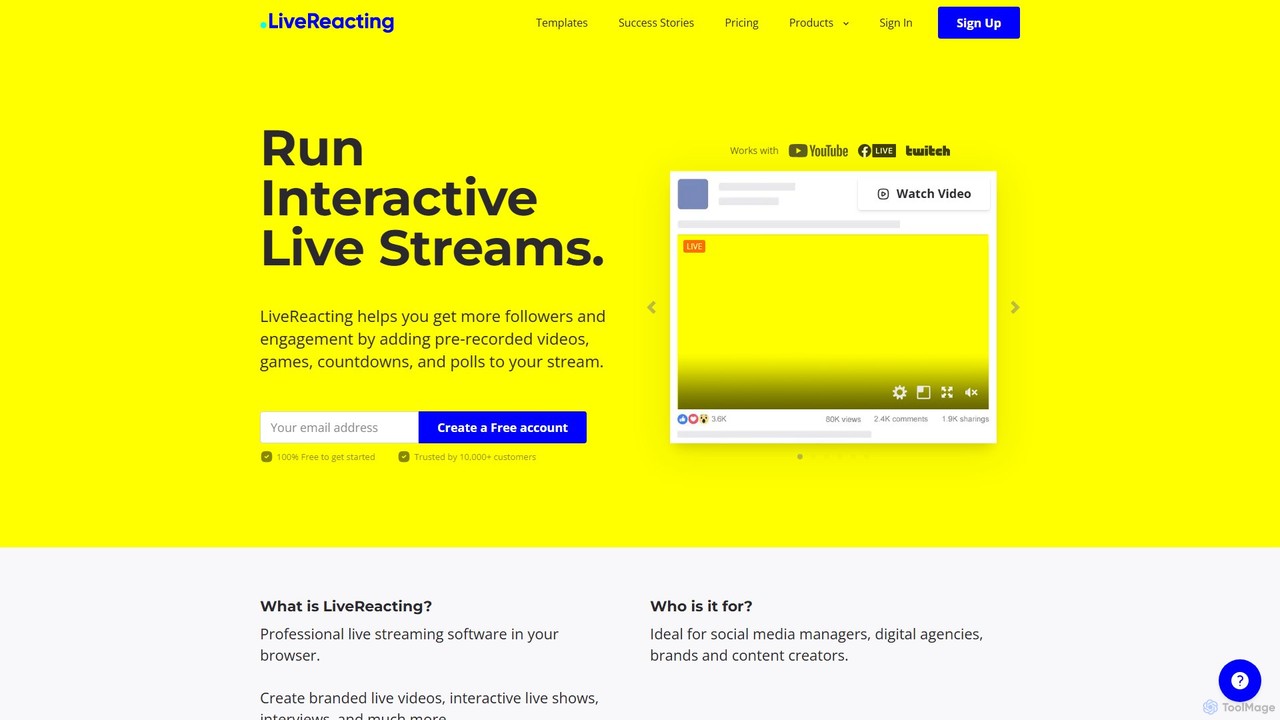
LiveReacting is a browser-based live streaming studio designed to boost audience engagement. It allows users to enrich their live streams with interactive elements like polls, games, and countdowns, stream pre-recorded videos, invite guests, and multistream to platforms like Facebook, YouTube, and Twitch. Ideal for marketers, content creators, and brands looking to create professional, interactive live content without complex software.

Engagement Tools
Visits 408KFavorites 121Likes 129

About Engagement Tools

Engagement Tools are AI-powered solutions designed to enhance user interaction, participation, and retention across digital platforms. These tools leverage artificial intelligence to personalize experiences, automate responses, and analyze user behavior, fostering deeper connections. Within content creation, they transform passive consumption into active involvement, making content more dynamic and impactful.

Core Features

  • Personalized Content Delivery: AI analyzes user preferences and behavior to deliver tailored content, recommendations, or notifications, increasing relevance.
  • Interactive Content Generation: Tools can create quizzes, polls, surveys, or interactive stories that prompt user input and participation.
  • AI Chatbots & Virtual Assistants: Provide instant, intelligent responses to user queries, guide users through processes, or facilitate conversations.
  • Sentiment Analysis & Feedback Processing: AI evaluates user comments, reviews, and interactions to gauge sentiment and extract actionable insights for improvement.
  • Gamification Elements: Integrate AI-driven challenges, rewards, or progress tracking to motivate users and sustain interest.

Use Cases

Content creators use these tools to build dynamic experiences, while marketing teams deploy them for personalized campaigns. Customer service departments leverage AI chatbots for instant support, and educators create interactive learning modules. Businesses across sectors utilize them to deepen customer relationships and gather valuable insights.

How to Choose

When selecting AI engagement tools, consider the specific interaction types you aim to enhance (e.g., conversation, participation, personalization). Evaluate the tool's AI capabilities (NLP accuracy, personalization algorithms), integration with existing platforms (CRM, CMS), scalability for your audience size, and the level of customization offered for branding and content.

Engagement Tools use cases

1

Automate Customer Support with AI Chatbots

E-commerce businesses and service providers can deploy AI chatbots to handle routine customer inquiries 24/7. By leveraging natural language processing, these chatbots provide instant answers to FAQs, guide users through product selection, or assist with order tracking, significantly reducing response times and freeing up human agents for complex issues. This leads to improved customer satisfaction and operational efficiency.

2

Create Interactive Content for Marketing Campaigns

Marketing teams can use engagement tools to generate dynamic quizzes, polls, or personalized interactive stories for their campaigns. Instead of static ads, users are prompted to participate, providing valuable data on preferences and increasing brand recall. This approach boosts engagement rates by up to 50% compared to traditional content, leading to higher lead generation and conversion rates.

3

Personalize User Journeys on Websites and Apps

Digital product managers and UX designers can implement AI engagement tools to tailor the user experience based on individual behavior and preferences. By analyzing clickstreams, past interactions, and demographic data, the tools dynamically adjust content, navigation paths, and feature recommendations. This personalization significantly improves user satisfaction, reduces bounce rates, and increases feature adoption within the platform.

4

Enhance Social Media Engagement and Community Building

Social media managers can utilize AI engagement tools to optimize posting times, suggest trending topics, and automate responses to comments and DMs. These tools analyze audience behavior to identify peak engagement periods and tailor content delivery. By facilitating more timely and personalized interactions, they help build stronger online communities, increase follower loyalty, and drive organic reach across platforms.

5

Gather and Analyze User Feedback at Scale

Product managers and market researchers can leverage AI engagement tools to collect and analyze vast amounts of user feedback from surveys, reviews, and social media. These tools use natural language processing and sentiment analysis to identify key themes, pain points, and emerging trends. This enables rapid iteration on product features, improves customer satisfaction, and informs strategic business decisions based on real user insights.

6

Gamify Learning and Onboarding Experiences

HR departments, L&D specialists, and product teams can use AI engagement tools to introduce gamified elements into training modules or new user onboarding flows. By incorporating AI-driven challenges, progress tracking, and reward systems, these tools make learning more interactive and enjoyable. This approach significantly increases completion rates for training programs and improves user retention during the critical onboarding phase, leading to better skill acquisition and product adoption.

Engagement Tools FAQ

What are AI Engagement Tools?

AI Engagement Tools are software solutions that use artificial intelligence to foster and enhance user interaction, participation, and retention across various digital touchpoints. They go beyond basic automation by understanding user intent, personalizing content, and providing intelligent responses. These tools are crucial for creating dynamic, responsive, and highly personalized user experiences that drive deeper connections and loyalty.

How do AI Engagement Tools differ from traditional engagement methods?

Traditional engagement methods often rely on manual processes, static content, and broad segmentation, leading to generic interactions. AI Engagement Tools, however, leverage advanced algorithms to analyze real-time user data, predict behavior, and deliver hyper-personalized experiences at scale. This allows for dynamic content adaptation, intelligent conversational interfaces, and proactive outreach, resulting in significantly higher relevance, efficiency, and effectiveness compared to conventional approaches.

What are the key benefits of using AI Engagement Tools?

The primary benefits of AI Engagement Tools include enhanced personalization, leading to more relevant user experiences and increased satisfaction. They automate repetitive tasks like customer support and content delivery, significantly boosting operational efficiency. Furthermore, these tools provide deep insights into user behavior through advanced analytics, enabling data-driven decision-making, improved conversion rates, and stronger customer loyalty by fostering more meaningful interactions.

How can I choose the best AI Engagement Tool for my business?

To choose the best AI Engagement Tool, first define your specific engagement goals, such as improving customer support, increasing content interaction, or personalizing user journeys. Then, evaluate tools based on their core AI capabilities (e.g., NLP accuracy, personalization algorithms), integration with your existing tech stack (CRM, CMS, marketing automation), scalability to handle your audience size, customization options for branding, and pricing models. Prioritize tools that offer robust analytics and clear ROI potential for your use cases.

What types of businesses can benefit most from AI Engagement Tools?

A wide range of businesses can benefit significantly from AI Engagement Tools. E-commerce and retail companies can use them for personalized shopping experiences and automated customer service. Media and content platforms can enhance audience interaction and content recommendations. SaaS companies can improve user onboarding and product adoption. Any business aiming to deepen customer relationships, streamline communication, or gain actionable insights from user interactions will find these tools invaluable for fostering loyalty and driving growth.