ToolMage
Sign in

Best 1 Engagement AI tools for Content Creation

Popular Engagement AI tools in Content Creation include QuizWizard, helping you work more efficiently.

QuizWizard
Freemium

QuizWizard

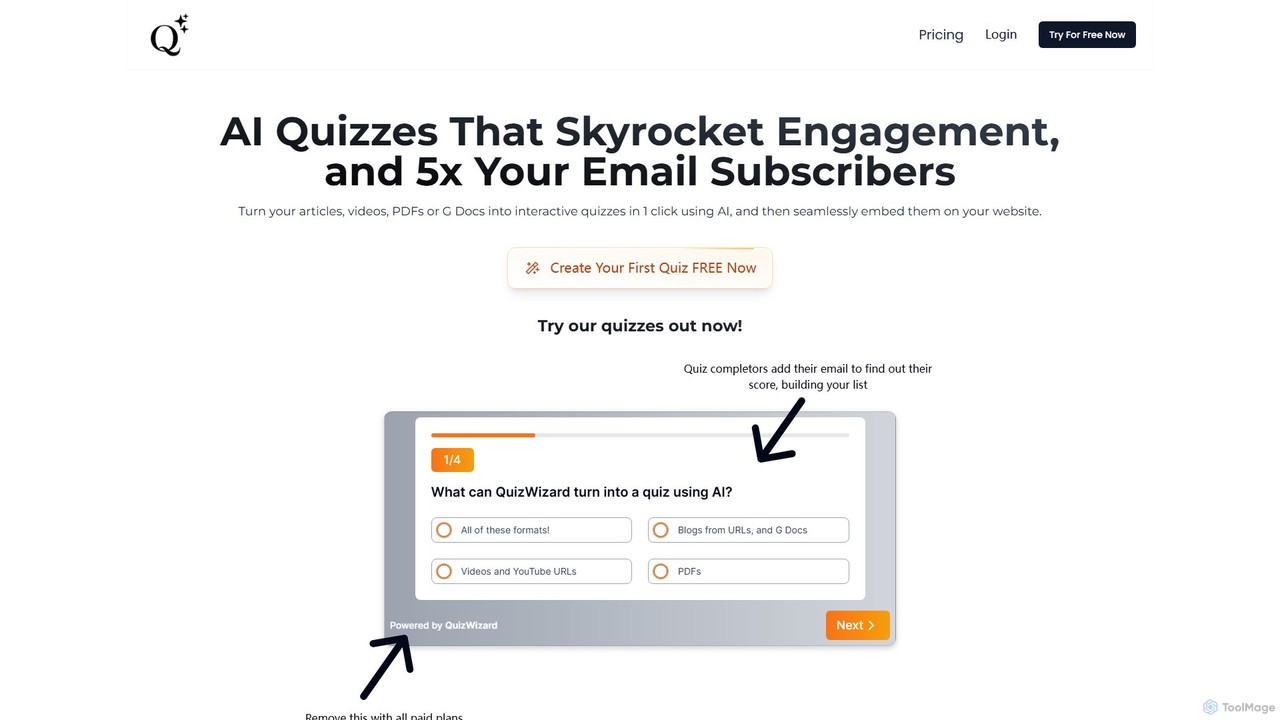
QuizWizard is an AI-powered quiz generator that transforms your articles, videos, PDFs, and Google Docs into interactive quizzes with a single click. It's designed to boost website engagement, capture email leads more effectively than pop-ups, and drive social media traffic.

Engagement
Visits 4.9KFavorites 154Likes 154

About Engagement

AI Engagement tools are a specialized category of software designed to transform static content into interactive experiences. They leverage AI to generate elements like quizzes, polls, and dynamic conversations, directly involving the audience with the material. This approach helps creators increase user dwell time, gather valuable feedback, and build stronger community relationships. These tools often analyze user responses in real-time to personalize subsequent interactions and provide deep insights into audience preferences.

Core Features

  • Interactive Content Generation: Automatically creates quizzes, polls, surveys, and calculators to capture user attention.
  • Automated Comment Analysis: Uses NLP to analyze sentiment, identify key topics, and filter spam in user comments.
  • Personalized Response Automation: Drafts context-aware replies to comments and messages, fostering community interaction.
  • Dynamic Content Adaptation: Modifies content or pathways in real-time based on user input and behavior.
  • Engagement Analytics: Provides detailed dashboards to track participation rates, completion funnels, and user choices.

Use Cases

These tools are widely used by digital marketers to create lead-generating quizzes, educators to build interactive lessons, and social media managers to boost community participation. E-commerce businesses also use them to create interactive product finders or gather customer feedback through dynamic surveys, guiding users and increasing conversion rates.

How to Choose

When selecting an AI Engagement tool, evaluate the types of interactive content it supports (e.g., quizzes, polls, interactive video). Consider its integration capabilities with your existing platforms, such as your website CMS or social media accounts. Assess the depth of its analytics and its ability to segment audiences based on their responses. Finally, review the pricing model, which may be based on views, participants, or features.

Engagement use cases

1

Create Interactive Quizzes for Lead Generation

A digital marketing team for a SaaS company needs to capture qualified leads. They use an AI Engagement tool to create a "What's Your Productivity Score?" quiz. The AI helps generate relevant questions and branching logic based on user answers. Visitors who complete the quiz enter their email to see their personalized results, providing the company with segmented, high-intent leads. The tool's analytics show which questions have the highest drop-off rates, allowing for continuous optimization of the quiz for better performance.

2

Boost Social Media Post Interaction

A social media manager for a fashion brand wants to increase comments and shares. They use an AI tool to automatically generate engaging poll questions and "This or That" story templates related to their new collection. The tool also analyzes incoming comments for common questions and positive sentiment, helping the manager prioritize which comments to reply to personally. This fosters a more active community and makes content planning more data-driven by revealing what the audience is most interested in.

3

Develop Interactive Training Modules

A corporate trainer is tasked with creating more effective online compliance training. Instead of a passive video, they use an AI Engagement tool to embed multiple-choice questions, scenario-based decisions, and knowledge checks directly into the training material. The AI can adapt the difficulty or provide remedial content based on the employee's answers, ensuring comprehension. This transforms a mandatory task into an active learning experience, which has been shown to improve knowledge retention and completion rates significantly.

4

Automate Audience Feedback Collection

A podcaster wants to gather listener feedback for future episode topics without manually sifting through hundreds of emails. They embed an AI-powered interactive survey on their website. The tool uses natural language processing to understand open-ended text responses, automatically categorizing suggestions and identifying recurring themes like "more expert interviews" or "deep dive on topic X". This saves the creator hours of manual analysis and provides clear, data-driven insights into what their audience wants to hear next.

5

Personalize the E-commerce Shopping Experience

An e-commerce site for skincare products aims to guide visitors to the right items. They implement an AI-driven product finder quiz. The tool asks users about their skin type, concerns, and lifestyle. Based on the answers, it presents a personalized list of recommended products. This interactive experience not only increases conversion rates by reducing choice paralysis but also educates the customer, building trust and increasing the average order value as customers feel more confident in their purchases.

6

Enhance Live Stream and Webinar Participation

A financial advisor hosting a live webinar on retirement planning wants to keep the audience engaged. They use an AI tool to run real-time polls and Q&A sessions. The tool can instantly visualize poll results on screen and use AI to group similar audience questions, allowing the host to address the most common concerns efficiently. This makes the webinar feel more like a two-way conversation than a one-way lecture, increasing viewer satisfaction and the likelihood they will attend future events.

Engagement FAQ

What are AI Engagement tools?

AI Engagement tools are applications that create interactive elements within digital content to increase audience participation. Unlike tools for creating static content, they use AI to generate quizzes, polls, interactive videos, and personalized response systems. Their primary goal is to convert passive viewers into active participants, which helps improve metrics like dwell time, lead generation, and community loyalty.

How do I choose the right AI Engagement tool?

To choose the right tool, consider these factors:

  • Content Types: Ensure it supports the formats you need (e.g., quizzes, polls, calculators, interactive video).
  • Integration: Check if it connects smoothly with your website, social media, or email marketing platforms.
  • Analytics: Look for detailed reporting on user responses, completion rates, and behavior patterns.
  • Customization: Evaluate the level of control you have over the design and branding to match your style.
  • Scalability: Consider if the pricing and features can grow with your audience size and needs.
What's the difference between AI Engagement tools and standard survey tools?

Standard survey tools are primarily for linear data collection. AI Engagement tools are broader; they focus on creating a two-way, interactive experience. Key differences include:

  • Logic & Personalization: AI tools often use complex branching logic and can personalize the user's path in real-time based on their answers.
  • Content Variety: They go beyond simple questions to include gamified quizzes, calculators, and interactive video overlays.
  • Analysis: AI engagement platforms often include advanced NLP to analyze open-ended text for sentiment and themes, whereas standard survey tools may only provide raw text data.
Who are the primary users of AI Engagement tools?

These tools are used by a wide range of professionals. Marketers use them for lead generation and brand awareness. Content creators and social media managers use them to boost audience interaction and grow their community. Educators and corporate trainers use them to create interactive learning materials. E-commerce businesses also leverage them for personalized product recommendations and customer feedback collection, improving the overall shopping experience.

Can these tools analyze user comments and feedback automatically?

Yes, many advanced AI Engagement tools include features for automated analysis. They use Natural Language Processing (NLP) to understand user-generated content like comments or open-ended survey responses. This allows them to identify sentiment (positive, negative, neutral), extract key topics and keywords, and group similar feedback. This capability saves significant time compared to manual analysis and provides actionable insights from qualitative data.