Content Creation Best in category 1 results Enrichment AI Tool

Popular AI tools in the Enrichment field of Content Creation include Tako, etc., helping you quickly improve efficiency.

Tako

Tako

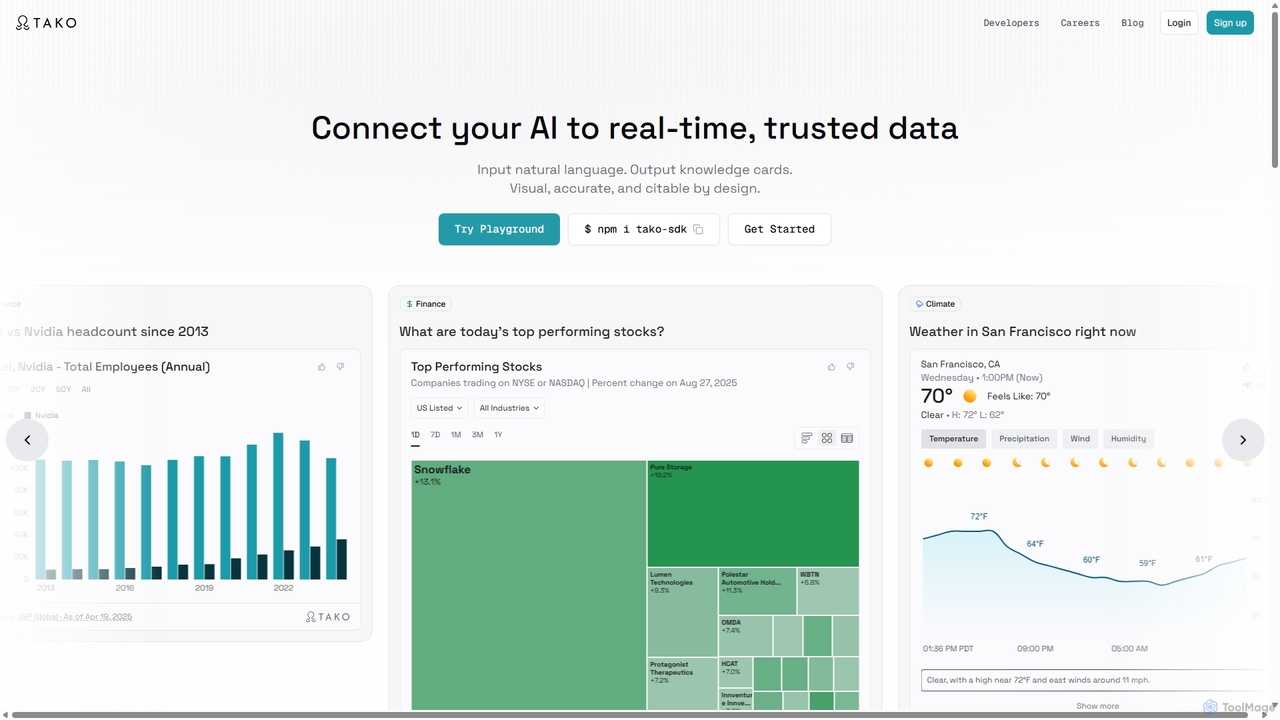
Tako is an AI knowledge engine that connects applications and agents to real-time, trusted data. It transforms natural …

3.4K

About Enrichment

AI Enrichment tools are a class of software designed to automatically add value, context, and detail to existing content or data. These tools leverage large language models (LLMs) and knowledge bases to analyze a given input—such as a sentence, keyword, or data point—and generate supplementary information, expand on ideas, or rephrase text for greater depth. Their primary value lies in transforming basic information into comprehensive, contextually rich material, significantly accelerating the content creation process. Unlike pure generators, enrichment tools focus on enhancing and building upon an existing foundation, ensuring the output remains aligned with the original intent while elevating its quality and completeness.

Core Features

  • Content Expansion: Elaborates on a short phrase or sentence to create a detailed, well-structured paragraph.
  • Contextual Data Appending: Adds relevant facts, statistics, or related information to a piece of text to increase its authority.
  • Style and Tone Enhancement: Rewrites existing text to match a specific tone (e.g., professional, casual, persuasive) without losing the core message.
  • Keyword Elaboration: Expands a single keyword into a list of related topics, questions, or structural outline points for an article.
  • Data Augmentation: Enriches contact or company data with public information like job titles or industry specifics for personalization.

Use Cases

AI Enrichment tools are widely used by content marketers, SEO specialists, copywriters, and sales teams. For instance, a marketer can turn a simple product feature list into compelling marketing copy, or an SEO specialist can expand a target keyword into a comprehensive content brief. They are ideal for workflows that involve scaling content production by improving existing drafts or ideas rather than starting from scratch.

How to Choose

When selecting an AI Enrichment tool, consider its specific function: does it excel at text expansion, data appending, or style enhancement? Evaluate its integration capabilities with your existing platforms like a CMS or CRM. Assess the factual accuracy of the data it provides and whether it can cite sources. Finally, check the level of customization available to control the tone, length, and style of the enriched output to ensure it aligns with your brand voice.

EnrichmentUse Cases

1

Expand Blog Post Outlines into First Drafts

A content writer has a detailed outline for a blog post, including H2 headings and key bullet points. Instead of writing each section from scratch, they input each bullet point into an AI Enrichment tool. The tool expands each point into a full, coherent paragraph that elaborates on the initial idea, maintaining a consistent tone. This process transforms a 200-word outline into a 1,500-word first draft in minutes, allowing the writer to focus their time on editing, fact-checking, and adding their unique insights rather than on basic composition.

2

Enhance E-commerce Product Descriptions

An e-commerce manager has a spreadsheet with hundreds of new products, each with only basic specifications (e.g., 'Cotton T-shirt, Blue, Size M'). They use an AI Enrichment tool integrated with their product management system. For each product, the tool takes the basic specs and generates a compelling, SEO-friendly description. It highlights benefits like 'breathable, soft-touch cotton for all-day comfort' and adds a call-to-action. This automates the creation of unique, persuasive copy, improving product page conversion rates and SEO rankings without manual copywriting for each item.

3

Generate Comprehensive SEO Content Briefs

An SEO strategist needs to create content briefs for a team of freelance writers. They input a primary keyword, such as 'best project management software', into an AI Enrichment tool. The tool enriches this single keyword by generating a detailed brief that includes: a list of semantically related LSI keywords, a 'People Also Ask' section with common user questions, competitor headline analysis, and a suggested article structure with H2 and H3 headings. This provides writers with a clear, data-driven roadmap, ensuring the final content is comprehensive, targets user intent, and is optimized for search engines.

4

Repurpose Short-Form Content for Multiple Platforms

A social media manager posts a concise 280-character update on Twitter. To maximize reach, they use an AI Enrichment tool to repurpose this content. The tool expands the original tweet into a more detailed 150-word post for LinkedIn, adding a professional tone and relevant hashtags. It also generates a slightly longer, more engaging version for a Facebook post, perhaps by adding a question to encourage comments. This allows for efficient content adaptation across different social media channels, tailoring the message to each platform's audience and format without significant extra effort.

5

Augment Market Research with Contextual Data

A market analyst is researching a new industry trend. They have collected several key articles and reports but need to add more depth. They use an AI Enrichment tool to process their summary notes. The tool scans the text and automatically appends relevant data, such as recent market size statistics from reputable sources, quotes from industry leaders on the topic, and links to related academic studies. This transforms a simple summary into a data-rich intelligence brief, saving hours of manual research and providing a more comprehensive foundation for strategic decision-making.

6

Personalize Sales Outreach Emails at Scale

A sales development representative (SDR) has a list of 500 leads with just names and company domains. To increase reply rates, they need to personalize their outreach. They upload the list to an AI Enrichment tool. The tool appends data like the lead's job title, the company's industry, and recent company news or funding announcements. The SDR can then use this enriched data to create highly personalized email templates, referencing the lead's specific role or a recent company achievement. This approach significantly boosts engagement compared to generic, non-personalized mass emails.

EnrichmentFrequently Asked Questions