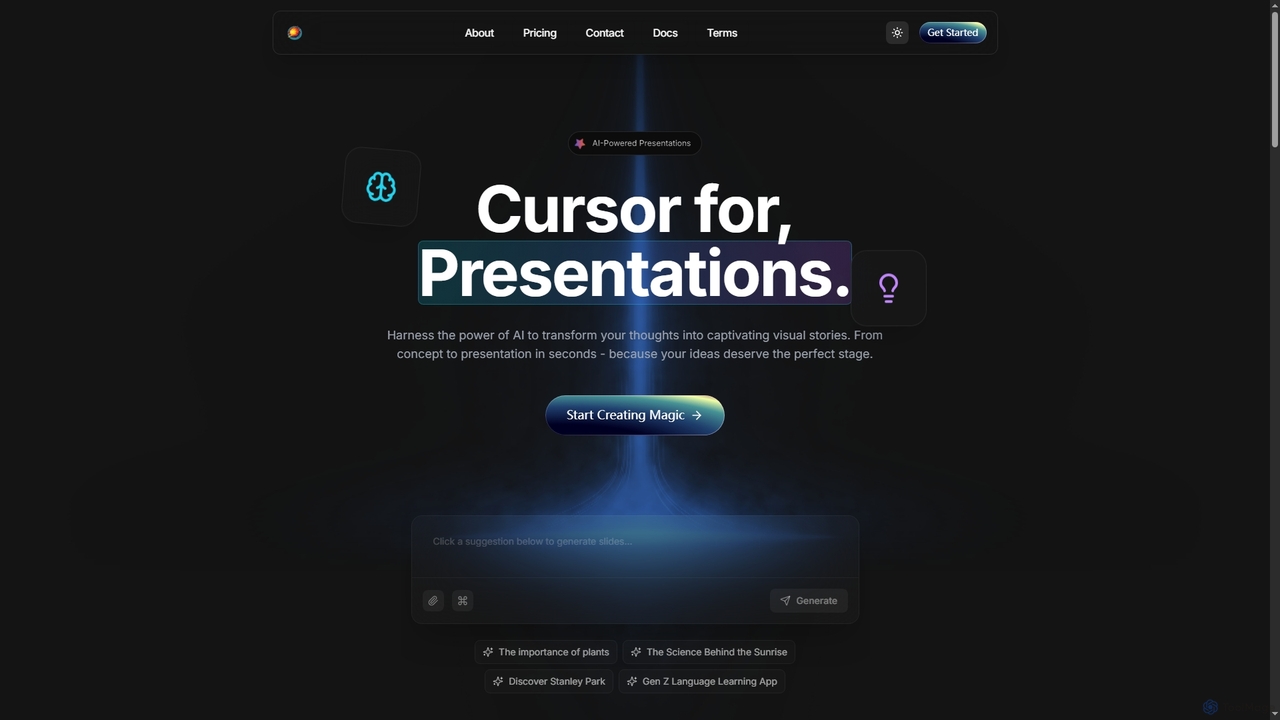
Generation tools are AI-powered applications designed to autonomously create new content, forming a crucial part of the content creation workflow. These tools leverage advanced algorithms, such as large language models (LLMs) and generative adversarial networks (GANs), to produce diverse outputs. They significantly accelerate content production, reduce manual effort, and unlock new creative possibilities across various media types.
Core Features
- Text Generation: Automatically drafts articles, summaries, marketing copy, scripts, and code snippets from prompts.
- Image Generation: Creates unique images, illustrations, concept art, and photorealistic visuals based on textual descriptions.
- Audio Generation: Produces original music, voiceovers, sound effects, and podcasts with customizable parameters.
- Video Generation: Transforms text, images, or audio into dynamic video clips, animations, and presentations.
- Code Generation: Assists developers by generating boilerplate code, functions, or entire scripts based on natural language requests.
Applicable Scenarios
Content creators use generation tools to overcome creative blocks and scale output. Marketers leverage them for rapid campaign asset creation, from ad copy to social media visuals. Developers utilize these tools to accelerate coding tasks and generate test data. Businesses employ them for personalized communication, automated report generation, and multimedia content production.
How to Choose
When selecting a generation tool, consider the primary content modality you need (text, image, audio, video, code). Evaluate the quality and customization options for the generated output, including style, tone, and specific parameters. Assess its integration capabilities with existing workflows and platforms, and compare pricing models based on usage and features. Finally, consider the ease of use and the learning curve for your team.