
i18nweb
i18nweb is an AI-powered translation tool designed for developers and content creators. It specializes in translating structured files …
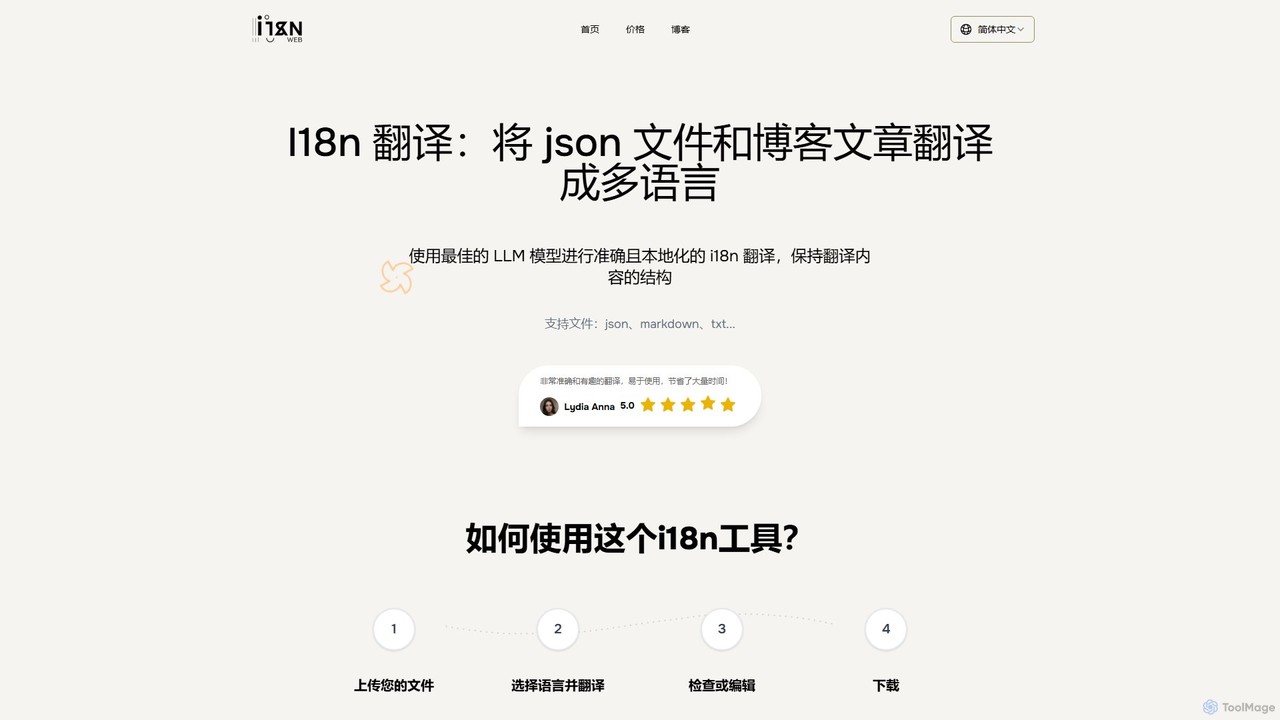
i18nweb is an AI-powered translation tool designed for developers and content creators. It specializes in translating structured files like JSON, Markdown, and TXT into multiple languages while preserving their original format. Using advanced LLM models, it provides accurate, context-aware, and localized translations, streamlining the internationalization (i18n) workflow for websites, apps, and blogs. The platform features a simple upload-translate-edit-download process, making localization efficient and user-friendly.
About Internationalization
AI Internationalization (i18n) tools are a class of software designed to automate the technical preparation of digital products for global audiences. These tools analyze source code and content files to extract translatable text, manage resource files, and integrate with development workflows. Their primary value lies in separating the code from the content, enabling developers to build products that can be easily adapted to different languages and regions without re-engineering. This process is a foundational step in the content creation lifecycle for global products, preceding translation and localization.
Core Features
- Source Text Extraction: Automatically scans codebases (e.g., React, iOS, Android) to find and extract user-facing strings into resource files.
- Resource File Management: Manages various localization file formats like JSON, XLIFF, YAML, or .properties, ensuring consistency across platforms.
- Version Control Integration: Connects with Git repositories (like GitHub, GitLab) to sync text changes automatically within the CI/CD pipeline.
- Context Provisioning: Captures screenshots or metadata to provide translators with visual context, improving translation accuracy.
- Pseudo-localization: Simulates translated text to help developers identify and fix UI layout issues before actual translation begins.
Applicable Scenarios
These tools are essential for software development teams, product managers, and localization managers in tech companies creating SaaS platforms, mobile apps, or websites for a global market. They are used during the development cycle to build a 'global-ready' product architecture, ensuring new features can be launched simultaneously in multiple languages.
Selection Criteria
When choosing an AI Internationalization tool, consider its compatibility with your specific programming frameworks and platforms. Evaluate its integration capabilities with your existing development tools, such as version control systems and design software. Also, assess its collaboration features for developers and translators, and the level of automation it provides for your continuous localization workflow.
InternationalizationUse Cases
Automating UI Text Extraction for a New Mobile App
A mobile development team is building a new application for both iOS and Android and plans a global launch. Instead of manually tracking every piece of text in spreadsheets, they use an AI Internationalization tool. The tool connects to their GitHub repository, scans the Swift and Kotlin code, automatically extracts all user-facing strings, and organizes them into standardized resource files. This process saves dozens of hours of manual work and eliminates the risk of missing hardcoded text, ensuring the app is technically ready for translation from day one.
Implementing Continuous Localization in a SaaS Platform
A SaaS company follows an agile development methodology with daily code pushes. To keep all language versions of their platform synchronized, they integrate an i18n tool into their CI/CD pipeline. When a developer merges a feature branch containing new UI text, a webhook automatically triggers the i18n tool. The tool extracts the new strings, sends them to their translation management system (TMS) via an API, and once translated, automatically creates a pull request with the updated language files. This automates the entire localization process, enabling continuous delivery of features across all supported languages.
Proactively Testing UI Layouts with Pseudo-localization
A front-end development team is preparing for a major UI redesign. Before sending thousands of strings to translators, they use the pseudo-localization feature of their i18n tool. The feature automatically replaces all English text in the application with expanded, accented, and non-Latin characters. By running the app in this state, they can immediately identify UI components where text overflows, breaks the layout, or doesn't render correctly. This allows them to fix all internationalization-related UI bugs proactively, saving significant time and cost compared to fixing them after translation is complete.
Providing Visual Context to Translators for Higher Accuracy
A localization manager notices that translations for short UI strings like 'Save' or 'Profile' are often ambiguous. To solve this, the team uses an i18n tool that automatically captures screenshots of the application's UI and links them to the corresponding text strings. When translators work on the content, they can see exactly where and how each string is used in the application. This visual context eliminates guesswork, reduces back-and-forth questions, and significantly improves the quality and appropriateness of the final translations, leading to a better user experience in all languages.
Centralizing Translation Keys Across Web and Mobile Platforms
A company maintains a web application, an iOS app, and an Android app, all sharing similar features. Previously, each platform managed its own set of translation keys, leading to inconsistencies and redundant translation costs. By adopting a central AI Internationalization platform, they create a single source of truth for all text strings. The platform manages keys and provides different file formats (.json for web, .strings for iOS, .xml for Android) from the same source. This ensures consistent terminology across all products, streamlines updates, and reduces translation workload by reusing translations for identical strings.
Preparing Game Content for a Global Release
A game development studio is preparing to launch their new title in multiple languages simultaneously. The game contains thousands of lines of dialogue, item descriptions, and UI text embedded in their game engine. They use a specialized i18n tool that integrates with their engine to parse game files, extract all localizable text, and handle complex features like pluralization and gender variables. The tool packages the content for their localization vendor and later re-integrates the translated text. This technical preparation is crucial for a smooth localization process, ensuring the game provides an immersive experience for players worldwide.