
ToolMage
Sign in

Best 1 Podcast Generation AI tools for Content Creation

Popular Podcast Generation AI tools in Content Creation include AutoContent API, helping you work more efficiently.

AutoContent API
Paid

AutoContent API

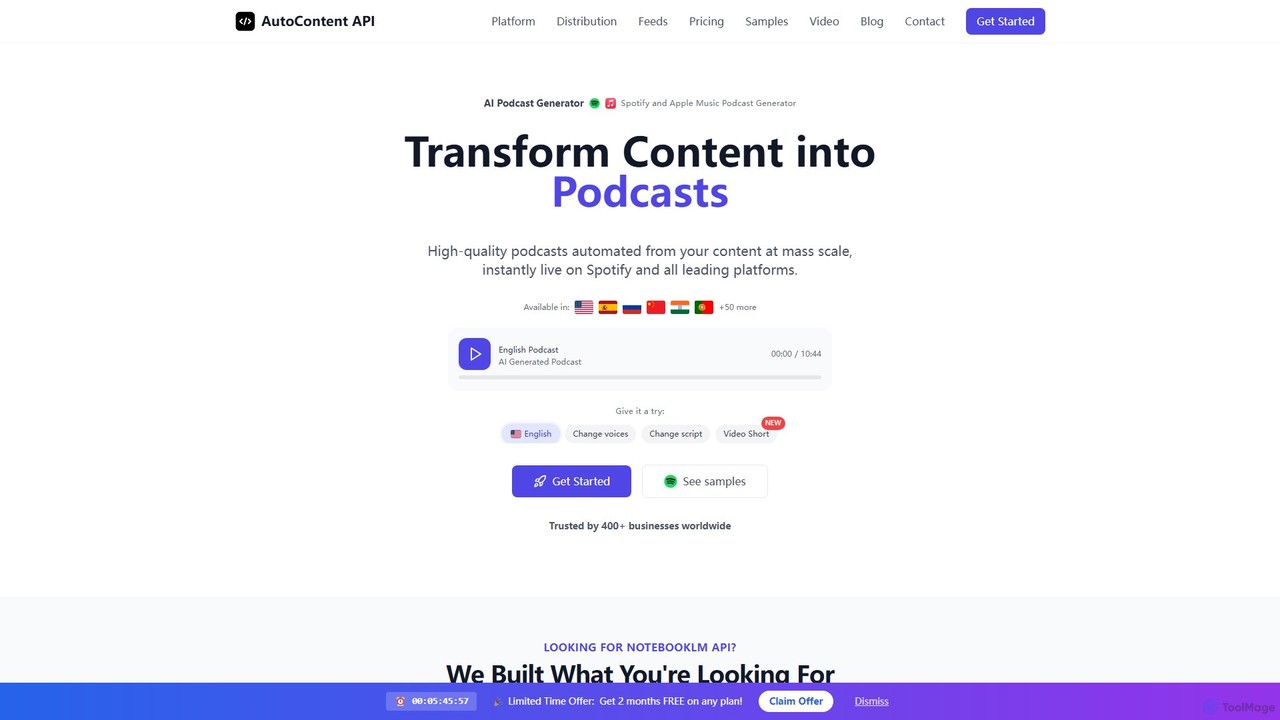
AutoContent API is a powerful platform for developers and content creators to automatically generate high-quality podcasts and video shorts from any content source. It transforms text, URLs, and even real-time social media feeds into engaging audio and video, with features like voice cloning, multi-language support, and direct distribution to Spotify and Apple Music. It's a comprehensive solution for scaling content production.

Podcast Generation
Visits 27.4KFavorites 125Likes 115

About Podcast Generation

AI Podcast Generation tools are a specialized category of software designed to automate the creation of audio episodes from text. These platforms leverage advanced text-to-speech (TTS) and voice synthesis technologies to transform written scripts into natural-sounding, multi-speaker audio content. They streamline the entire production workflow, from voice-over recording to audio mastering, enabling creators to produce high-quality podcasts without microphones or complex editing software. This makes podcasting more accessible and scalable for marketers, educators, and businesses.

Core Features

  • AI Voice Synthesis: Generates realistic, human-like voices with various emotions, accents, and styles from text inputs.
  • Multi-Speaker Dialogue: Allows assigning distinct AI voices to different speakers within a single script to create conversational formats.
  • Automated Audio Mastering: Includes features like background noise reduction, volume leveling, and equalization to ensure professional sound quality.
  • Content Repurposing: Effortlessly converts existing content like blog posts, articles, or newsletters into engaging podcast episodes.
  • Sound Design Integration: Provides libraries of royalty-free music and sound effects that can be easily added to the audio track.

Use Cases

These tools are widely used by content marketers to repurpose written content for audio platforms, expanding their audience reach. Educational institutions and corporate trainers utilize them to create accessible learning materials and training modules. Publishers and media companies also employ them to produce daily news briefings or automated audio versions of their articles efficiently.

How to Choose

When selecting an AI Podcast Generation tool, evaluate the quality and naturalness of the AI voices. Consider the range of available languages, accents, and emotional tones. Assess the platform's audio editing capabilities, such as the ability to adjust pacing and pronunciation. Finally, review the pricing model—whether it's based on character count, audio duration, or a subscription—and check for integration options with your existing content platforms.

Podcast Generation use cases

1

Repurpose Blog Posts into Audio Episodes

A content marketer for a tech company needs to expand their brand's reach beyond written articles. Instead of investing heavily in recording equipment and voice talent, they use an AI Podcast Generation tool. They simply paste the URL of a popular blog post into the tool. The AI analyzes the text, assigns a suitable narrator voice, and generates a complete audio episode in minutes. They can then add custom intro music and publish the podcast on platforms like Spotify and Apple Podcasts, reaching a new audience during their commute or workout.

2

Create Internal Corporate Training Modules

An L&D manager is tasked with creating engaging training materials for a global, remote workforce. To cater to different learning styles and busy schedules, they decide to produce an internal podcast series on company policies and leadership skills. Using an AI Podcast Generation tool, they convert their training documents into audio lessons. They assign different voices for scenario-based dialogues, making the content more dynamic. This allows employees to learn on the go, increasing training completion rates and knowledge retention without the high cost of studio production.

3

Automate Daily News Briefing Podcasts

A digital media publisher wants to offer a daily audio news summary to its subscribers. The fast-paced news cycle makes manual recording and editing impractical. They integrate an AI Podcast Generation API into their content management system (CMS). Each morning, the system automatically pulls the top headlines and article summaries, formats them into a script, and sends it to the AI tool. A consistent, branded AI voice generates the 5-minute briefing, which is then automatically published to their website and podcast feeds before the morning commute begins.

4

Produce Multilingual Versions of a Podcast

A successful podcast creator wants to enter new international markets but lacks the resources to hire voice actors for multiple languages. They use an AI Podcast Generation platform that supports a wide range of languages and accents. After translating their original English script into Spanish and German, they upload the new scripts to the tool. They select high-quality, localized AI voices for each language, ensuring the tone and style match the original. This allows them to launch multiple international versions of their show simultaneously, significantly growing their global listenership.

5

Generate Audiobooks from E-book Manuscripts

An independent author wants to release an audiobook version of their new novel but has a limited budget. Professional narration and production can be costly and time-consuming. They opt for an AI Podcast Generation tool with advanced voice synthesis capabilities. They upload their manuscript chapter by chapter, assigning a main narrator voice and different voices for key characters in dialogue. The tool allows them to fine-tune pronunciations of unique names and adjust the pacing for dramatic effect, resulting in a polished audiobook ready for distribution on platforms like Audible.

6

Create Accessible Audio for Educational Content

An online learning platform aims to make its courses compliant with accessibility standards (WCAG). To support students with visual impairments or reading disabilities, they need to provide audio versions of all text-based lessons and articles. They use an AI Podcast Generation tool to systematically convert their entire library of educational materials into clear, easy-to-understand audio files. This not only improves accessibility but also provides a flexible learning option for all students who prefer auditory learning, enhancing the overall user experience.

Podcast Generation FAQ

What is AI Podcast Generation?

AI Podcast Generation refers to using artificial intelligence tools to automatically create complete podcast episodes from text. Unlike simple text-to-speech, these platforms offer advanced features like multiple realistic AI voices for creating dialogues, automated audio mastering for professional sound quality, and integration of music and sound effects. The primary goal is to streamline the entire podcast production process, making it possible to generate high-quality audio content quickly and without traditional recording equipment.

How do I choose the right AI Podcast Generation tool?

To choose the right tool, consider these four key factors:

  • Voice Quality & Variety: Listen to voice samples. Do they sound natural and engaging? Does the platform offer a wide range of voices, accents, and languages to fit your brand?
  • Editing & Customization: Check if you can adjust pacing, pronunciation, and emphasis. The ability to add music, sound effects, and manage multiple speakers is also crucial.
  • Workflow & Integration: Does the tool fit your process? Look for features like article-to-podcast conversion, API access for automation, or integrations with content platforms.
  • Pricing Model: Compare costs. Some tools charge per character or minute of audio, while others offer monthly subscriptions with generous limits. Choose a model that aligns with your production volume.
What's the difference between AI Podcast Generation and standard Text-to-Speech (TTS)?

The main difference lies in scope and features. Standard Text-to-Speech (TTS) tools focus on one core task: converting text into a single voiceover. AI Podcast Generation platforms are complete production suites. They build upon advanced TTS with features specifically for podcasting, such as multi-speaker dialogue creation, automatic sound mixing with music and effects, AI-powered audio mastering (noise reduction, equalization), and content repurposing workflows. In short, TTS creates a voice track, while AI Podcast Generation creates a finished, publish-ready podcast episode.

Can AI-generated podcasts sound truly human?

Modern AI voice synthesis has made significant advancements, producing voices that are often indistinguishable from human narration for many listeners. Top-tier tools use generative AI models that capture subtle nuances like intonation, emotion, and pacing. While they may not yet perfectly replicate the dynamic performance of a professional voice actor in complex dramatic scenes, they excel at creating clear, natural-sounding narration for content like news briefings, educational material, and article readings. The quality is constantly improving, making AI a viable option for professional-grade audio production.

Who should use AI Podcast Generation tools?

AI Podcast Generation tools are ideal for a wide range of users. Content creators and marketers can use them to repurpose blog posts and articles into audio format, expanding their audience. Businesses and corporate trainers can efficiently create internal podcasts for training and communication. Media publishers can automate the production of daily news summaries. Additionally, educators and authors can create accessible audio versions of their materials or even produce entire audiobooks without the high cost of a recording studio.