
ToolMage
Sign in

Best 1 Prompt Engineering AI tools for Content Creation

Popular Prompt Engineering AI tools in Content Creation include SoraShorts, helping you work more efficiently.

SoraShorts
Freemium

SoraShorts

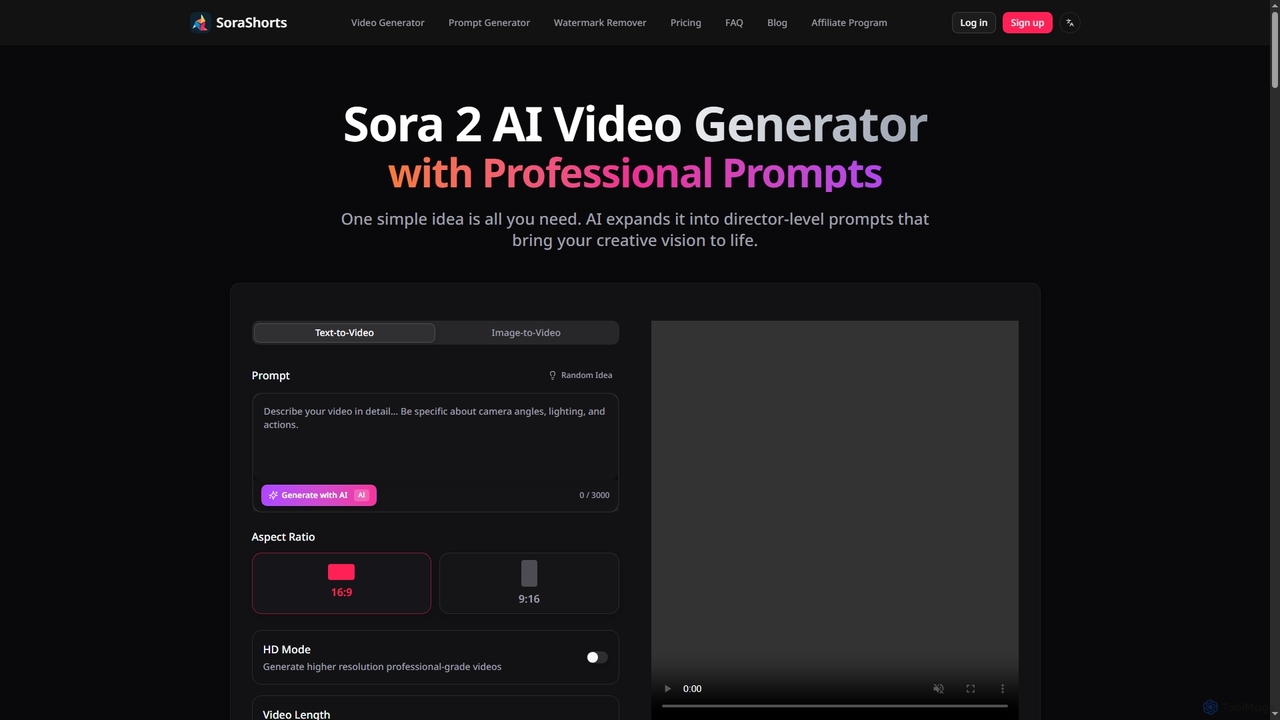
SoraShorts is an advanced AI video generator powered by Sora 2 technology, enabling users to transform text or images into professional, watermark-free videos. It includes a sophisticated prompt generator for cinematic quality and a tool to remove watermarks, streamlining video creation for various commercial and creative needs.

Prompt Engineering
Visits 5.2KFavorites 128Likes 121

About Prompt Engineering

Prompt Engineering tools are specialized AI-powered platforms designed to help users craft, optimize, and manage effective prompts for generative AI models. These tools leverage structured frameworks and iterative testing to enhance the quality and relevance of AI-generated content. They are essential for maximizing the output of large language models and other generative AI, streamlining workflows in content creation, development, and research.

Core Features

  • Prompt Templates: Pre-designed structures for common tasks and content types.
  • Prompt Optimization: AI-driven suggestions to improve prompt clarity, specificity, and effectiveness.
  • Version Control: Track changes, iterations, and performance of different prompt versions.
  • Prompt Libraries: Centralized repositories for managing, categorizing, and sharing effective prompts.
  • Performance Analytics: Evaluate AI model responses based on prompt variations and desired outcomes.

Applicable Scenarios

Content creators, marketers, and developers utilize Prompt Engineering tools to refine their interactions with AI. For instance, a marketing team can use these tools to generate diverse ad copy variations by systematically testing different prompt structures. Developers might employ them to fine-tune prompts for specific code generation tasks, ensuring more accurate and relevant outputs from AI assistants.

How to Choose

When selecting Prompt Engineering tools, consider the types of AI models you frequently use and the complexity of your prompting needs. Look for features like robust prompt management, integration with your existing AI platforms, and advanced optimization capabilities. Evaluate the ease of use, community support, and whether it offers version control and collaboration features for team environments.

Featured tool rankings

Prompt Engineering use cases

1

Optimizing Marketing Copy Generation

Marketers use prompt engineering tools to systematically test and refine prompts for generating high-performing ad headlines, social media posts, and email subject lines. By iterating on prompt structures and parameters, they can achieve higher engagement rates and conversion metrics from AI-generated content, saving significant time compared to manual copywriting and A/B testing.

2

Developing AI Chatbot Personalities

AI developers and UX designers employ prompt engineering to define and maintain consistent personalities and conversational styles for chatbots. They craft detailed system prompts and few-shot examples to ensure the chatbot responds appropriately, maintaining brand voice and user experience across diverse interactions, leading to more engaging and trustworthy AI agents.

3

Enhancing Code Generation Accuracy

Software engineers leverage prompt engineering to create precise prompts for AI code assistants, guiding them to generate specific functions, debug code, or refactor existing solutions. This involves providing clear constraints, desired output formats, and relevant context to minimize errors and improve code quality, significantly accelerating development cycles and reducing manual coding effort.

4

Streamlining Research and Summarization

Researchers and analysts utilize prompt engineering to extract specific information or generate concise summaries from large datasets or documents. By designing prompts that specify desired output formats, key entities, and summarization styles, they can efficiently process information and accelerate knowledge discovery, turning hours of manual review into minutes of AI-assisted analysis.

5

Creating Consistent Storylines for Content

Writers and content strategists use prompt engineering to maintain narrative consistency and character development when generating long-form content or multiple pieces within a series. They define character traits, plot points, and stylistic guidelines in prompts to ensure AI-generated text aligns with the overall creative vision, reducing the need for extensive post-generation editing.

6

Generating Diverse Image Concepts

Digital artists and designers apply prompt engineering to explore a wide range of visual concepts from AI image generators. They experiment with descriptive keywords, artistic styles, and negative prompts to guide the AI in producing unique and high-quality visual assets for projects like concept art, illustrations, or marketing visuals, significantly speeding up the ideation phase.

Prompt Engineering FAQ

What is Prompt Engineering?

Prompt Engineering is the practice of designing, refining, and optimizing inputs (prompts) for AI models to achieve desired and precise outputs. It involves understanding how AI models interpret instructions and crafting prompts that effectively guide their generation process. This discipline is crucial for unlocking the full potential of generative AI in various applications, from content creation to data analysis.

How does Prompt Engineering differ from regular AI interaction?

Regular AI interaction often involves simple, direct questions, while Prompt Engineering is a more deliberate and structured approach. It focuses on crafting detailed, context-rich prompts with specific instructions, constraints, and examples to elicit highly targeted and high-quality responses from AI models, moving beyond basic queries to strategic guidance for complex tasks.

Who benefits most from using Prompt Engineering tools?

Content creators, marketers, developers, researchers, and anyone regularly interacting with generative AI models benefit significantly. These tools help them overcome common challenges like vague outputs, hallucinations, or inconsistent results, enabling them to achieve more precise, creative, and efficient AI-driven workflows, ultimately saving time and improving output quality.

What are the key components of an effective prompt?

An effective prompt typically includes clear instructions, specific context, examples (few-shot learning), desired output format, and constraints or negative instructions. Clarity and specificity are paramount, ensuring the AI understands the task and avoids generating irrelevant or undesirable content. Iteration and refinement are also key to success, as prompts often require fine-tuning.

How can Prompt Engineering improve content creation?

Prompt Engineering enhances content creation by allowing creators to generate more relevant, consistent, and high-quality text, images, or code. It helps in rapidly prototyping ideas, maintaining brand voice, overcoming writer's block, and automating repetitive content tasks. This leads to more efficient and impactful content production, freeing up human creators to focus on strategic and creative oversight rather than manual execution.