ToolMage
Sign in

Best 2 Rewriting AI tools for Content Creation

Popular Rewriting AI tools in Content Creation include AI Humanizer and Devortix, helping you work more efficiently.

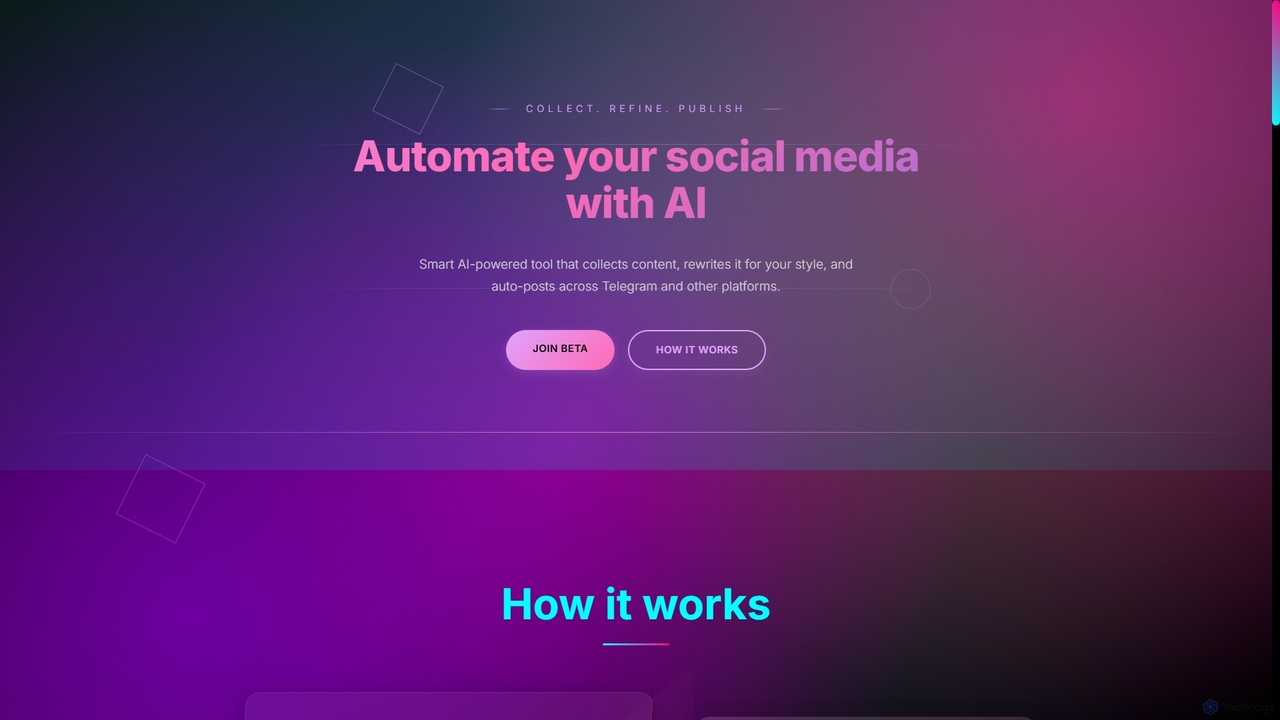
Devortix

Devortix

Devortix is an AI-powered social media automation tool designed for creators and brands. It intelligently collects content, refines it with AI to match your style, adds relevant hashtags and emojis, and then auto-posts across various platforms like Telegram. The tool also provides performance tracking to help users optimize their social media strategy.

Rewriting
Visits 7.3KFavorites 176Likes 178
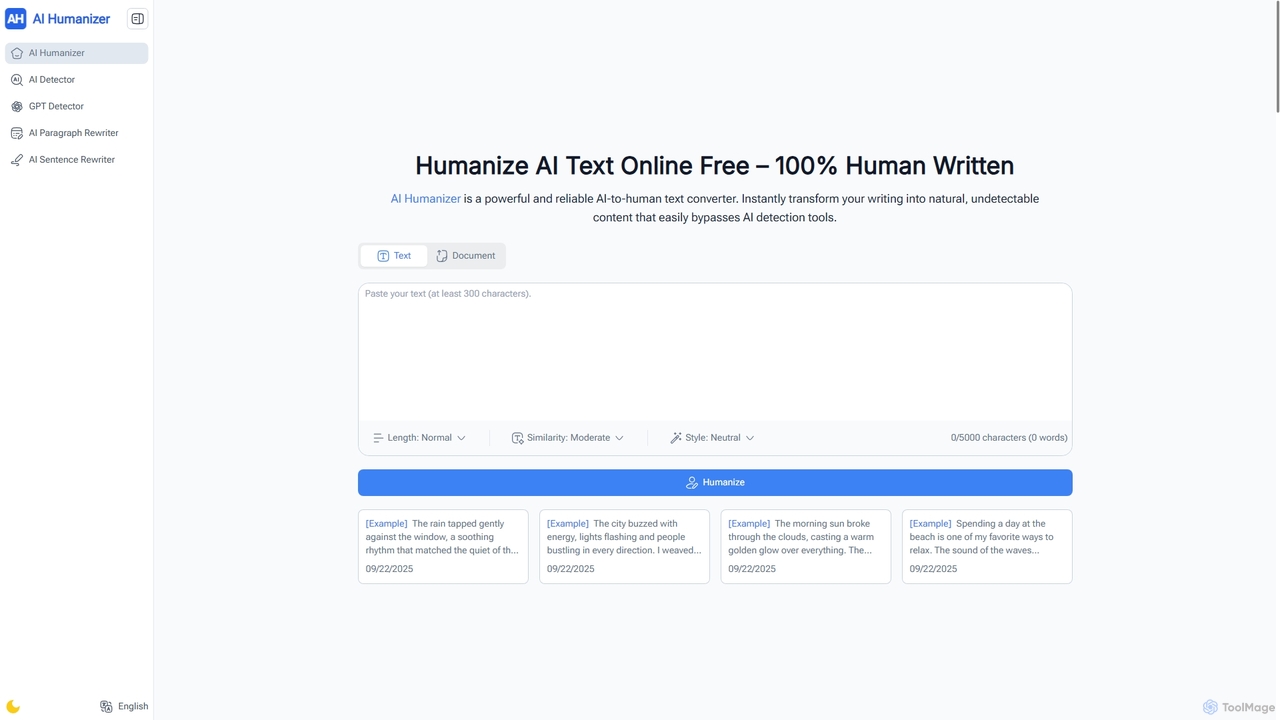
AI Humanizer
Free

AI Humanizer

AI Humanizer is a comprehensive online platform offering a suite of free tools to transform AI-generated text into natural, human-like content, accurately detect AI writing, and rewrite sentences or paragraphs in various styles. It helps users bypass AI detection, enhance readability, and maintain authenticity across academic, professional, and creative writing, all without requiring any sign-up or hidden fees.

Ai Detection
Visits 8.1KFavorites 140Likes 137

About Rewriting

Rewriting tools are AI-powered applications designed to transform existing text into new versions while preserving the original meaning. Leveraging advanced natural language processing (NLP) models, these tools can alter sentence structure, vocabulary, tone, and style. They provide significant value by enhancing clarity, adapting content for different audiences, or avoiding plagiarism. This capability is crucial for refining drafts and optimizing content for various platforms.

Core Features

  • Paraphrasing & Synonym Replacement: Automatically rephrases sentences and suggests alternative words to diversify vocabulary.
  • Tone Adjustment: Modifies text to match desired tones, such as formal, informal, persuasive, or academic.
  • Style Transformation: Adapts content to different writing styles, from concise and direct to elaborate and descriptive.
  • Plagiarism Checking Integration: Often includes or integrates with tools to ensure the rewritten content is original and unique.
  • Readability Enhancement: Simplifies complex sentences and improves overall text flow for better audience comprehension.

Applicable Scenarios

Content creators, marketers, students, and professionals frequently use rewriting tools to refine their written work. For instance, a blogger might use them to repurpose an old article for a new platform, or a student could rephrase research notes to avoid accidental plagiarism in an essay. Businesses also leverage these tools to adapt marketing copy for different campaigns or regional audiences.

How to Choose

When selecting a rewriting tool, consider its accuracy in preserving meaning, the range of stylistic and tonal adjustments offered, and its integration capabilities with other writing platforms. Evaluate the output quality for naturalness and grammatical correctness, and check for features like plagiarism detection. Pricing models and the availability of specific language support are also important factors.

Rewriting use cases

1

Repurposing Blog Posts for Social Media

A social media manager needs to adapt a lengthy blog post into several concise, engaging captions for platforms like Twitter, Instagram, and LinkedIn. Rewriting tools help condense key messages, adjust tone for each platform, and generate multiple variations quickly, saving hours of manual rephrasing and ensuring consistent messaging.

2

Enhancing Academic Papers for Clarity

A student or researcher wants to improve the readability and flow of their academic paper without altering the core scientific facts. Rewriting tools can rephrase complex sentences, suggest clearer vocabulary, and restructure paragraphs to enhance coherence, making the paper more accessible to a broader academic audience while maintaining scholarly rigor.

3

Localizing Marketing Copy for Different Regions

A global marketing team needs to adapt a successful English ad campaign for non-English speaking markets, ensuring cultural relevance and linguistic nuance. Rewriting tools assist in translating and then rephrasing the copy to resonate with local audiences, adjusting idioms and cultural references to maximize impact and engagement in each target region.

4

Generating Multiple Product Descriptions for E-commerce

An e-commerce business requires unique and compelling product descriptions for hundreds of items to avoid duplicate content penalties and appeal to diverse customer segments. Rewriting tools can take a base description and generate numerous distinct versions, highlighting different features or benefits, thereby boosting SEO and conversion rates.

5

Refining Email Outreach for Persuasion

A sales professional aims to optimize their cold email outreach sequences to increase open and response rates. Rewriting tools can help refine subject lines, adjust the body text for a more persuasive or empathetic tone, and experiment with different calls to action, leading to more effective communication and better lead generation.

6

Summarizing and Rephrasing Legal Documents

A legal professional needs to simplify complex legal jargon in contracts or briefs for clients who lack legal expertise, or to create concise internal summaries. Rewriting tools can distill dense legal text into plain language, making it understandable without losing critical information, thus improving client communication and internal efficiency.

Rewriting FAQ

What are AI Rewriting Tools?

AI rewriting tools are software applications that use artificial intelligence, specifically natural language processing (NLP), to rephrase existing text. Their primary function is to generate new versions of content that convey the same meaning but with different wording, sentence structures, or styles. They are widely used to enhance clarity, adapt content for various audiences, or ensure originality.

How do AI Rewriting Tools work?

AI rewriting tools typically work by analyzing the input text using advanced NLP algorithms. They identify the core meaning, context, and key phrases. Then, using large language models (LLMs) trained on vast datasets of text, they generate alternative phrasings, synonyms, and sentence structures to produce a new version. Some tools also allow users to specify desired tones or styles for the output.

What are the main benefits of using a Rewriting tool?

The main benefits include saving time on manual rephrasing, improving content originality to avoid plagiarism, enhancing readability and clarity, and adapting content for different platforms or audiences. They are invaluable for content creators, students, and marketers who need to produce high volumes of varied content efficiently while maintaining quality and consistency.

How do Rewriting tools differ from AI Content Generators?

Rewriting tools specifically focus on transforming existing text, preserving its original meaning while altering its presentation. In contrast, AI content generators create new content from scratch based on prompts or keywords, without a pre-existing source text to rephrase. While both use AI, their starting points and primary objectives are distinct: transformation versus creation.

Can Rewriting tools help avoid plagiarism?

Yes, rewriting tools can significantly help in avoiding unintentional plagiarism by rephrasing borrowed content into original text. However, users must still exercise caution and review the output to ensure it accurately reflects the source material's intent and is properly cited if necessary. Relying solely on a tool without human oversight is not recommended for academic or professional integrity.