ToolMage
Sign in

Best 2 Script Writing AI tools for Content Creation

Popular Script Writing AI tools in Content Creation include bigvu and Fanfuel, helping you work more efficiently.

bigvu
Freemium

bigvu

bigvu is an all-in-one AI video creation platform that combines a teleprompter, AI script generator, automatic captions, and a powerful video editor. It enables users to script, shoot, style, and share professional-quality videos 10x faster, with features like AI avatars and text-based editing. Ideal for marketing, sales, and content creators.

Script Writing
Visits 270.6KFavorites 113Likes 98
Fanfuel
Paid

Fanfuel

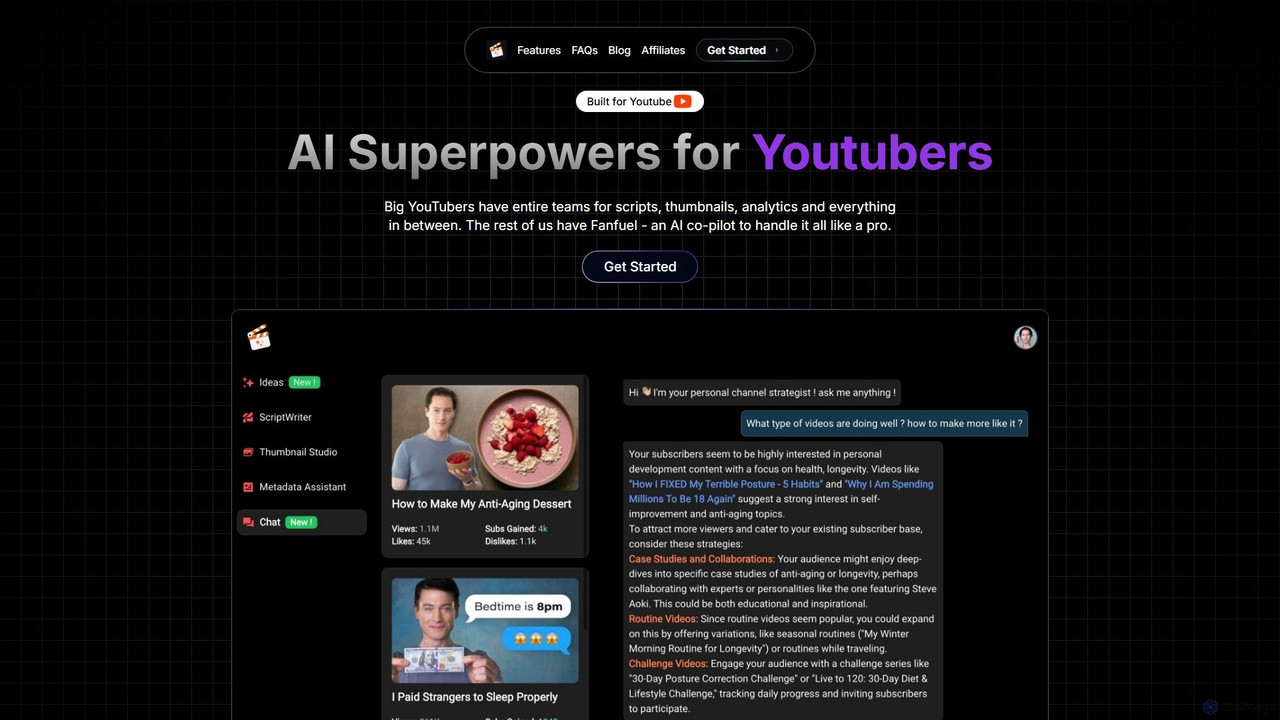
Fanfuel is an AI-powered co-pilot for YouTubers, designed to streamline channel growth. It offers a suite of tools for generating eye-catching thumbnails, writing engaging scripts in any language, optimizing SEO metadata, and simplifying analytics through a chat interface. It's built to give individual creators the capabilities of a full production team.

Script Writing
Visits 7.6KFavorites 109Likes 112

About Script Writing

Script Writing tools are AI-powered applications designed to assist in generating, refining, and structuring written content specifically for narrative media. These tools leverage advanced natural language processing (NLP) and generative AI models to help users overcome creative blocks and streamline the script development process. They are invaluable for crafting compelling stories, realistic dialogues, and detailed scene descriptions across various formats, significantly enhancing efficiency for creators. This specialized category within content creation focuses on the unique demands of storytelling and structured narrative.

Core Features

  • Plot & Outline Generation: Assists in brainstorming story arcs, scene sequences, and overall narrative structures.
  • Character Dialogue Creation: Generates realistic and in-character conversations, adapting to specific personas and emotional tones.
  • Scene Description & Setting: Crafts vivid descriptions of environments, actions, and visual cues for various media.
  • Industry-Standard Formatting: Automatically formats scripts (e.g., screenplay, stage play, teleplay) to professional standards.
  • Idea & Prompt Generation: Provides creative prompts and suggestions to spark inspiration and overcome writer's block.

Applicable Scenarios

Script Writing tools are widely adopted by screenwriters, playwrights, game developers, podcasters, and content creators for digital platforms. They are used to accelerate the initial drafting phase of a film script, develop intricate dialogue trees for video games, or quickly outline a series of short video scripts for social media campaigns. These tools help maintain narrative consistency and ensure adherence to specific genre conventions.

How to Choose

When selecting an AI script writing tool, consider its genre specialization (e.g., drama, comedy, sci-fi), the depth of its character development features, and its ability to handle complex plot structures. Evaluate its formatting capabilities to ensure it meets industry standards for your specific medium. Also, assess the flexibility of its editing interface and its integration potential with other creative software, alongside pricing models and community support for ongoing development.


Featured tool rankings

Script Writing use cases

1

Generate First Drafts for Film Screenplays

A screenwriter, facing a tight deadline, inputs their story synopsis, character profiles, and key plot points into an AI script writing tool. The tool then generates a preliminary draft of the screenplay, including scene headings, action descriptions, and initial dialogue. This significantly reduces the time spent on initial conceptualization and formatting, allowing the writer to focus on refining the narrative and character development, potentially cutting weeks off the drafting process.

2

Develop Dialogue for Video Game NPCs

A game designer needs to create hundreds of unique dialogue lines for various non-player characters (NPCs) in an open-world RPG. Using an AI script writing tool, they input character archetypes, lore, and specific quest contexts. The AI generates diverse dialogue options, ranging from casual greetings to quest-specific hints and emotional responses, ensuring consistency with the game's narrative and character personalities. This automates a labor-intensive task, allowing designers to enrich the game world with more interactive and believable NPC interactions.

3

Outline and Script Podcast Episodes

A podcast creator regularly produces episodes on complex topics and struggles with structuring content and writing engaging host dialogue. By using an AI script writing tool, they input the episode's main theme, key discussion points, and desired tone. The AI generates a detailed episode outline, including segment transitions, suggested questions for guests, and compelling opening/closing remarks. This ensures a coherent flow and helps the host deliver a polished, professional podcast, saving hours in preparation time per episode.

4

Craft Short Video Scripts for Social Media

A social media marketer needs to produce daily short video content for various platforms (TikTok, Instagram Reels) to promote new products. They use an AI script writing tool to input product features, target audience, and desired call-to-action. The AI quickly generates multiple script variations, complete with suggested visuals, on-screen text, and engaging hooks, tailored for short-form video. This enables the marketer to maintain a consistent content pipeline and test different creative approaches efficiently, boosting engagement rates.

5

Refine and Optimize Stage Play Dialogues

A playwright has completed a draft of a stage play but feels certain dialogues lack impact or character authenticity. They feed sections of the script into an AI script writing tool, specifying character motivations and desired emotional arcs. The AI analyzes the dialogue and suggests alternative phrasing, pacing adjustments, and even new lines that enhance dramatic tension or comedic timing. This iterative refinement process helps the playwright polish their work, ensuring each line resonates with the audience and strengthens the overall theatrical experience.

6

Generate Story Concepts for Graphic Novels

A graphic novel artist is struggling to develop compelling story concepts and character backstories for their next project. They use an AI script writing tool to input genre preferences, thematic elements, and visual style ideas. The AI generates unique plot outlines, character arcs, and even short scene descriptions that can be translated into visual panels. This helps the artist overcome creative blocks, providing a solid narrative foundation upon which to build their visual storytelling, accelerating the pre-production phase significantly.

Script Writing FAQ

What are AI Script Writing tools?

AI Script Writing tools are specialized software applications that use artificial intelligence to assist in the creation and refinement of scripts for various media. They leverage natural language processing and generative AI to help users brainstorm ideas, develop plotlines, craft dialogues, and format their scripts. These tools are designed to streamline the narrative development process, offering creative suggestions and automating tedious formatting tasks for screenwriters, playwrights, and content creators.

How do AI Script Writing tools differ from general AI writing assistants?

While general AI writing assistants focus on broad content generation like articles or emails, AI Script Writing tools are specifically tailored for structured narrative formats. They offer specialized features such as industry-standard script formatting (e.g., screenplay, stage play), character-specific dialogue generation, plot outlining, and scene description capabilities. Their algorithms are trained on vast datasets of scripts, enabling them to understand and replicate narrative conventions, pacing, and dramatic structure, which generic tools typically lack.

What are the key benefits of using AI for script writing?

Using AI for script writing offers several key benefits. It significantly accelerates the initial drafting process, helping writers overcome writer's block and generate ideas quickly. AI tools ensure consistent formatting according to industry standards, saving valuable time. They can also assist in developing character voices, creating diverse dialogue options, and suggesting plot twists, enhancing creative output. Ultimately, AI tools boost productivity, allowing writers to focus more on refining their artistic vision rather than repetitive tasks.

How to choose the right AI Script Writing tool for my project?

Choosing the right AI script writing tool involves evaluating several factors. First, consider the specific medium (film, stage, game, podcast) and genre you're working on, as some tools specialize. Look for features like robust plot generation, nuanced character dialogue capabilities, and adherence to industry-standard formatting. Assess the tool's flexibility for human editing, integration with other software, and its learning curve. Finally, compare pricing models, user reviews, and the quality of customer support to find a solution that aligns with your budget and workflow.

Can AI Script Writing tools replace human screenwriters?

AI Script Writing tools are powerful assistants, but they are not designed to replace human screenwriters. While AI excels at generating text, automating formatting, and providing creative prompts, it lacks the nuanced understanding of human emotion, cultural context, and original artistic vision that defines truly compelling storytelling. Human writers bring unique life experiences, empathy, and a distinct voice to their work. AI tools serve to augment human creativity, handling repetitive tasks and offering suggestions, allowing writers to focus on the deeper, more complex aspects of narrative development and emotional resonance.