Content Creation Best in category 1 results Text Processing AI Tool

Popular AI tools in the Text Processing field of Content Creation include FreeToolz, etc., helping you quickly improve efficiency.

Free
FreeToolz

FreeToolz

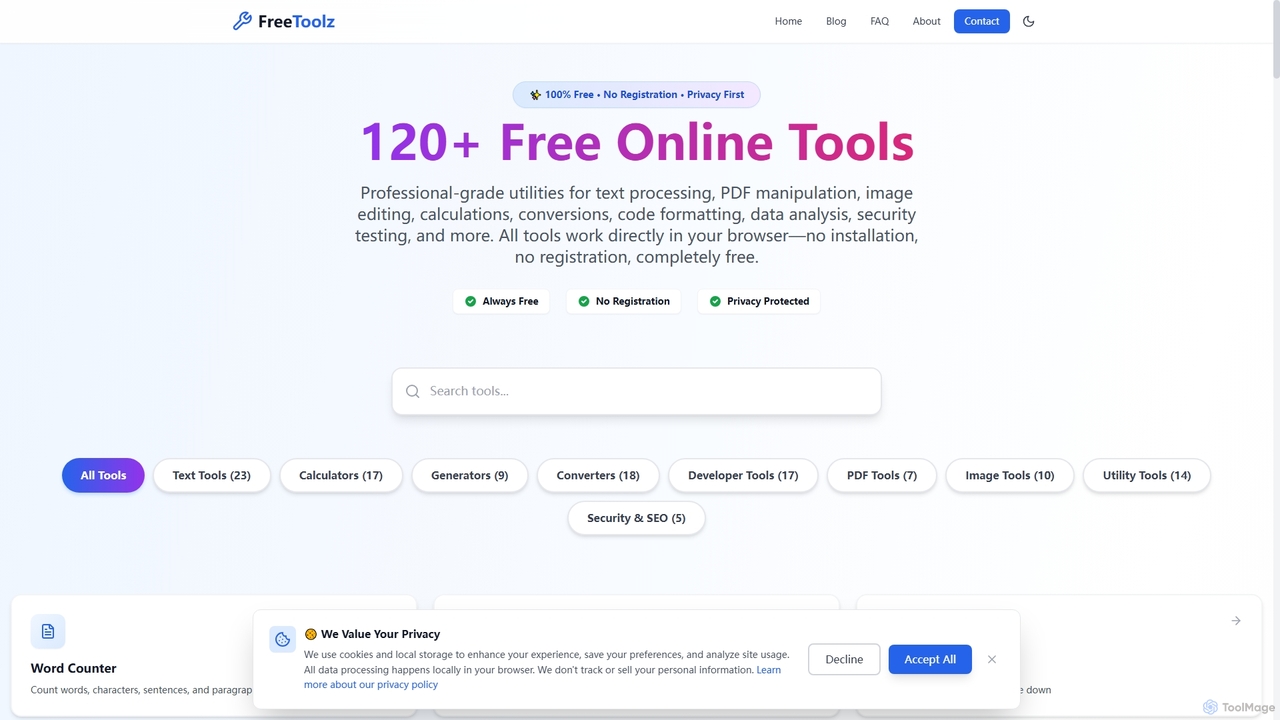
FreeToolz offers a comprehensive suite of over 120 professional-grade online tools for various tasks, including text processing, PDF …

2.1K

About Text Processing

Text Processing tools are AI-powered applications designed to analyze, modify, and generate textual content, playing a crucial role within the broader field of content creation. These tools leverage advanced Natural Language Processing (NLP) and machine learning algorithms to understand, interpret, and manipulate human language. They enable users to streamline various writing tasks, enhance content quality, and automate repetitive text-based operations. From refining grammar to extracting key information, Text Processing AI significantly boosts efficiency and accuracy in handling diverse textual data.

Core Features

  • Grammar and Style Correction: Automatically identifies and corrects grammatical errors, spelling mistakes, and suggests stylistic improvements for clarity and conciseness.
  • Text Summarization: Condenses long documents or articles into shorter, coherent summaries, highlighting key information and main ideas.
  • Content Generation and Rewriting: Creates new text based on prompts or rewrites existing content to improve readability, tone, or to avoid plagiarism.
  • Sentiment Analysis: Analyzes text to determine the emotional tone, attitude, or sentiment expressed, useful for customer feedback or market research.
  • Entity Recognition and Extraction: Identifies and extracts specific entities like names, organizations, locations, and dates from unstructured text.

Applicable Scenarios

Content creators, marketers, researchers, and customer service professionals widely utilize text processing AI. For instance, a marketing team might use these tools to optimize ad copy for better engagement, while a researcher could quickly summarize academic papers to identify relevant information. Customer support centers employ sentiment analysis to gauge customer satisfaction from feedback, and writers use grammar checkers to polish their manuscripts before publication.

How to Choose

When selecting a Text Processing AI tool, consider its specific functionalities (e.g., summarization vs. generation), the accuracy and language support of its NLP models, and its integration capabilities with existing workflows or platforms. Evaluate the pricing structure, scalability for your volume of text, and the user interface's ease of use. Additionally, assess the tool's ability to handle diverse text formats and its data privacy policies.

Text ProcessingUse Cases

1

Optimizing Marketing Copy for Engagement

Marketing specialists use text processing AI to analyze and refine advertising slogans, social media posts, and website content. By leveraging sentiment analysis and readability scores, they can identify phrases that resonate best with target audiences, ensuring messages are clear, persuasive, and emotionally impactful, ultimately leading to higher conversion rates and brand engagement.

2

Automating Document Summarization for Research

Researchers and analysts frequently deal with vast amounts of textual data, such as academic papers, reports, and news articles. Text summarization tools automatically condense these lengthy documents into concise overviews, extracting key findings and arguments. This allows professionals to quickly grasp the core content, saving significant time in literature reviews and information gathering.

3

Enhancing Customer Service Response Quality

Customer support teams utilize text processing AI to improve the quality and consistency of their responses. Tools can check grammar, spelling, and tone in real-time as agents type, ensuring professional and empathetic communication. Furthermore, AI can suggest relevant knowledge base articles or pre-written snippets based on customer inquiries, speeding up resolution times and improving customer satisfaction.

4

Streamlining Legal Document Review

Legal professionals face the challenge of reviewing extensive contracts, agreements, and case files. Text processing AI assists by performing entity recognition to quickly identify key parties, dates, and clauses, and by highlighting potentially problematic language or inconsistencies. This significantly reduces manual review time, enhances accuracy, and helps in risk assessment during due diligence processes.

5

Personalizing Educational Content Delivery

Educators and e-learning platforms employ text processing AI to adapt learning materials to individual student needs. By analyzing student writing samples or responses, AI can identify areas where a student struggles with grammar, vocabulary, or comprehension. It can then generate personalized exercises, provide targeted feedback, or rephrase complex explanations to match the student's proficiency level, fostering more effective learning.

6

Generating Diverse Content Variations for SEO

SEO specialists and content creators use text processing AI to generate multiple variations of articles, product descriptions, or meta tags from a single source. This helps in creating unique content for different platforms or A/B testing, improving keyword density, and avoiding duplicate content penalties. The AI can rephrase sentences, substitute synonyms, and adjust sentence structures while maintaining the original meaning, boosting search engine visibility.

Text ProcessingFrequently Asked Questions