ToolMage
Sign in

Best 3 Translation AI tools for Content Creation

Popular Translation AI tools in Content Creation include BookTranslate.ai, VoiceClone-AI, and Zoki, helping you work more efficiently.

Zoki

Zoki

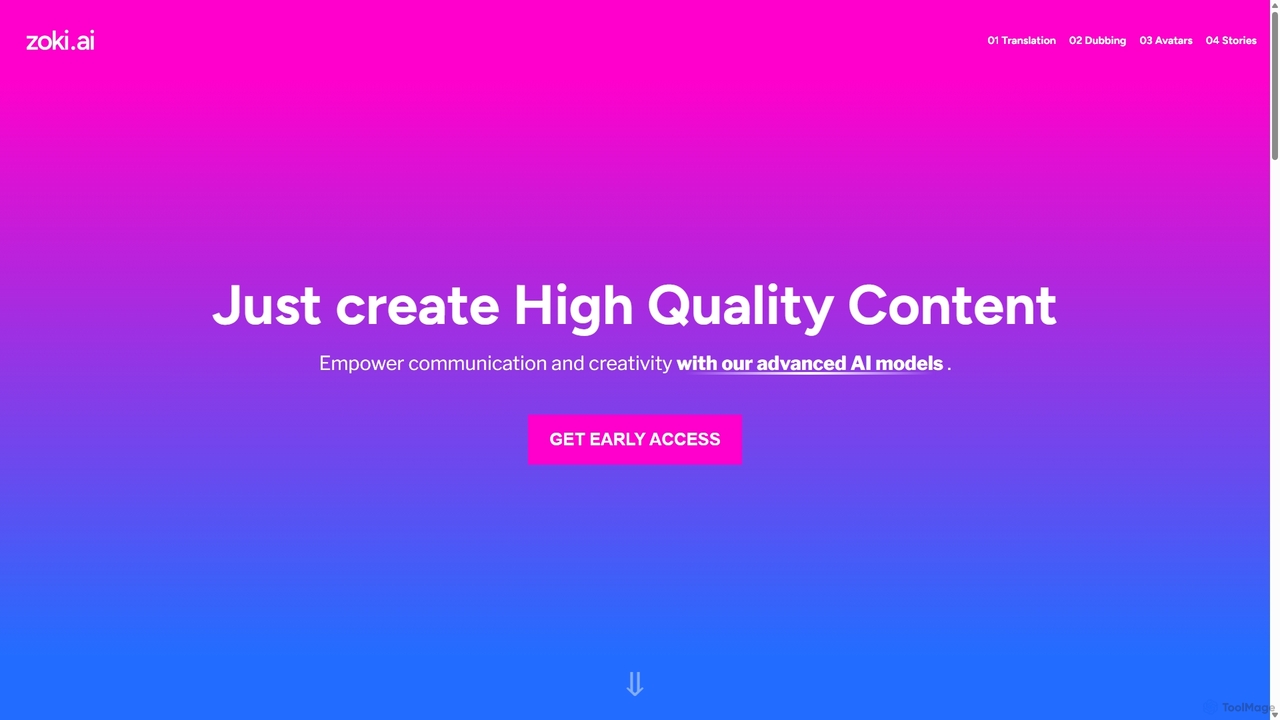
Zoki is an advanced AI platform for content creation, enabling users to generate high-quality videos, translations, AI dubbing with lip-sync, and realistic avatars in over 100 languages. Transform simple text or images into engaging stories, digital twins, or fictional characters, streamlining global communication and creative projects.

Dubbing
Visits 4.3KFavorites 132Likes 121
VoiceClone-AI
Paid

VoiceClone-AI

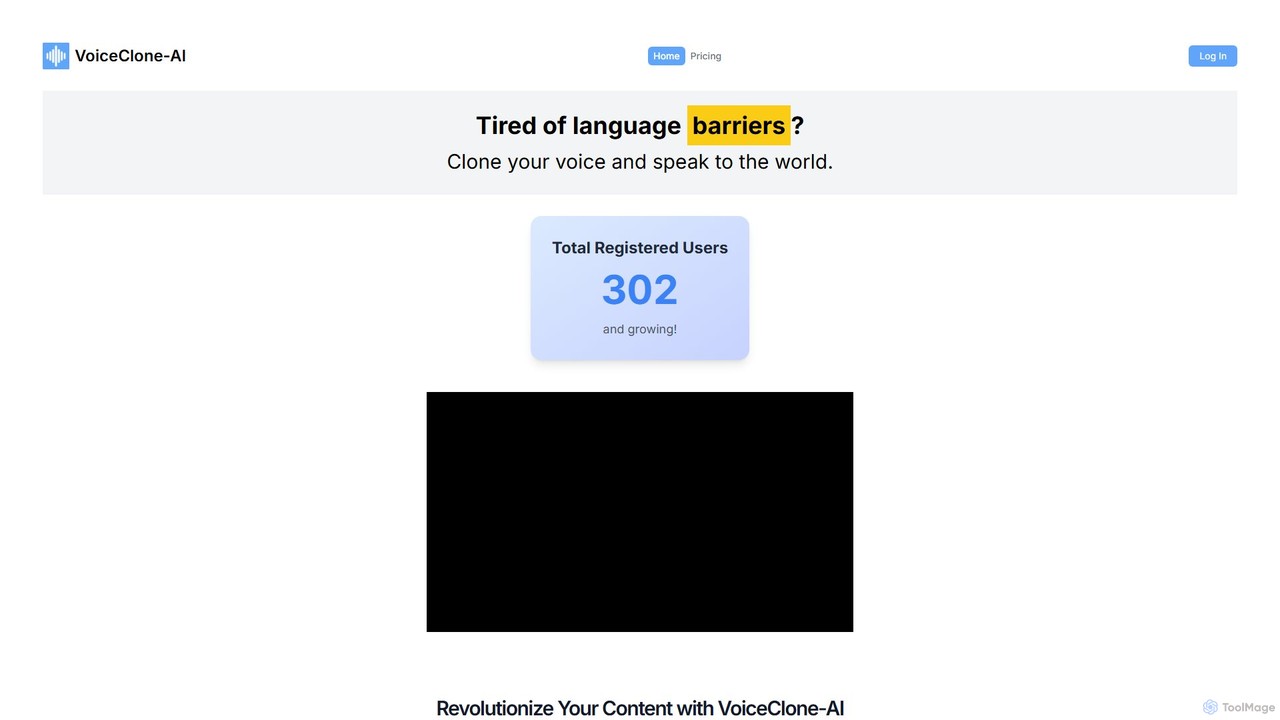
VoiceClone-AI is a powerful AI platform for voice cloning and multilingual dubbing. It enables users to translate video and audio content into 29 languages while preserving the original speaker's voice, emotion, and tone, making global content creation seamless and authentic.

Voice Cloning
Visits 5KFavorites 111Likes 104
BookTranslate.ai
Freemium

BookTranslate.ai

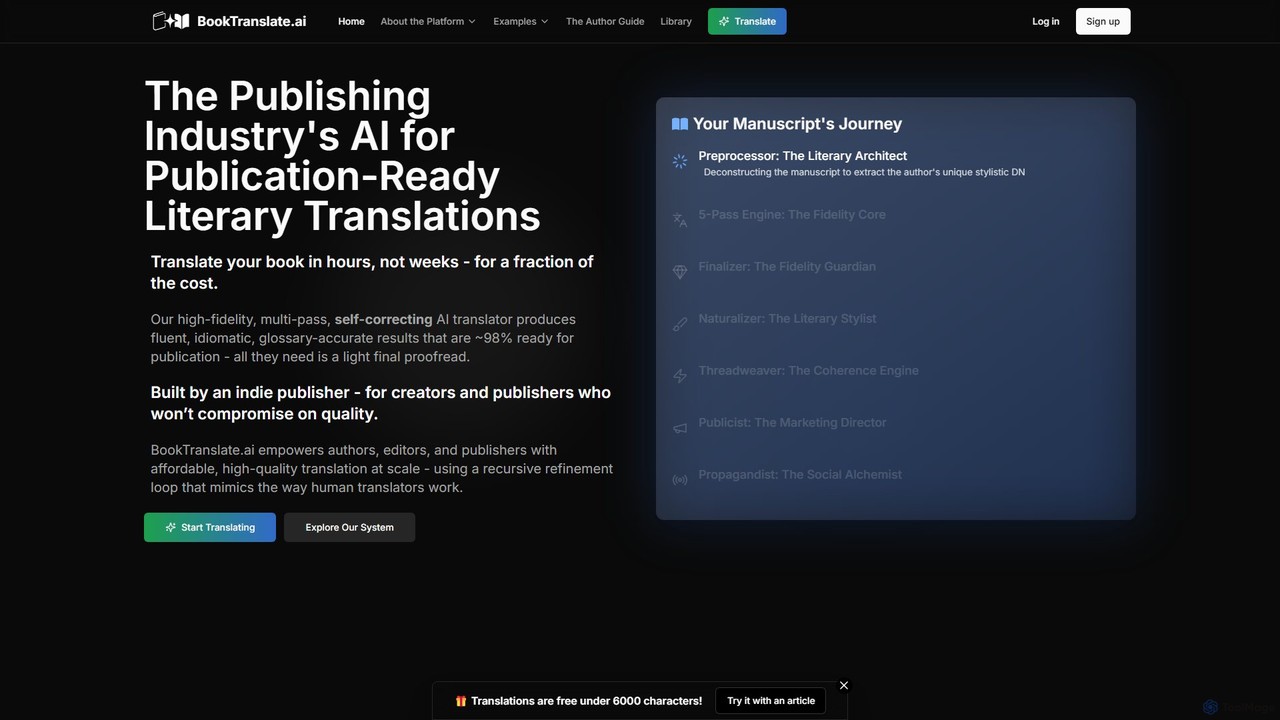
BookTranslate.ai is a specialized AI platform designed for translating full-length books. It uses a sophisticated multi-pass, self-correcting system to produce publication-ready literary translations that are ~98% complete. It preserves the author's unique voice, style, and nuance, offering a faster and more affordable alternative to traditional translation while surpassing the quality of generic AI tools.

Translation
Visits 7.3KFavorites 103Likes 96

About Translation

AI Translation tools are applications that use artificial intelligence, particularly neural machine translation (NMT), to automatically convert text or speech from one language to another. Unlike traditional rule-based systems, these tools leverage deep learning models to understand context, nuance, and idiomatic expressions, resulting in more accurate and natural-sounding translations. They are essential for creating multilingual content, enabling businesses to globalize marketing materials, support international customers, and facilitate cross-border communication. Many tools now offer advanced features like real-time voice translation, document format preservation, and customizable glossaries for brand-specific terminology.

Core Features

  • Neural Machine Translation (NMT): Delivers context-aware and fluent translations that significantly outperform older statistical methods.
  • Real-Time Translation: Instantly translates spoken conversations or live text streams for seamless communication.
  • Document Translation: Preserves the original formatting of files like PDFs, Word documents, and presentations while translating the text.
  • Glossary & Terminology Management: Allows users to define specific terms to ensure brand and industry consistency across all translations.
  • API Integration: Enables developers to embed translation capabilities directly into websites, applications, and business workflows.

Use Cases

These tools are widely used by marketing teams for website and campaign localization, customer support centers for providing multilingual service, and legal or technical professionals for translating large volumes of documents. They are also valuable for content creators aiming to reach a global audience and for multinational corporations facilitating internal communication.

How to Choose

When selecting an AI Translation tool, consider the languages supported and the quality for your specific language pairs. Evaluate its accuracy with your type of content (e.g., technical vs. creative). Assess API availability for integration needs, and review security policies for handling sensitive data. Finally, compare pricing models, such as per-character fees versus monthly subscriptions, to find the best fit for your budget and usage volume.

Featured tool rankings

Translation use cases

1

Localizing Marketing Websites and Blogs

A digital marketer for a growing e-commerce brand needs to expand into European and Asian markets. This requires translating the entire website, including product descriptions, blog posts, and UI elements, into Spanish, German, and Japanese. Using an AI translation tool with API integration, they automate the process. New content added to the CMS is automatically sent for translation and published on the localized site versions. A custom glossary ensures product names and taglines are translated consistently, maintaining brand identity across regions. This approach reduces the time to launch in new markets from months to weeks and cuts content management overhead significantly.

2

Enabling Real-Time Multilingual Customer Support

A customer support agent at a global SaaS company receives a support ticket in Portuguese, a language they don't speak. Their help desk software is integrated with a real-time translation API. The platform instantly translates the customer's query into English for the agent and translates the agent's English reply back into Portuguese for the customer. This seamless, real-time communication allows the company to provide effective support to its global user base without needing to hire native speakers for every language, improving first-response times and customer satisfaction.

3

Translating Legal and Technical Documents in Bulk

A paralegal at a law firm needs to review thousands of pages of discovery documents written in a foreign language for an international case. Manually translating this volume is impractical. They use a secure AI document translation tool that supports PDF and DOCX formats. The tool translates entire batches of files while preserving the original layout, tables, and images. A custom glossary is used for specific legal terminology to ensure accuracy. This allows the legal team to get a rapid, first-pass understanding of the documents in hours, identifying key information for detailed human review and saving weeks of manual effort.

4

Facilitating International Team Collaboration

A project manager leads a distributed team with members in Brazil, Japan, and Germany. They collaborate daily in a shared chat channel. To overcome language barriers, they install a translation bot integrated with their chat platform. The bot automatically detects and translates messages that are not in a user's native language, displaying both the original and translated text. This allows everyone to communicate fluently in their preferred language, leading to faster decision-making, fewer misunderstandings, and a more inclusive and efficient team environment.

5

Generating Subtitles for a Global Video Audience

A video creator wants to increase their channel's reach by adding subtitles in multiple languages. After generating an initial transcript in the source language, they upload the SRT file to an AI translation tool. The tool processes the file, translating the time-coded text into ten different languages within minutes. The creator can then download the translated SRT files and upload them directly to their video platform. This simple workflow makes their content accessible to a vastly larger international audience, significantly boosting views, engagement, and potential for monetization.

6

Accelerating Academic Research and Literature Review

A university researcher is studying a niche topic where many key papers are published in German and Chinese, languages they don't speak. To conduct a comprehensive literature review, they use an AI translation tool with a browser extension. This allows them to instantly translate abstracts and web pages. For full papers, they use the tool's document translation feature. While not a substitute for professional translation for publication, it allows them to quickly grasp the core concepts, methodologies, and findings of foreign-language research, ensuring their work is informed by global academic advancements.

Translation FAQ

What are AI Translation tools?

AI Translation tools are software applications that use artificial intelligence, primarily Neural Machine Translation (NMT), to automatically translate text, speech, and documents between languages. Unlike older systems, they analyze the full context of a sentence to produce more accurate, fluent, and natural-sounding translations. They are widely used for localizing content, enabling multilingual communication, and processing large volumes of text quickly.

How do I choose the right AI Translation tool?

To choose the right tool, consider these key factors:

  • Language Support: Ensure it offers high-quality translation for the specific language pairs you need.
  • Accuracy & Context: Test its performance on your specific type of content (e.g., technical, marketing, casual).
  • Features: Look for essential functions like document format preservation, real-time translation, or glossary management.
  • Integration: If you need to automate workflows, check for robust API access and clear documentation.
  • Security & Privacy: For sensitive information, choose a provider with strong data protection policies.
What is the difference between AI Translation and traditional machine translation?

The main difference is the underlying technology. Traditional machine translation (like Statistical Machine Translation, SMT) analyzed text in smaller chunks and translated based on statistical probabilities. AI Translation, powered by Neural Machine Translation (NMT), uses deep learning networks to process entire sentences at once. This allows NMT to understand grammar, context, and nuance, resulting in translations that are significantly more accurate, fluent, and human-like compared to the often literal and disjointed output of older systems.

Can AI Translation replace human translators?

AI translation is a powerful assistant, but it doesn't fully replace human translators for all tasks. For general understanding, internal communications, or first-pass drafts, AI is highly effective and fast. However, for high-stakes content like legal contracts, creative marketing copy, or literary works, professional human translators are essential. They provide crucial nuance, cultural adaptation, and quality assurance that AI cannot yet consistently replicate. The best approach is often a hybrid one, where AI provides a baseline translation that is then reviewed and refined by a human expert (post-editing).

What are the main functions of AI Translation tools?

The primary functions of AI Translation tools are designed to break down language barriers across different media:

  • Text & Document Translation: Translating plain text or entire files (like PDFs, Word documents) while attempting to preserve the original formatting.
  • Real-Time Speech Translation: Translating spoken conversations, either in-person or online, to facilitate live communication.
  • Website Localization: Translating all elements of a website, from text to buttons, often via API or plugins.
  • Terminology Management: Creating and using custom glossaries to ensure consistent translation of specific brand or industry terms.
  • API Access: Providing an interface for developers to integrate translation features directly into their own applications and services.