ToolMage
Sign in

Best 1 Video Platform for Content Creation

Popular Video Platform in Content Creation include Twitch, helping you work more efficiently.

Twitch
Freemium

Twitch

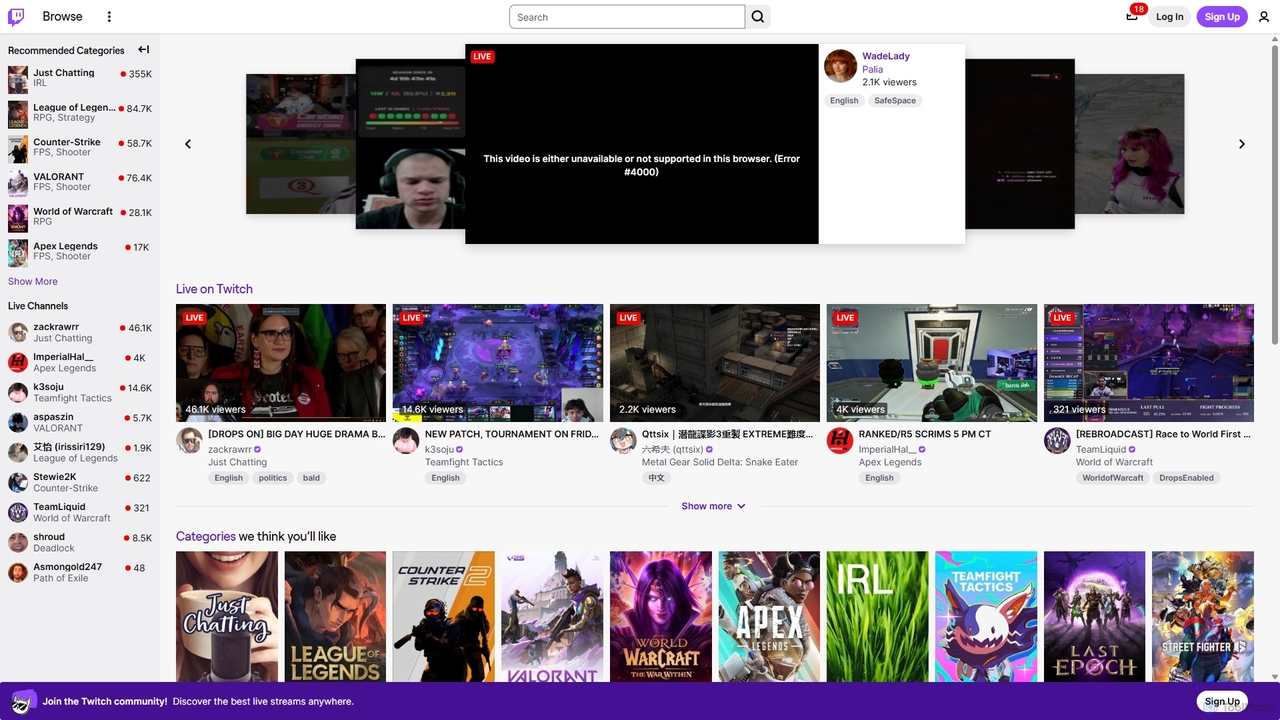
Twitch is the world's leading live streaming platform for gamers, entertainers, musicians, and creative communities. It offers an interactive space for creators to broadcast their content in real-time, engage with a global audience through live chat, and build dedicated communities. Viewers can watch, chat, and support their favorite streamers through subscriptions and virtual goods.

Video Platform
Visits 1BFavorites 136Likes 125

About Video Platform

AI Video Platforms are comprehensive solutions designed to host, manage, analyze, and deliver video content using artificial intelligence. These platforms leverage AI to automate tasks such as transcription, content tagging, and chapter generation, making video libraries easily searchable and accessible. They provide deep analytics on viewer engagement, helping creators and businesses understand audience behavior and optimize content performance. Unlike simple video hosting, AI Video Platforms offer an intelligent infrastructure for video marketing, corporate training, and knowledge management.

Core Features

  • AI-Powered Search: Enables searching for spoken words, on-screen text, or objects within the entire video library.
  • Automated Metadata Generation: Automatically creates transcripts, closed captions, summaries, and content tags to improve discoverability.
  • Advanced Viewer Analytics: Provides detailed insights into engagement, drop-off rates, and viewer interaction hotspots.
  • Intelligent Content Recommendations: Uses AI algorithms to suggest relevant videos to viewers, increasing watch time and engagement.
  • Interactive Video Elements: Allows embedding of calls-to-action, forms, quizzes, and links directly within the video player.

Use Cases

These platforms are widely used by marketing teams for lead generation, corporate trainers for creating searchable onboarding materials, and educational institutions for managing lecture archives. For example, a company can use an AI Video Platform to host its knowledge base, allowing employees to instantly find answers within hours of training videos. Marketers can analyze which parts of a product demo are most re-watched to refine their messaging.

How to Choose

When selecting an AI Video Platform, consider the depth of its analytics and search capabilities. Evaluate its integration options with your existing tools, such as CRM or LMS. Assess the platform's security features, scalability to handle a growing library, and the pricing model, which may be based on storage, bandwidth, or feature tiers.

Featured tool rankings

Video Platform use cases

1

Corporate Training and Knowledge Management

An HR department or a corporate training team uses an AI Video Platform to build a centralized library of training materials, onboarding sessions, and internal communications. New employees can quickly get up to speed by searching for specific terms or questions across all video content, such as 'how to file an expense report'. The AI automatically transcribes every video, making the entire knowledge base searchable. Analytics help trainers identify which videos are most effective and where employees might be struggling, allowing for continuous improvement of the training program.

2

Video Marketing and Lead Generation

A marketing team hosts its product demos, webinars, and customer testimonials on an AI Video Platform. They embed these videos on their website and landing pages. The platform allows them to add interactive elements like lead capture forms or 'book a demo' call-to-action buttons directly within the video player. AI-powered analytics provide a heatmap of viewer engagement, showing exactly which parts of the video are most watched or skipped. This data helps the team refine their marketing message and identify highly engaged prospects for sales follow-up.

3

Online Education and E-Learning Delivery

An online university or e-learning provider uses an AI Video Platform to host its entire catalog of lectures and course materials. The AI's automatic transcription and captioning feature makes all content accessible to students with disabilities and improves SEO for course pages. The platform's powerful in-video search allows students to instantly find specific topics mentioned across hundreds of hours of lectures. Furthermore, interactive quizzes can be embedded within videos to test comprehension, with results feeding directly into a Learning Management System (LMS) for grading.

4

Customer Support Video Knowledge Base

A customer support team creates a library of video tutorials and troubleshooting guides to help users solve common problems. By hosting these on an AI Video Platform, the content becomes a powerful, self-service knowledge base. When a customer has an issue, they can search the video library using natural language (e.g., 'my screen is frozen'). The AI search engine finds the exact moment in a video that addresses their problem. This reduces the number of support tickets, decreases resolution time, and improves overall customer satisfaction by providing instant, visual answers.

5

Internal Communications and Town Halls

A large enterprise records its quarterly town hall meetings and executive announcements for employees across different time zones. Using an AI Video Platform, these recordings are automatically transcribed and translated into multiple languages, ensuring all global employees can access the information. The AI also generates a clickable table of contents based on the meeting agenda, allowing employees to jump directly to the sections most relevant to them. This makes internal communications more efficient, inclusive, and engaging, transforming lengthy recordings into valuable, on-demand assets.

6

Media Asset Management and Archiving

A media production house or broadcaster manages a vast archive of video footage. An AI Video Platform acts as an intelligent Media Asset Management (MAM) system. The AI automatically analyzes and tags all incoming footage, identifying speakers, objects, on-screen text, and even sentiment. This makes the entire archive searchable in granular detail. A producer looking for 'a clip of the CEO speaking positively about Q3 results' can find it in seconds, rather than manually scrubbing through hours of footage. This dramatically accelerates post-production workflows and content repurposing.

Video Platform FAQ

What is an AI Video Platform?

An AI Video Platform is a cloud-based solution for hosting, managing, and analyzing video content, enhanced with artificial intelligence features. Unlike standard video hosting services, it uses AI to make video content searchable, accessible, and more engaging. Key functions include automatic transcription, in-video search for spoken words or objects, and advanced analytics that provide deep insights into viewer behavior.

How does an AI Video Platform differ from YouTube?

While both host videos, they serve different purposes. YouTube is a public, ad-supported social platform designed for broad audience reach and content discovery. An AI Video Platform is a professional tool for businesses and organizations, offering advanced features such as:

  • Enhanced Security: Granular access controls and privacy settings.
  • No Ads or Unrelated Recommendations: A controlled, brand-safe viewing experience.
  • Deep Analytics: Detailed viewer engagement data tied to specific users.
  • Integrations: Connects with business systems like CRMs, marketing automation platforms, and LMS.
  • Advanced Search: AI-powered search inside the video content itself.

Who should use an AI Video Platform?

AI Video Platforms are ideal for any organization that relies on video for communication, training, or marketing and needs to extract more value from its content. This includes:

  • Marketing Teams: To analyze video performance, generate leads, and create interactive content.
  • Corporate Trainers & HR: To build searchable training libraries and track employee progress.
  • Educational Institutions: To manage lecture archives and make them accessible and searchable for students.
  • Customer Support Teams: To create self-service video knowledge bases that reduce support tickets.

What are the key AI features to look for in a Video Platform?

When evaluating an AI Video Platform, focus on features that turn your passive video library into an active, intelligent asset. Key features include:

  • Automatic Transcription and Captioning: For accessibility and making content searchable.
  • In-Video Search: The ability to search for spoken words, on-screen text, and sometimes even objects or faces.
  • Content Intelligence: AI that can automatically generate summaries, chapters, and relevant tags.
  • Viewer Analytics: AI-driven insights that go beyond simple view counts to show engagement heatmaps and drop-off points.
  • Personalized Recommendations: An engine that suggests relevant content to keep viewers engaged.

How do I choose the right AI Video Platform?

Choosing the right platform depends on your specific needs. Consider the following factors:

  • Primary Use Case: Are you focused on marketing, training, or internal communications? Different platforms excel in different areas.
  • Integration Capabilities: Ensure it connects seamlessly with your existing tools like a CRM, LMS, or marketing automation software.
  • Scalability: Can the platform grow with your video library and viewership without a significant increase in cost?
  • Security and Compliance: Check for features like SSO, granular permissions, and compliance with data privacy regulations (e.g., GDPR).
  • Analytics Depth: Evaluate whether the platform provides the level of insight you need to measure ROI and optimize content.