AuraText
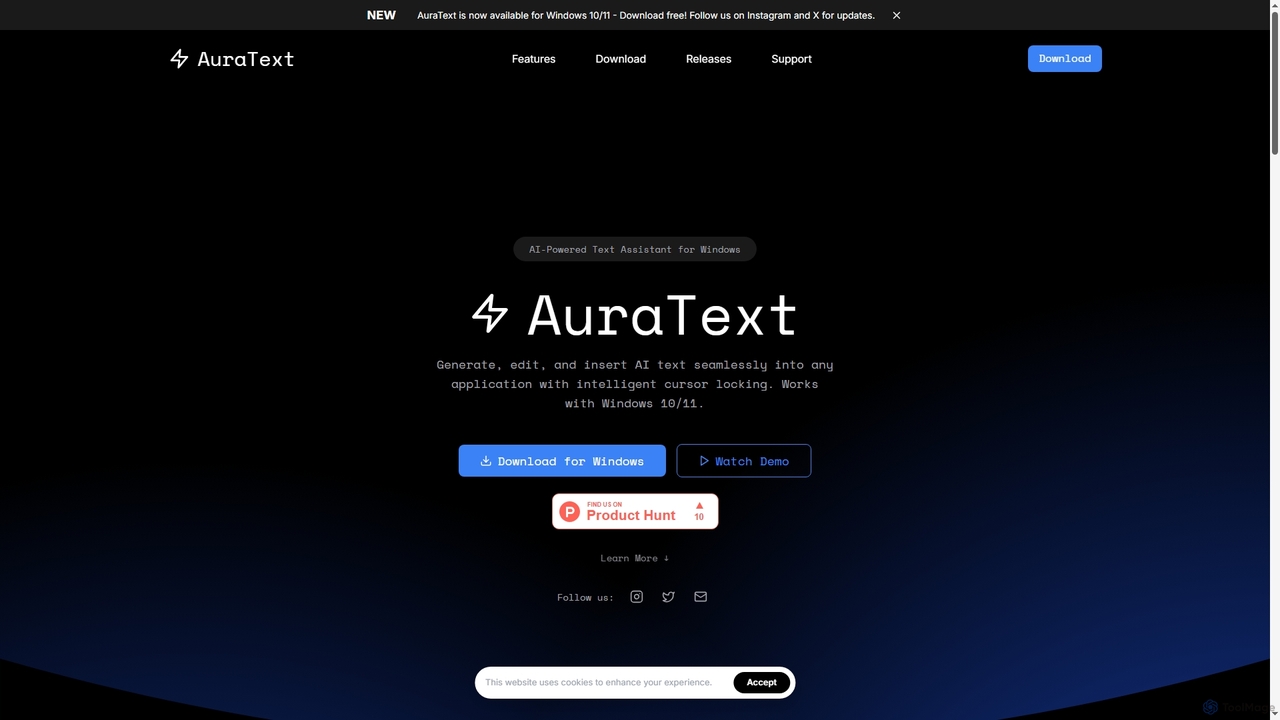
AuraText is an AI-powered text assistant for Windows and browsers, enabling seamless generation, editing, and insertion of AI-generated …
AuraText is an AI-powered text assistant for Windows and browsers, enabling seamless generation, editing, and insertion of AI-generated text into any application. It features intelligent cursor locking, multi-AI provider support (Gemini, Perplexity, OpenAI), real-time text analysis, and a secure, private environment for enhanced productivity.
About Text Editing
Text Editing tools are a specialized category of AI-powered applications designed to refine, enhance, and optimize written content. Leveraging advanced natural language processing (NLP) and machine learning, these tools go beyond basic spell-checking to offer sophisticated suggestions for grammar, style, tone, and clarity. They play a crucial role within the broader Content Generation ecosystem by transforming raw drafts into polished, professional, and impactful texts, ensuring high-quality output for various communication needs.
Core Features
- Grammar and Style Correction: Identifies and corrects grammatical errors, punctuation mistakes, and suggests stylistic improvements for better readability.
- Tone Adjustment: Analyzes text sentiment and offers modifications to align the writing with desired tones, such as formal, casual, persuasive, or empathetic.
- Summarization and Condensation: Automatically extracts key information from longer texts, generating concise summaries or shortening sentences without losing meaning.
- Paraphrasing and Rewriting: Provides alternative phrasings and sentence structures to improve originality, avoid plagiarism, or adapt content for different audiences.
- Readability Enhancement: Evaluates text complexity and suggests changes to sentence structure and vocabulary to make content easier for target readers to understand.
Use Cases
These tools are indispensable for content creators, marketers, academics, and business professionals who need to ensure their written communications are clear, error-free, and impactful. They are used for refining blog posts, polishing marketing copy, improving academic papers, and ensuring consistent brand voice across all written materials.
How to Choose
When selecting an AI text editing tool, consider its accuracy in identifying errors and suggesting improvements, the range of stylistic and tonal adjustments it offers, and its integration capabilities with your existing writing platforms. Evaluate the supported languages, customization options for specific style guides, and the overall user interface for ease of use. Prioritize tools that provide clear explanations for suggestions, allowing users to learn and improve their writing skills.

Text EditingUse Cases
Refining Marketing Copy for Campaigns
A marketing specialist uses AI text editing tools to polish ad copy, email newsletters, and social media posts. The tool helps ensure consistent brand voice, adjusts tone for different campaign segments (e.g., persuasive for sales, informative for awareness), and corrects grammatical errors, leading to higher engagement rates and clearer messaging.
Improving Academic Papers and Reports
A student or researcher utilizes text editing AI to enhance the clarity, conciseness, and academic rigor of their essays, theses, and research reports. The tool identifies complex sentences, suggests more precise vocabulary, corrects citation formatting issues, and ensures adherence to specific style guides, improving overall academic quality and readability.
Optimizing Blog Posts for Readability and SEO
A content writer employs AI text editing to optimize blog articles for both human readers and search engines. The tool helps improve sentence flow, suggests stronger verbs, ensures keyword integration is natural, and checks for readability scores, making the content more engaging and discoverable.
Adapting Business Communications for Global Audiences
An international business professional uses AI text editing to adapt internal and external communications for diverse linguistic and cultural contexts. The tool assists in rephrasing idioms, simplifying complex jargon, and adjusting formality levels, ensuring messages are universally understood and culturally appropriate.
Streamlining Technical Documentation and Manuals
A technical writer leverages AI text editing to ensure accuracy, clarity, and consistency across user manuals, guides, and technical specifications. The tool helps standardize terminology, simplify complex instructions, and maintain a uniform style, reducing ambiguity and improving user comprehension.
Enhancing Creative Writing and Storytelling
A novelist or short story writer uses AI text editing to refine their prose, improve narrative flow, and strengthen character dialogue. The tool offers suggestions for varied sentence structures, identifies repetitive phrasing, and helps enhance descriptive language, allowing the author to focus on creative aspects while ensuring polished delivery.