ToolMage
Sign in

Best 2 Inspiration AI tools for Creative

Popular Inspiration AI tools in Creative include Samplette and HookGen, helping you work more efficiently.

Samplette
Freemium

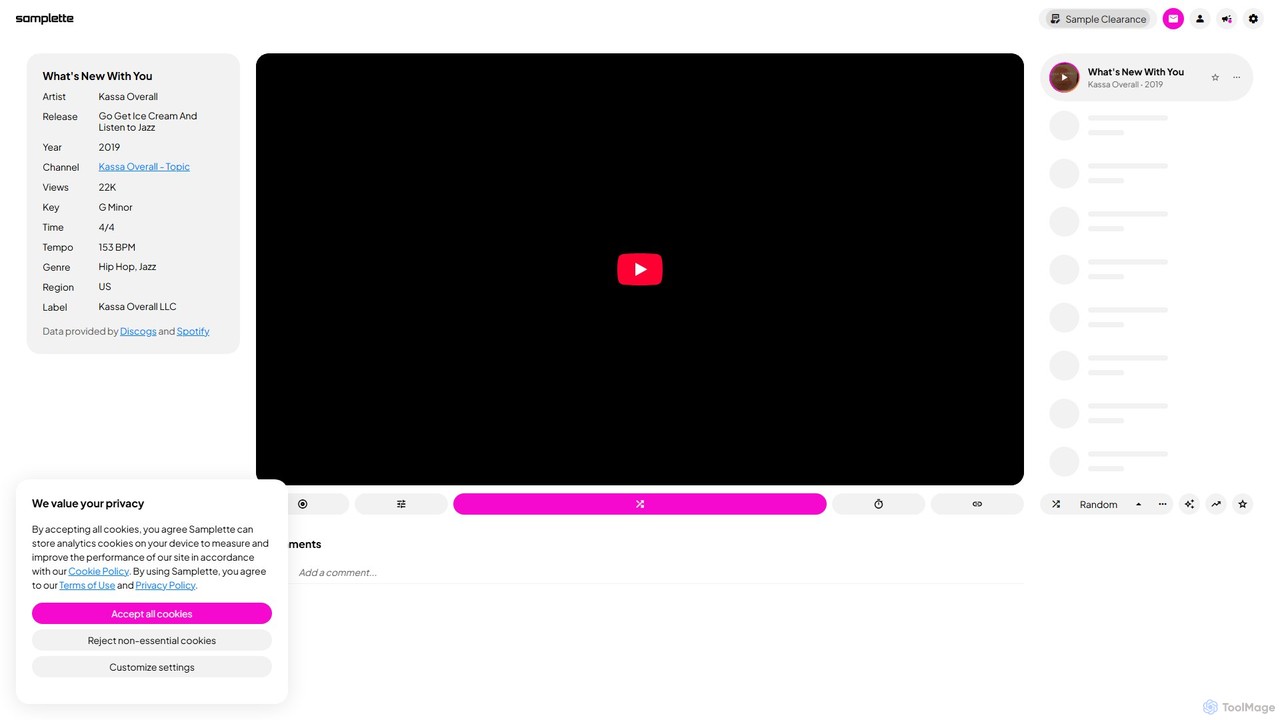
Samplette

Samplette is an AI-powered music discovery tool that revolutionizes the 'crate digging' experience. It randomly generates music videos from YouTube's vast library, allowing music producers, DJs, and enthusiasts to find unique and obscure tracks. With advanced filters for genre, region, tempo, and more, it's a powerful engine for musical inspiration and sample finding.

Music Discovery
Visits 776.1KFavorites 120Likes 104
HookGen
Free

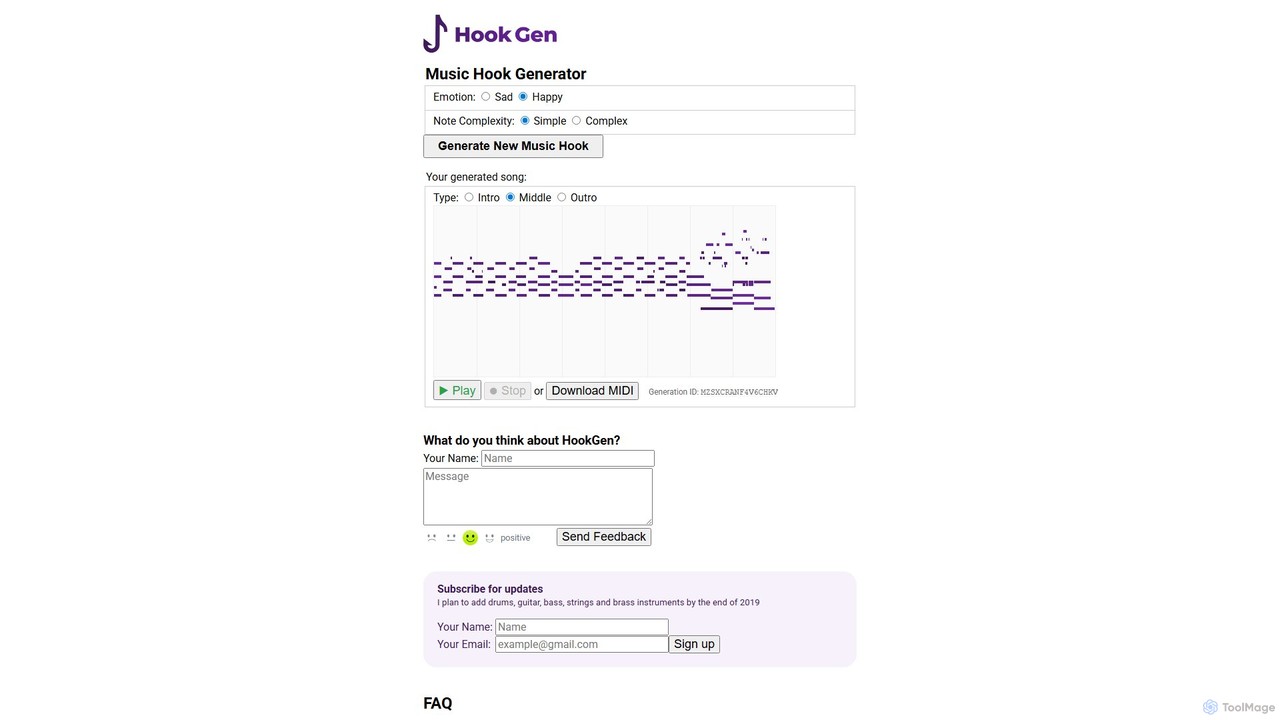
HookGen

HookGen is an AI-powered music generator that creates original, royalty-free piano hooks and melodies. Users can specify emotion and complexity to instantly generate unique MIDI files, perfect for music producers, songwriters, and content creators seeking inspiration or custom tracks.

Music Generation
Visits 6.9KFavorites 135Likes 130

About Inspiration

AI Inspiration tools are a class of creative AI designed to help users overcome creative blocks by generating novel ideas, prompts, and conceptual starting points. They leverage large language models and generative algorithms to analyze inputs like keywords or themes and produce a wide range of creative suggestions. This enables artists, writers, and designers to quickly explore different directions, discover unexpected connections, and kickstart projects with fresh perspectives. Unlike simple keyword generators, these tools often provide structured or visually rich outputs like mind maps or mood boards.

Core Features

  • Idea Generation: Produces lists of topics, names, or concepts based on a simple prompt.
  • Prompt Expansion: Takes a basic idea and fleshes it out with details, variations, or related angles.
  • Visual Concept Creation: Generates mood boards, color palettes, or stylistic guides from descriptive text.
  • Structured Brainstorming: Creates organized outputs like mind maps or outlines to explore connections between ideas.
  • Analogical Thinking: Suggests ideas from different domains to foster innovative cross-pollination of concepts.

Use Cases

These tools are primarily used by content creators, marketers, designers, writers, and product developers during the initial brainstorming phase. They are valuable for generating social media content calendars, conceptualizing ad campaigns, finding topics for blog posts, or overcoming writer's block in fiction.

How to Choose

When selecting an AI Inspiration tool, consider the type of output you need (text, visual, structured), the diversity and quality of the generated ideas, and its ability to understand nuanced prompts. Also, evaluate the user interface for ease of brainstorming and the ability to organize or export your favorite concepts for further development.

Inspiration use cases

1

Generating a Monthly Social Media Content Calendar

A social media manager, tasked with creating content for a sustainable coffee brand, uses an AI inspiration tool to combat creative fatigue. By inputting keywords like 'eco-friendly coffee', 'morning ritual', and 'community stories', the tool generates a month's worth of diverse content pillars. It suggests ideas such as 'A Day in the Life of a Coffee Farmer' video series, a poll asking 'What's your favorite brewing method?', and visual concepts for Instagram posts showcasing the brand's recycled packaging. This process transforms a multi-day task into a focused one-hour session.

2

Conceptualizing New Mobile App Features

A product team for a language-learning app wants to brainstorm features to increase user engagement. They use an AI inspiration tool, inputting their core function ('language learning') and the goal ('increase daily active users'). The AI suggests innovative concepts outside of their usual roadmap, such as 'AI-powered conversation partners based on historical figures', 'gamified vocabulary quests in a virtual city', and 'location-based language challenges'. These concrete, creative starting points fuel a productive design sprint and lead to the development of a highly-rated new feature.

3

Overcoming Writer's Block for a Fantasy Novel

A novelist is stuck developing a key plot point in their fantasy story. They provide an AI inspiration tool with their main character's traits ('exiled mage seeking redemption') and the current setting ('a city powered by forgotten magic'). The tool generates a list of potential conflicts and twists, such as 'The forgotten magic is sentient and has its own agenda', 'A rival exile knows the secret to redemption but demands a terrible price', or 'The source of the magic is fading, threatening the city'. This flood of possibilities helps the writer break through their block and choose a compelling new direction for the narrative.

4

Creating a Mood Board for a New Brand Identity

A graphic designer is tasked with defining the visual direction for a new tech startup. To quickly align with the client, the designer uses an AI inspiration tool. By inputting keywords that describe the brand's ethos, such as 'minimalist', 'human-centric', and 'trustworthy', the AI generates a comprehensive visual mood board. This board includes suggested color palettes, font pairings, abstract shapes, and curated stock imagery that collectively evoke the desired brand feel. This accelerates the initial design phase and provides a solid, visually-driven foundation for client discussions.

5

Brainstorming Slogans for an Ad Campaign

A marketing agency is developing a pitch for a new electric vehicle. The creative team uses an AI inspiration tool to generate a wide array of slogans and taglines. They input the car's key features ('long-range', 'recycled materials', 'silent drive') and target audience ('urban professionals'). The tool produces hundreds of options, ranging from clever wordplay to emotionally resonant phrases. While the final slogan is refined by the copywriters, the AI-generated list provides a massive pool of diverse ideas, saving hours of traditional brainstorming and ensuring no creative angle is overlooked.

6

Generating Prompts for Game Concept Art

A game development studio is in pre-production for a sci-fi RPG. To inspire their artists, the art director uses an AI tool to generate rich, descriptive prompts. They input core themes like 'cyberpunk noir detective' or 'bioluminescent alien jungle'. The tool expands these into detailed paragraphs describing mood, lighting, key characters, and architectural styles. These prompts serve as a consistent creative foundation for the entire art team. Artists can use them directly in AI image generators for initial concepts or as a detailed brief for their own sketches, ensuring a unified yet imaginative vision for the game's world.

Inspiration FAQ

What are AI Inspiration tools?

AI Inspiration tools are a type of creative software that uses artificial intelligence to generate ideas, prompts, and concepts to overcome creative blocks. They analyze user inputs to produce novel starting points for projects like writing, design, and marketing. Unlike search engines which find existing information, these tools synthesize information to create new, often unexpected, connections and suggestions.

How do I choose the right AI Inspiration tool?

To choose the right tool, first identify your primary need. Consider these key factors:

  • Output Format: Do you need text ideas, visual mood boards, structured outlines, or mind maps?
  • Idea Quality: Evaluate the creativity, relevance, and diversity of the suggestions. Many tools offer free trials for this.
  • Customization: Check if you can refine prompts, set constraints (like tone or style), and guide the AI's output.
  • Usability: A good tool should have an intuitive interface that facilitates a creative flow rather than hindering it.
What's the difference between AI Inspiration and AI Content Generation tools?

The primary difference is their purpose in the creative workflow. AI Inspiration tools focus on the 'ideation' phase; they provide sparks, concepts, and high-level outlines to help you start. Their goal is to give you many different directions to explore. In contrast, AI Content Generation tools (like AI writers or image generators) focus on the 'execution' phase. They take a specific prompt and produce a more finished piece of content, such as a full article or a detailed image. Inspiration tools help you decide what to create, while content generators help you create it.

Who can benefit from using AI Inspiration tools?

A wide range of professionals and creators can benefit. This includes writers and authors looking for plot ideas, marketers brainstorming campaign concepts, designers seeking visual direction, product managers exploring new features, and students needing unique perspectives for their projects. Essentially, anyone who engages in creative work and occasionally faces a 'blank page' problem can find these tools valuable for sparking new lines of thought.

Are the ideas from AI Inspiration tools original?

AI Inspiration tools generate ideas by identifying patterns and relationships in vast amounts of data. The outputs are new combinations and syntheses of that data, not direct copies. While they may not be 'original' in the human sense of lived experience, they are often novel, unexpected, and highly effective at breaking conventional thinking patterns. The value lies not in the AI's 'originality' but in its ability to present you with connections and possibilities you might not have considered on your own.