Zapyon
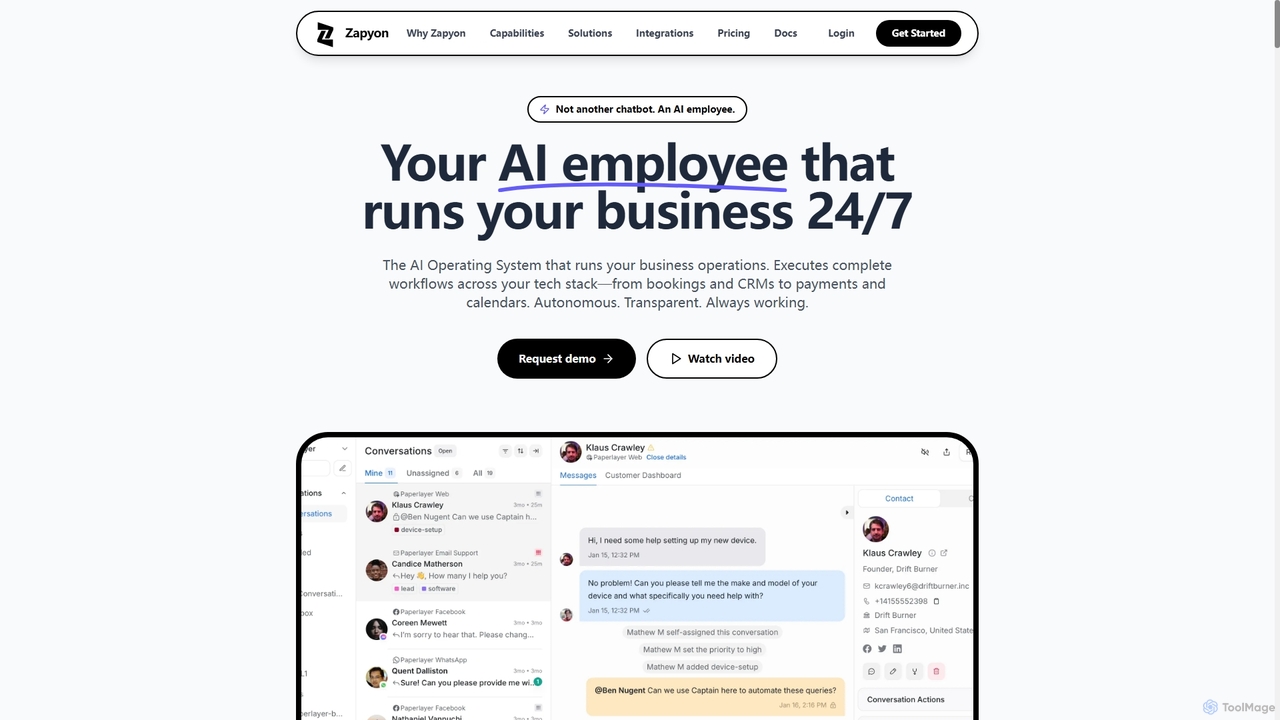
Zapyon is an AI Operating System that acts as an AI employee, automating complete business workflows 24/7 across …
Zapyon is an AI Operating System that acts as an AI employee, automating complete business workflows 24/7 across various communication channels and integrating with over 100 apps. It handles tasks from customer inquiries and appointment bookings to CRM updates and payment processing, aiming to replace repetitive operational overhead.
Voxket
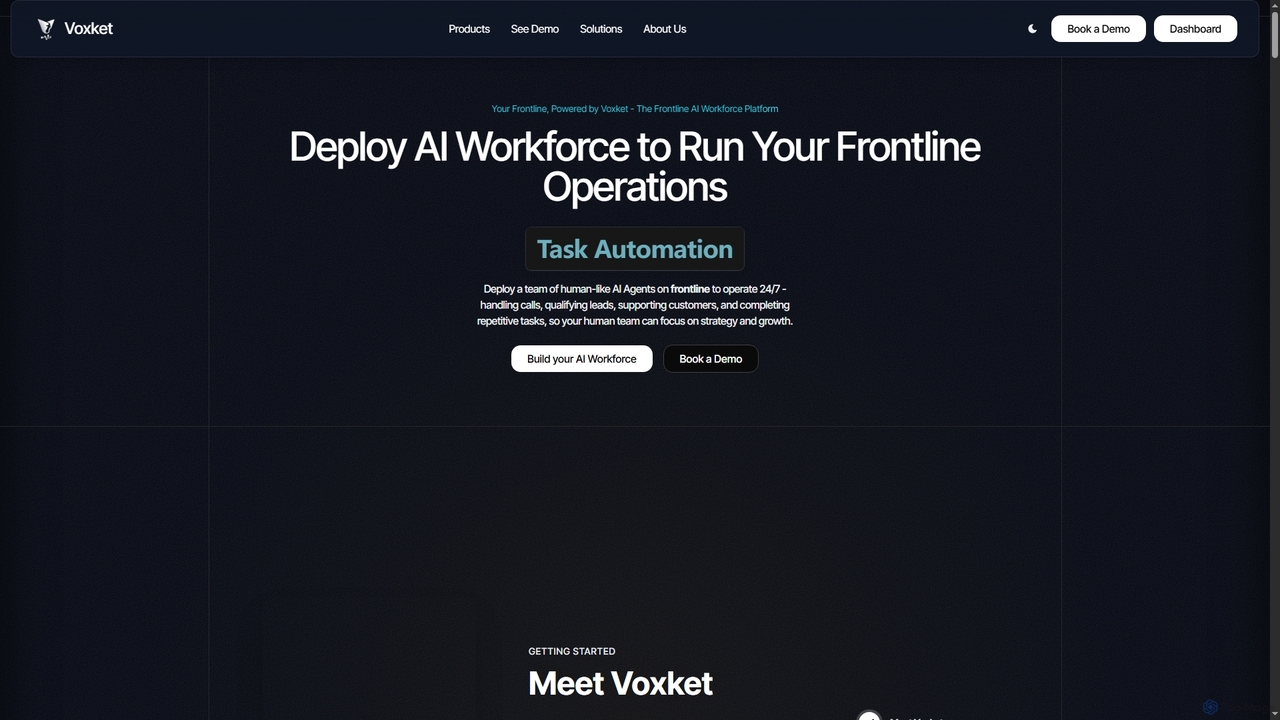
Voxket is a frontline AI workforce platform that enables businesses to deploy human-like AI agents for 24/7 operations. …
Voxket is a frontline AI workforce platform that enables businesses to deploy human-like AI agents for 24/7 operations. It automates customer support, lead qualification, and repetitive tasks across voice, chat, IVR, and video, allowing human teams to focus on strategic growth.
About Ai Agents
AI Agents are autonomous AI programs designed to perform specific tasks or achieve goals with minimal human intervention. These advanced tools leverage machine learning and natural language processing to understand complex requests, make decisions, and interact proactively with various systems and users. They significantly enhance operational efficiency and personalize user experiences across diverse applications, particularly within customer service.
Core Features
- Autonomous Operation: Execute tasks and make decisions independently based on predefined goals and learned patterns.
- Goal-Oriented Planning: Break down complex objectives into manageable sub-tasks and strategize their execution.
- Environmental Interaction: Interface with databases, APIs, and other software systems to gather information and perform actions.
- Learning and Adaptation: Continuously improve performance and decision-making through data analysis and feedback loops.
- Proactive Engagement: Initiate actions or communications based on triggers, anomalies, or predicted user needs.
Use Cases
AI Agents are invaluable in scenarios requiring intelligent automation and proactive problem-solving. They can manage complex customer inquiries end-to-end, automate lead qualification processes, or monitor system performance to preemptively address issues before they impact users.
How to Choose
When selecting an AI Agent, consider its autonomy level, integration capabilities with existing systems, the complexity of tasks it can handle, and its learning and adaptation mechanisms. Evaluate the platform's scalability, security features, and the availability of customization options to align with specific business needs.
Ai AgentsUse Cases
Automated Customer Issue Resolution
For customer support teams, an AI Agent can autonomously identify common customer problems, such as password resets or order status inquiries. It accesses relevant databases, verifies user identity, and executes the necessary steps to resolve the issue end-to-end, providing instant solutions and reducing human agent workload.
Personalized Product Recommendations
E-commerce businesses can deploy AI Agents to analyze individual customer browsing history, purchase patterns, and expressed preferences. The agent then proactively generates and delivers highly personalized product recommendations via email, in-app notifications, or website pop-ups, significantly boosting engagement and conversion rates.
Proactive Service Outreach & Alerts
IT operations or service providers utilize AI Agents to monitor system performance and detect anomalies or potential service disruptions. Upon identifying an issue, the agent can automatically notify affected customers, provide status updates, and even initiate troubleshooting steps, minimizing downtime and improving customer satisfaction.
Complex Inquiry Routing & Escalation
In large contact centers, an AI Agent can serve as the first point of contact, understanding the nuances of complex customer inquiries through advanced NLU. It gathers critical information, assesses the urgency and nature of the problem, and intelligently routes the customer to the most qualified human agent or specialized department, streamlining support workflows.
Automated Lead Qualification & Nurturing
Sales and marketing teams can leverage AI Agents to engage with website visitors or inbound leads. The agent asks qualifying questions, provides relevant information about products or services, addresses initial queries, and schedules follow-up meetings or demos for sales representatives, effectively nurturing leads through the sales funnel.
Sentiment Analysis & Feedback Collection
Customer experience managers use AI Agents to continuously monitor customer interactions across various channels, analyzing sentiment and identifying recurring pain points. The agent can then proactively initiate targeted feedback surveys or suggest improvements to products or services, providing actionable insights for business growth.