Owlish
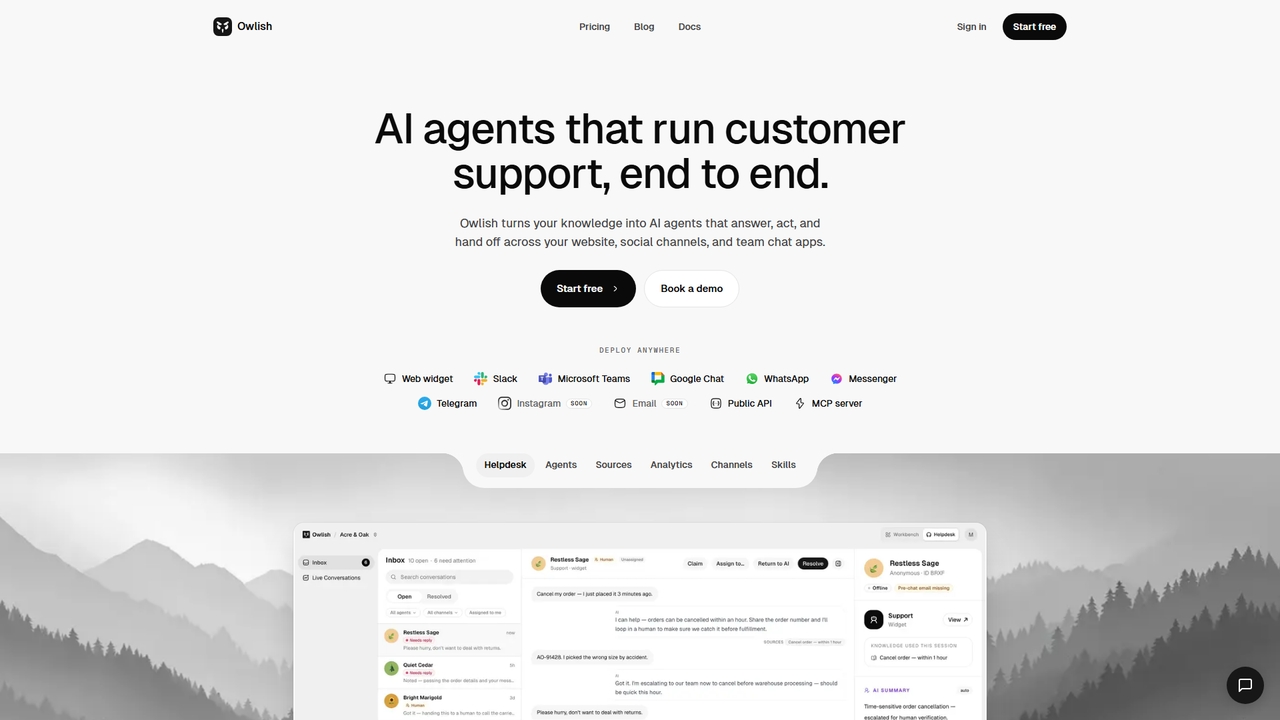
Owlish is a no-code AI agent platform that creates source-grounded customer support bots. It answers from your knowledge …
Owlish is a no-code AI agent platform that creates source-grounded customer support bots. It answers from your knowledge base, performs actions, and hands off seamlessly to human agents across multiple channels like web, Slack, and Teams.
Avaturn
Avaturn offers lifelike AI avatars designed to transform business interactions, providing 24/7 virtual representatives for sales training, customer …
Avaturn offers lifelike AI avatars designed to transform business interactions, providing 24/7 virtual representatives for sales training, customer support, and in-person assistance. It helps businesses drive growth and significantly cut operational costs.
About Ai Support
AI Support tools are a specialized category within customer service solutions, leveraging artificial intelligence to automate, enhance, and personalize customer interactions. These tools utilize advanced natural language processing (NLP), machine learning, and data analytics to understand customer queries, provide instant responses, and streamline support workflows. Their primary value lies in improving customer satisfaction, reducing operational costs, and freeing human agents to focus on complex issues, thereby transforming the traditional customer service landscape.
Core Features
- Natural Language Understanding (NLU): Accurately interprets customer intent and sentiment from free-form text or speech.
- Automated Response Generation: Provides instant, contextually relevant answers to common questions using knowledge bases and generative AI.
- Proactive Engagement: Identifies potential issues or opportunities to assist customers before they explicitly ask, based on behavior or data.
- Agent Assist: Offers real-time suggestions, information retrieval, and workflow automation to human support agents.
- Sentiment Analysis: Detects customer emotions to prioritize urgent cases and tailor communication styles.
Applicable Scenarios
AI Support tools are indispensable across various sectors. E-commerce businesses use them for 24/7 order status updates and product inquiries. SaaS companies deploy them for instant technical troubleshooting and onboarding guidance. Financial institutions leverage AI for secure account inquiries and fraud detection, while call centers integrate them to offload routine calls and improve agent efficiency, ensuring consistent and rapid customer service delivery.
How to Choose
When selecting an AI Support tool, prioritize its natural language processing capabilities to ensure accurate understanding of diverse customer queries. Evaluate its integration potential with existing CRM, ticketing systems, and knowledge bases for seamless workflow. Consider scalability to handle fluctuating customer volumes and the level of customization offered for branding and specific business rules. Finally, assess its analytics and reporting features to gain insights into customer interactions and service performance.

Ai SupportUse Cases
Automating First-Line Customer Inquiries
For e-commerce businesses, AI Support tools can automatically handle common questions about order status, shipping information, or product details. Customers receive instant, accurate responses 24/7, reducing the need for human intervention and significantly cutting response times, leading to higher customer satisfaction and fewer abandoned carts.
Providing Instant Self-Service Support
SaaS companies deploy AI Support to offer immediate answers to technical FAQs, troubleshooting steps, or feature usage guides. Users can access a comprehensive knowledge base via a chatbot or virtual assistant, resolving issues independently without waiting for an agent, which enhances user autonomy and reduces support ticket volume.
Assisting Human Support Agents in Real-Time
In busy call centers, AI Support acts as an agent assist tool, providing human agents with real-time information, relevant knowledge base articles, or script suggestions during live conversations. This empowers agents to resolve complex issues faster and more accurately, improving first-call resolution rates and agent productivity.
Personalizing Customer Interactions
Retailers use AI Support to offer personalized product recommendations or tailored support based on a customer's purchase history and browsing behavior. By understanding individual preferences, the AI can guide customers more effectively, leading to increased cross-selling opportunities and a more engaging shopping experience.
Analyzing Customer Feedback and Sentiment
Marketing and product teams utilize AI Support to analyze vast amounts of customer feedback from chat logs, emails, and social media. The AI identifies common pain points, emerging trends, and overall sentiment, providing actionable insights that inform product development, marketing strategies, and service improvements.
Handling Routine Account Management Tasks
Financial services or utility providers implement AI Support to automate routine tasks like password resets, bill inquiries, or updating personal information. This frees up human agents from repetitive work, allowing them to focus on more complex, high-value customer interactions, while ensuring quick and secure self-service options for customers.