ToolMage
Sign in

Best 1 Call Management AI tools for Customer Service

Popular Call Management AI tools in Customer Service include Sloane, helping you work more efficiently.

Sloane
Freemium

Sloane

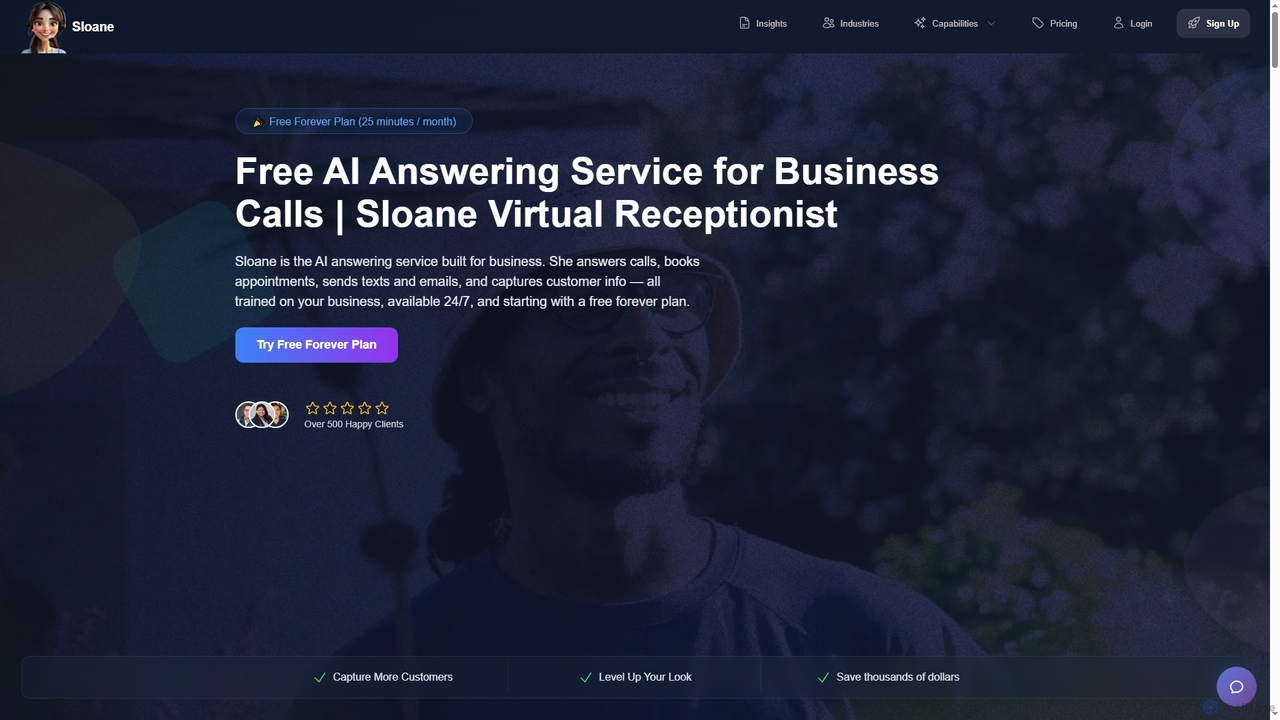
Sloane is an AI-powered virtual receptionist service designed for businesses to handle calls 24/7. It answers calls, books appointments, screens spam, sends texts and emails, and captures customer information, all while being customizable to your brand's voice and trained on your business data. It offers a free forever plan and aims to save businesses time and money.

3D
Visits 13.1KFavorites 154Likes 159

About Call Management

Call Management tools are AI-powered solutions designed to automate, optimize, and analyze telephone interactions within customer service operations. These tools leverage advanced AI capabilities like natural language processing (NLP) and machine learning to handle calls more efficiently, improve customer satisfaction, and provide actionable insights. They streamline call routing, enhance agent performance, and offer comprehensive analytics for better decision-making.

Core Features

  • AI Call Routing: Intelligently directs calls to the most suitable agent or department based on caller intent, history, and agent skills.
  • Virtual Agents/Chatbots: Automates responses to common queries and performs routine tasks, freeing human agents for complex issues.
  • Call Transcription & Analysis: Converts spoken words into text and analyzes conversations for sentiment, keywords, and compliance.
  • Predictive Dialing: Uses algorithms to predict agent availability and dial numbers, minimizing agent idle time for outbound campaigns.
  • Agent Assist: Provides real-time information, scripts, and suggestions to agents during live calls, improving resolution rates.

Applicable Scenarios

Businesses with high call volumes, such as e-commerce customer support centers, financial institutions, and healthcare providers, heavily rely on AI call management. It's crucial for sales teams managing outbound leads, marketing departments conducting surveys, and any organization aiming to enhance its customer service efficiency and quality. These tools help in scaling operations without proportionally increasing human agent costs.

How to Choose

When selecting an AI call management solution, consider its integration capabilities with existing CRM and helpdesk systems, the accuracy and language support of its NLP features, and the scalability of its virtual agent functionalities. Evaluate the depth of its analytics and reporting, ensuring it provides actionable insights into call performance and customer sentiment. Also, assess its compliance features for data privacy and industry regulations.

Call Management use cases

1

Automate Inbound Customer Support with AI Virtual Agents

For large enterprises and e-commerce businesses, AI call management tools deploy virtual agents to handle routine customer inquiries like order status checks, password resets, or FAQ answers. This reduces wait times, provides 24/7 support, and allows human agents to focus on complex, high-value interactions, significantly improving overall customer satisfaction and operational efficiency.

2

Optimize Outbound Sales and Telemarketing Campaigns

Sales and telemarketing teams utilize AI call management for predictive dialing and intelligent lead prioritization. The system automatically dials numbers, connects agents only to live answers, and routes calls based on lead scores or agent expertise. This maximizes agent talk time, increases conversion rates, and ensures more effective outreach campaigns by focusing efforts on the most promising prospects.

3

Enhance Agent Performance with Real-time Call Assistance

Customer service managers use AI agent assist features to provide live guidance to human agents during calls. The AI analyzes conversations in real-time, suggesting relevant knowledge base articles, compliance scripts, or next best actions. This empowers agents to resolve issues faster, maintain consistent service quality, and reduces training time for new hires, leading to improved first-call resolution rates.

4

Analyze Call Data for Continuous Service Improvement

Quality assurance teams and business analysts leverage AI call management for comprehensive call transcription and sentiment analysis. The tools automatically transcribe all calls and identify trends in customer feedback, common pain points, and agent performance. This data-driven approach helps pinpoint areas for service improvement, refine training programs, and optimize customer journeys.

5

Streamline Technical Support Call Routing

IT helpdesks and technical support centers use AI call routing to efficiently direct complex technical issues. Based on the caller's initial description and historical data, the AI intelligently routes the call to an agent with specific technical expertise (e.g., network issues, software bugs). This minimizes transfers, reduces resolution time, and ensures customers connect with the right expert immediately.

6

Ensure Compliance and Quality Assurance in Calls

Compliance officers and QA teams in regulated industries (e.g., finance, healthcare) use AI call management to monitor and audit calls. The AI automatically flags conversations for specific keywords, phrases, or emotional cues that might indicate compliance risks or quality issues. This ensures adherence to regulations, identifies training needs, and maintains high service standards across all interactions.

Call Management FAQ

What are AI Call Management tools?

AI Call Management tools are software solutions that use artificial intelligence to automate, optimize, and analyze telephone communications for businesses. They go beyond basic call routing by incorporating advanced features like natural language processing (NLP) for understanding caller intent, machine learning for predictive analytics, and virtual agents to handle routine inquiries. Their primary goal is to enhance customer service efficiency, improve customer experience, and provide actionable insights from call data.

How do AI Call Management tools differ from traditional call centers?

Traditional call centers primarily rely on human agents and basic automated systems for routing. AI Call Management tools, while still involving human agents, integrate AI at multiple touchpoints. This includes AI-powered virtual agents for self-service, intelligent routing based on caller intent and sentiment, real-time agent assistance, and comprehensive AI-driven analytics of call transcripts. This results in greater automation, personalized interactions, and data-driven operational improvements that traditional systems lack.

What are the key benefits of implementing AI Call Management?

Implementing AI Call Management offers several significant benefits. Firstly, it dramatically improves efficiency by automating routine tasks and optimizing call routing, leading to reduced wait times and operational costs. Secondly, it enhances customer satisfaction through faster resolutions, 24/7 availability, and more personalized interactions. Thirdly, it provides valuable insights through call analytics, helping businesses understand customer needs, identify trends, and improve agent performance. Finally, it ensures better compliance and quality assurance through automated monitoring.

Can AI Call Management tools integrate with existing CRM systems?

Yes, integration with existing CRM (Customer Relationship Management) systems is a crucial feature for most AI Call Management tools. This integration allows agents to access customer history, preferences, and previous interactions directly within their call interface, providing a unified view of the customer. It also enables the AI to make more informed routing decisions and personalize interactions based on comprehensive customer data, streamlining workflows and improving the overall customer experience.

What security and privacy considerations are important for AI Call Management?

Security and privacy are paramount for AI Call Management, especially when handling sensitive customer data. Key considerations include robust data encryption for calls and transcripts, compliance with regulations like GDPR, HIPAA, or CCPA, and secure access controls. Businesses should also ensure that AI models are trained ethically, data anonymization techniques are used where appropriate, and clear policies are in place regarding data retention and usage to protect customer information and maintain trust.