
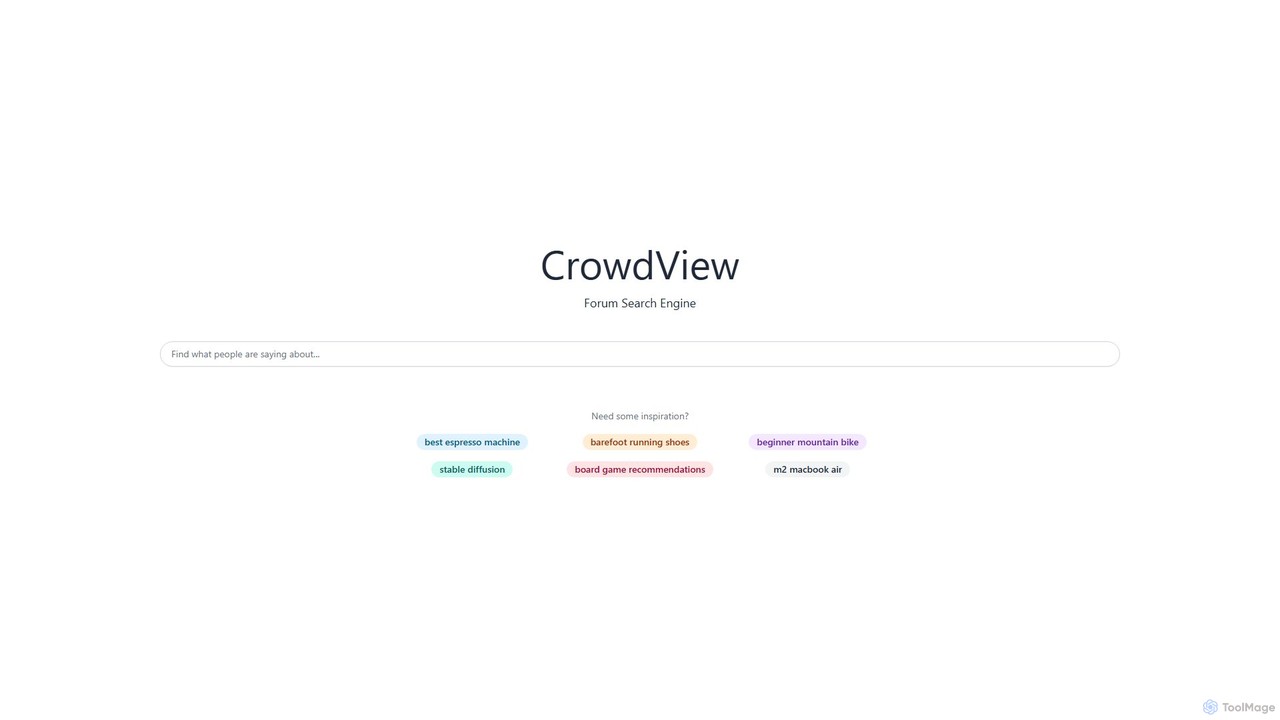
CrowdView
CrowdView is a specialized forum search engine that scours online communities like Reddit, Hacker News, and Stack Exchange. …
CrowdView is a specialized forum search engine that scours online communities like Reddit, Hacker News, and Stack Exchange. It helps you find authentic user opinions, product recommendations, and solutions to technical problems, cutting through the noise of standard search engines to deliver real-world discussions.
About Community Feedback
Community Feedback tools are a specialized category of customer support software designed to systematically collect, organize, and analyze user suggestions. These platforms centralize feedback from various channels, using features like idea boards and voting systems to transform unstructured user comments into actionable product insights. They empower product teams to make data-driven decisions, prioritize feature development based on popular demand, and maintain transparent communication with their user base. This approach helps bridge the gap between user needs and the product roadmap.
Core Features
- Idea Boards & Feature Requests: Provides a centralized forum for users to submit new ideas and feature suggestions publicly.
- Voting & Prioritization: Allows community members to upvote suggestions, giving product teams clear data on the most requested features.
- Feedback Aggregation: Gathers feedback from multiple sources like email, social media, and support tickets into a single, manageable dashboard.
- Public Roadmaps & Status Updates: Enables companies to share their product roadmap and update users on the status of their suggestions, closing the feedback loop.
- AI-Powered Analysis: Utilizes AI to automatically categorize feedback, detect sentiment, and identify emerging trends from large volumes of text.
Use Cases
Community Feedback tools are essential for product managers, community managers, and UX researchers in technology-driven industries like SaaS, gaming, and mobile app development. They are used to validate new product concepts before development, prioritize bug fixes based on community impact, and continuously gather insights to improve user experience and retention.
How to Choose
When selecting a Community Feedback tool, consider its integration capabilities with development tools like Jira or Slack. Evaluate the platform's ability to segment feedback by user demographics or customer value. Also, assess the customization options for feedback portals and the quality of its analytics for identifying trends and generating reports. Finally, consider the scalability to handle a growing community and feedback volume.
Community FeedbackUse Cases
Prioritizing New Features for a SaaS Product
A product manager for a B2B SaaS platform needs to decide which features to build in the next quarter. They use a community feedback tool to create a public idea board. Customers submit feature requests, and other users can vote and comment on them. The product manager can then sort ideas by 'most votes' or 'trending' to see what the community values most. This data-driven approach ensures development resources are focused on features that will increase customer satisfaction and reduce churn.
Managing Bug Reports for a Video Game
A community manager for a popular online game is overwhelmed with bug reports from Discord, Reddit, and forums. By implementing a community feedback tool, they create a centralized bug reporting portal. Players can submit detailed reports with logs and screenshots, and vote on existing reports. This allows the development team to quickly identify and prioritize the most critical, widespread bugs affecting the player base, leading to faster patch releases and a more stable game.
Closing the Feedback Loop with a Public Roadmap
A company wants to improve transparency with its users. They use a community feedback tool that includes a public roadmap feature. When a popular user suggestion is reviewed by the product team, its status is updated to 'Under Consideration'. Once development begins, it's moved to 'In Progress', and finally to 'Launched'. Users who submitted or voted for the idea receive automatic email notifications at each stage. This process makes users feel heard and valued, strengthening community loyalty.
Validating a New Product Idea with Early Adopters
A startup is developing a new mobile app and wants to validate its core concept before a full-scale launch. They create a private feedback board for a select group of beta testers. Using the tool, they can post specific questions, run polls on feature preferences, and collect initial bug reports. This direct line of communication with early adopters provides invaluable insights, helping the startup refine the product and confirm market fit before investing further development resources.
Aggregating Feedback from Multiple Social Channels
A B2C brand's community is active on Twitter, Discord, and a dedicated Subreddit. The community manager struggles to keep track of all suggestions. They adopt a feedback tool with AI-powered aggregation. The tool automatically pulls in mentions and relevant posts from these platforms, categorizes them (e.g., 'Feature Request', 'UI/UX Issue'), and analyzes sentiment. This provides a unified view of community sentiment and popular topics, allowing the manager to respond strategically and report key trends to the product team without manual monitoring.
Identifying Power Users and Product Advocates
A UX researcher wants to conduct in-depth interviews with the most engaged users. By analyzing the community feedback platform, they can easily identify individuals who frequently submit high-quality ideas, provide constructive comments, and help other users. The platform's data allows them to filter for these 'power users'. They can then reach out directly through the platform to invite them to user research sessions or an exclusive advocate program, fostering a stronger relationship with their most valuable community members.