ToolMage
Sign in

Best 5 Email Management AI tools for Customer Support

Popular Email Management AI tools in Customer Support include Levity, Tekst, EmailTree.ai, Auto Gmail, and InboxGPT, helping you work more efficiently.

Auto Gmail
Freemium

Auto Gmail

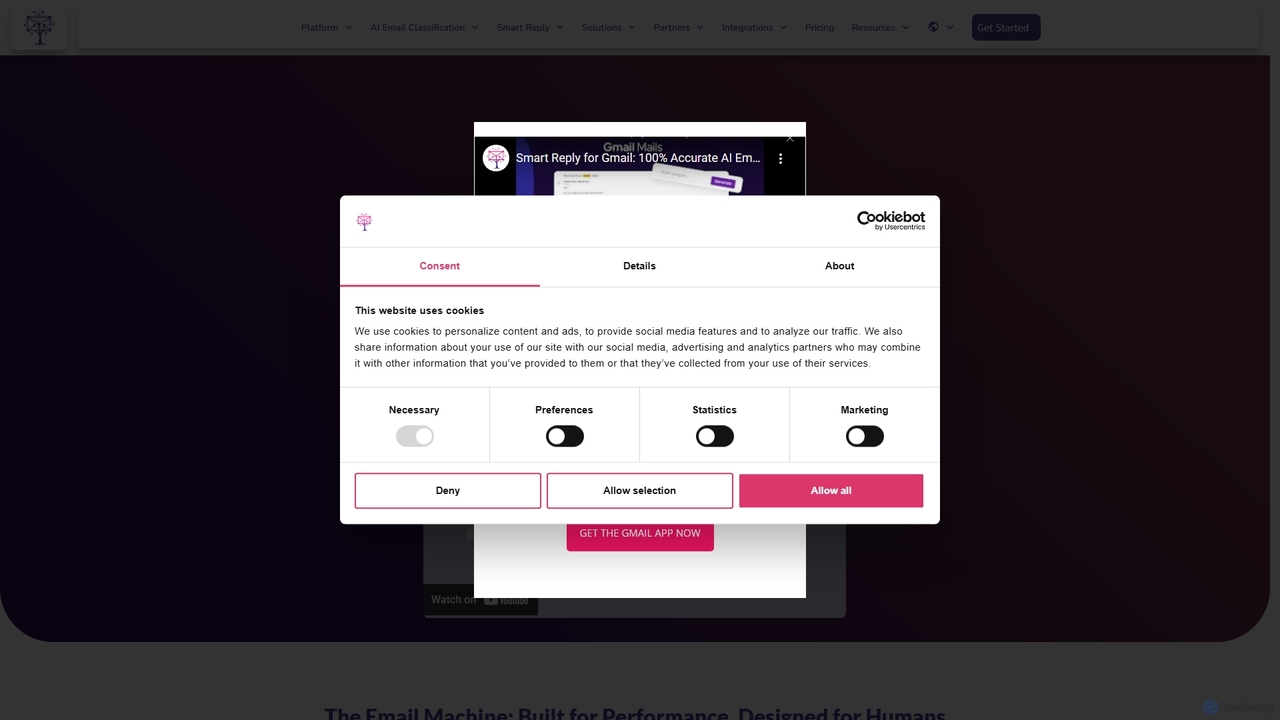
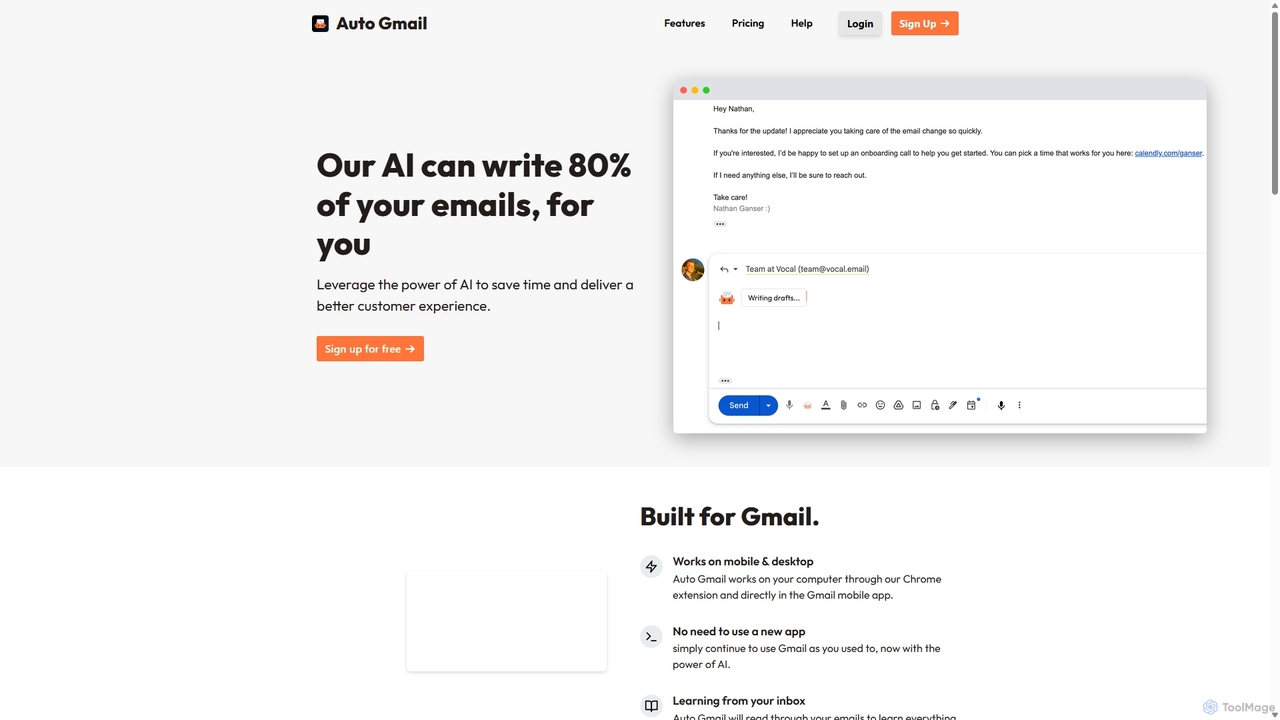
Auto Gmail is an AI-powered assistant for Gmail that learns your writing style to automatically draft email replies. It integrates seamlessly into your inbox via a Chrome extension, aiming to write 80% of your emails, saving you time and enhancing customer communication.

Email Management
Visits 9.1KFavorites 130Likes 120
EmailTree.ai
Paid

EmailTree.ai

EmailTree.ai is an AI-powered platform designed to automate and optimize email communication for customer service and sales teams. It intelligently analyzes incoming emails, automates replies to common queries, suggests responses for complex issues, and routes inquiries to the appropriate agent, significantly boosting efficiency and customer satisfaction.

Email Management
Visits 10KFavorites 122Likes 105
InboxGPT
Paid

InboxGPT

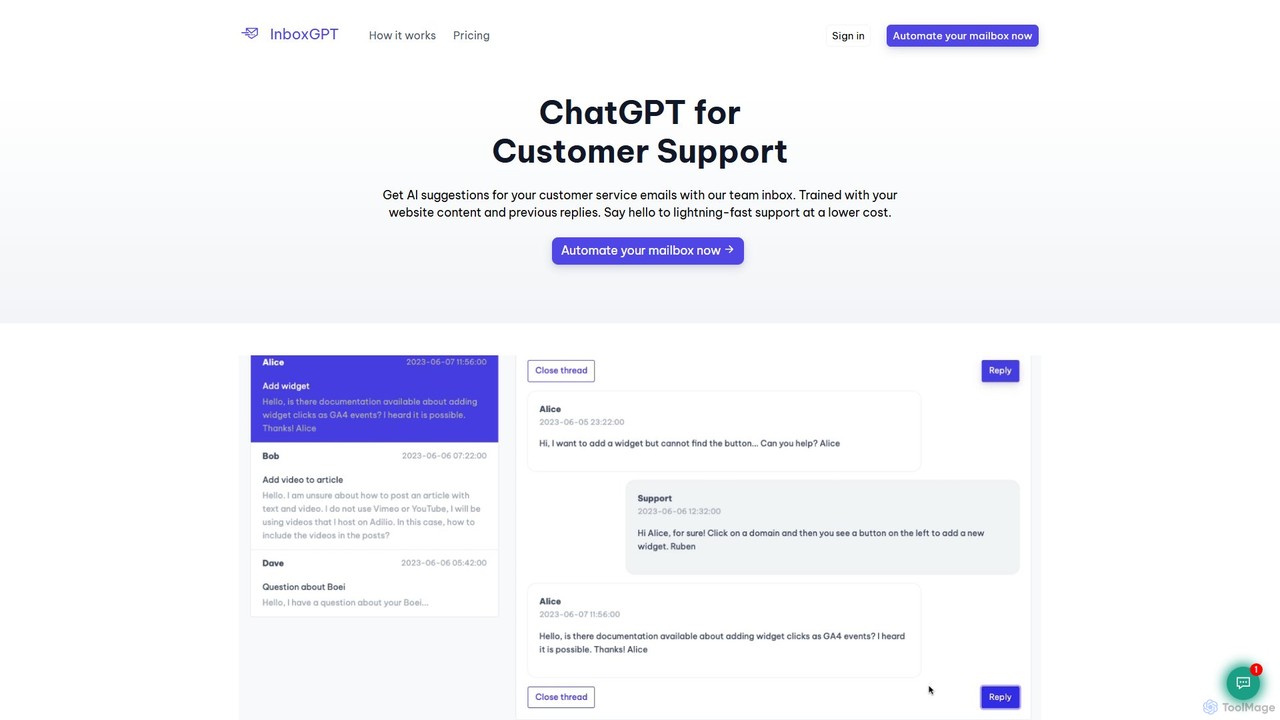
InboxGPT is an AI-powered team inbox designed to revolutionize customer support. It connects your Gmail accounts into a unified platform, providing intelligent, AI-generated reply suggestions. By training on your website content and past emails, it helps your team respond twice as fast, in any language, ensuring high-quality, consistent, and efficient customer service.

Communication
Visits 5.2KFavorites 128Likes 137
Tekst
Paid

Tekst

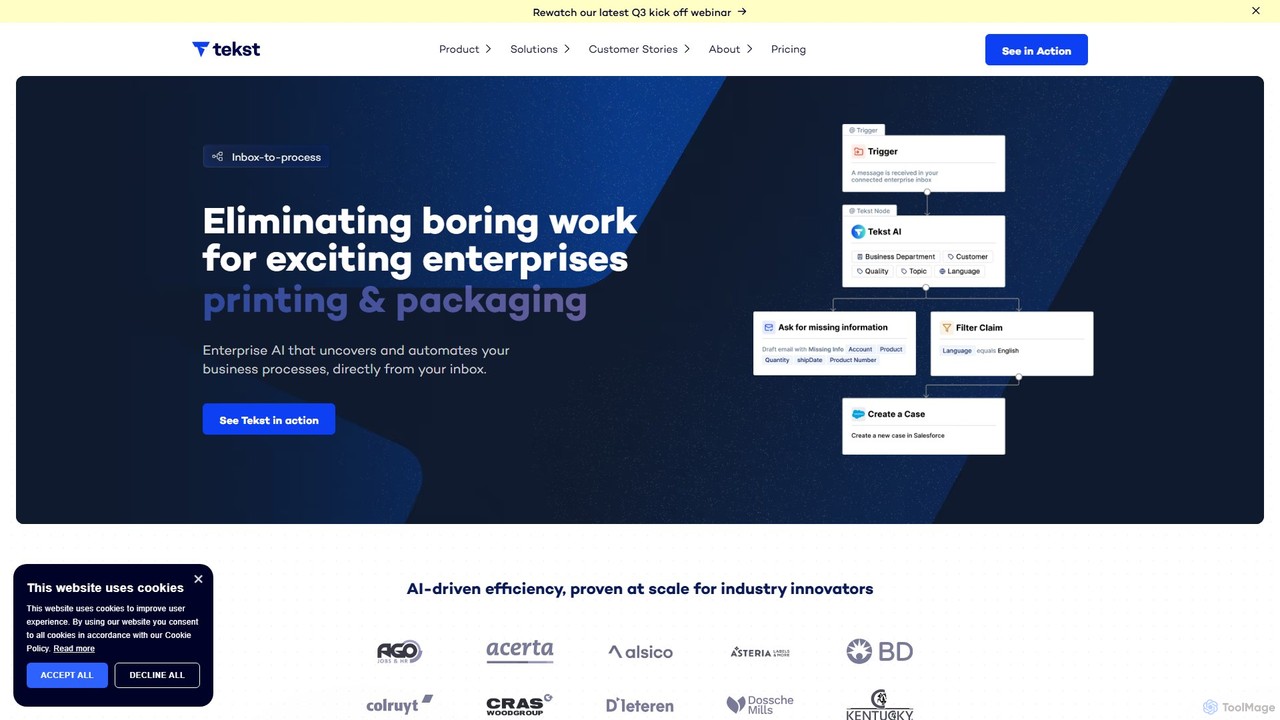
Tekst is an enterprise-grade AI platform that automates complex business workflows by analyzing and understanding unstructured communications. It intelligently categorizes, prioritizes, and routes emails, tickets, and chats to streamline operations, enhance customer support, and drive significant efficiency gains. By integrating seamlessly with existing systems like SAP and Salesforce, Tekst turns your back-office into a competitive advantage.

Business Intelligence
Visits 21.6KFavorites 144Likes 126
Levity
Paid

Levity

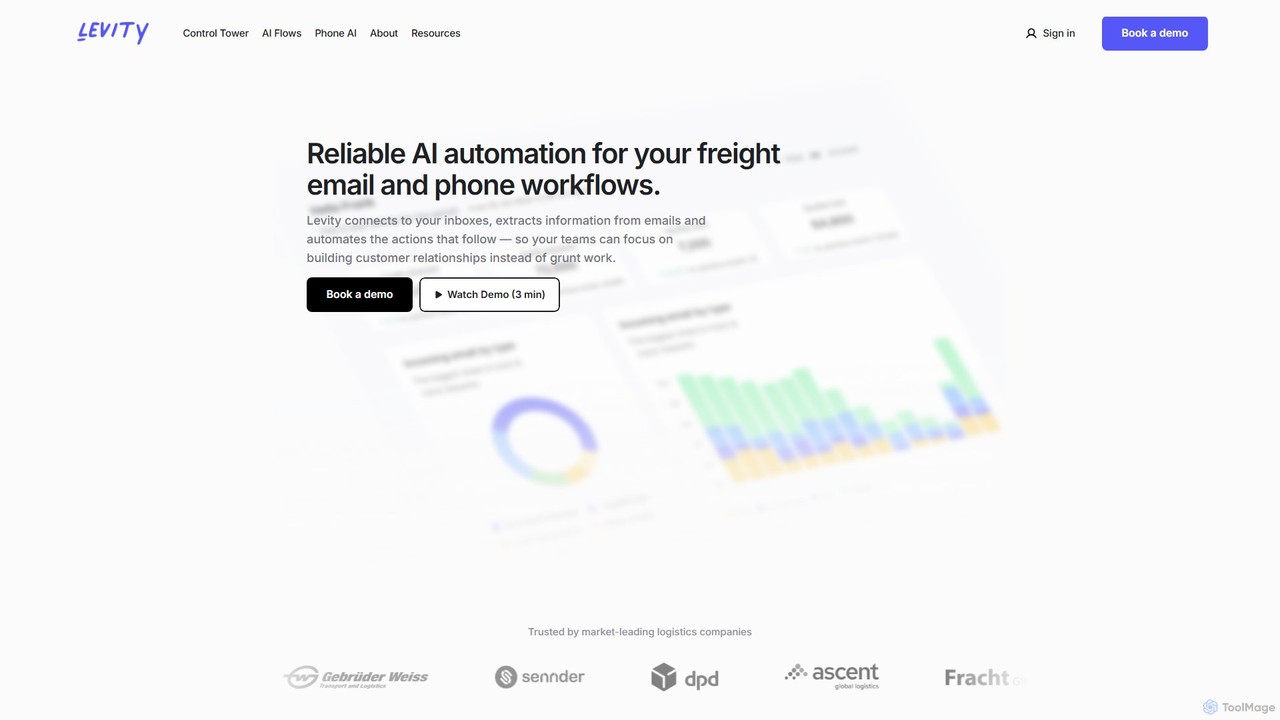
Levity is an AI-powered automation platform designed for the freight and logistics industry. It streamlines email and phone workflows by connecting to your inboxes, extracting critical information from communications, and automating subsequent actions. This allows operations teams to reduce manual work, lower costs per load, and focus on building customer relationships.

Logistics
Visits 29.8KFavorites 114Likes 108

About Email Management

AI Email Management tools are specialized applications that use artificial intelligence to automate and streamline the handling of high-volume email inboxes, particularly within customer support contexts. They leverage Natural Language Processing (NLP) to understand, categorize, and prioritize incoming messages based on content, intent, and sentiment. This allows teams to automate responses, route inquiries to the correct agents, and extract valuable insights from customer communications. By transforming a cluttered inbox into an organized workflow, these tools significantly reduce manual effort and improve response times.

Core Features

  • Intelligent Categorization & Routing: Automatically analyzes email content to assign tags (e.g., 'Billing,' 'Tech Support') and route it to the appropriate team or agent.
  • AI-Powered Response Suggestions: Generates context-aware draft replies for common questions, allowing agents to respond faster.
  • Sentiment Analysis: Detects the emotional tone of an email (e.g., positive, negative, urgent) to help prioritize critical issues.
  • Automated Triage: Filters spam and automatically handles routine requests, such as order status updates, without human intervention.

Use Cases

These tools are primarily used by customer support departments, helpdesks, and sales teams in industries like e-commerce, SaaS, and financial services. They are ideal for any organization facing a large volume of inbound emails where speed and accuracy of response are critical for customer satisfaction and operational efficiency.

How to Choose

When selecting an AI Email Management tool, consider its integration capabilities with your existing CRM or helpdesk software. Evaluate the accuracy of its AI models for categorization and sentiment analysis. Also, assess its scalability to handle your email volume and the quality of its analytics for performance tracking.

Email Management use cases

1

Automating Helpdesk Ticket Triage

An e-commerce support team receives hundreds of customer emails daily about orders, returns, and product questions. Manually reading and assigning each email is time-consuming. By implementing an AI Email Management tool, incoming emails are automatically scanned and categorized. For example, an email containing 'return policy' is tagged as 'Returns' and assigned to the returns department, while a message with 'shipping status' is routed to the logistics team. This automation reduces initial ticket handling time by up to 80%, freeing up agents to focus on resolving complex customer issues.

2

Drafting Responses for Common Sales Inquiries

A B2B SaaS sales team often receives repetitive inquiries about pricing, features, and demo requests. An AI Email Management tool can analyze these incoming emails and generate accurate, pre-approved draft responses. When a sales representative opens an email asking for pricing tiers, a complete draft is already waiting for their review. The representative can quickly personalize it and send it, reducing response time from hours to minutes. This accelerates the sales cycle and ensures consistent, high-quality communication with potential leads.

3

Prioritizing Urgent Customer Complaints

For a financial services company, a single negative customer experience can have significant consequences. An AI Email Management tool with sentiment analysis can scan all incoming support emails to detect frustrated or angry language. Emails containing phrases like 'extremely disappointed' or 'unacceptable service' are automatically flagged as high-priority and escalated to a senior support manager's queue. This proactive approach allows the company to address critical issues immediately, potentially preventing customer churn and mitigating reputational damage before the situation worsens.

4

Managing High-Volume Product Feedback Inboxes

A product management team at a software company uses a dedicated email address to collect user feedback. This inbox quickly becomes overwhelmed with thousands of emails. An AI Email Management tool can process this entire inbox, using NLP to identify key topics like 'feature request,' 'bug report,' or 'UI suggestion.' It can then group similar feedback together and generate a summary report highlighting the most frequently mentioned issues and ideas. This transforms raw, unstructured feedback into actionable insights for the product roadmap, saving the team countless hours of manual analysis.

5

Automating Order Status Updates

An online retailer's support team is flooded with 'Where is my order?' (WISMO) emails, which are repetitive and take up significant agent time. By integrating an AI Email Management tool with their order management system, these inquiries can be handled automatically. The AI identifies a WISMO query, extracts the order number from the email, looks up the real-time shipping status, and sends a personalized reply with the tracking link and estimated delivery date. This deflects a large percentage of common tickets, allowing human agents to handle more complex issues like returns or damaged goods.

6

Multi-language Support Email Routing

A global company provides customer support in multiple languages. Without an intelligent system, emails in different languages can get delayed or sent to the wrong agent. An AI Email Management tool can instantly detect the language of an incoming email (e.g., Spanish, German, Japanese). Based on the detected language, it automatically routes the ticket to a dedicated queue for native-speaking support agents. This ensures that customers receive faster and more accurate support in their preferred language, significantly improving the global customer experience and operational efficiency.

Email Management FAQ

What are AI Email Management tools?

AI Email Management tools are software solutions that use artificial intelligence to automate the sorting, routing, and response processes for high-volume inboxes. Unlike standard email clients like Gmail or Outlook, they are built for team collaboration and efficiency, especially in customer support and sales. Key functions include automatically categorizing emails by topic, analyzing sentiment to prioritize urgent messages, suggesting replies to common questions, and routing inquiries to the correct agent or department without manual intervention.

How to choose the right AI Email Management tool?

When selecting a tool, consider these factors:

  • Integration Capabilities: Ensure it connects seamlessly with your existing CRM, helpdesk, or other business software to create a unified workflow.
  • AI Model Accuracy: Evaluate how well the tool categorizes emails, detects sentiment, and suggests relevant responses. Look for options to train or customize the AI.
  • Scalability: Choose a solution that can handle your current email volume and grow with your business without a significant drop in performance.
  • Analytics and Reporting: The tool should provide clear insights into team performance, response times, customer satisfaction, and common inquiry topics.
What's the difference between AI Email Management and a standard email client?

A standard email client (like Gmail or Outlook) is designed for personal communication—sending, receiving, and organizing individual emails. An AI Email Management tool is a business application built for teams handling large volumes of inquiries. The key difference is the AI-powered automation layer. It adds features like intelligent routing, automated categorization, sentiment analysis, and response suggestions, which are not present in standard clients. It transforms an inbox from a simple communication tool into a smart, collaborative workspace for customer support and sales teams.

What key features should I look for in an AI Email Management tool?

Look for a combination of automation and analytical features. The most valuable ones include:

  • Automated Tagging and Categorization: The ability to automatically apply tags based on email content for easy sorting and routing.
  • Sentiment Analysis: To identify customer emotions and prioritize tickets accordingly.
  • AI-Generated Response Suggestions: To speed up replies and ensure consistency.
  • Collision Detection: A feature that prevents multiple agents from replying to the same email simultaneously.
  • Performance Analytics: Dashboards that track key metrics like response time, resolution time, and agent productivity.
Who benefits most from AI Email Management tools?

Any team that deals with a high volume of inbound email can benefit, but they are particularly valuable for:

  • Customer Support Teams: To manage tickets, reduce response times, and improve customer satisfaction.
  • Sales Teams: To quickly respond to leads, manage inquiries, and ensure no opportunity is missed.
  • Operations and IT Helpdesks: To triage internal requests, route issues to the right technicians, and automate status updates.
  • Product Teams: To collect, categorize, and analyze user feedback from a dedicated inbox.

Essentially, if your team's inbox is a bottleneck, an AI Email Management tool can provide significant efficiency gains.