ToolMage
Sign in

Best 27 Feedback Analysis AI tools for Customer Support

Popular Feedback Analysis AI tools in Customer Support include insight7, Zefi, Syncly, unitQ, Spiral, Lang.ai, ClientZen, swyftai, Pivony, and Recensia, helping you work more efficiently.

Recensia
Freemium

Recensia

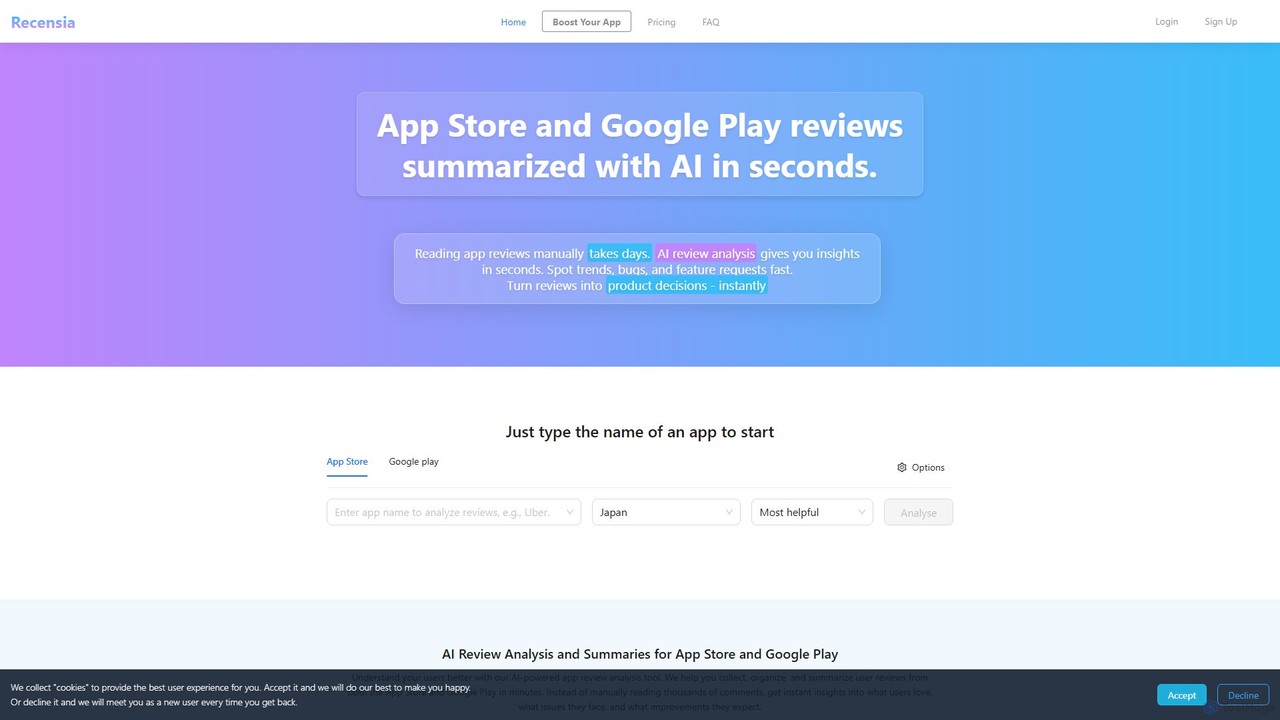
Recensia is an AI-powered platform that analyzes and summarizes user reviews from the App Store and Google Play. It helps product managers, developers, and UX designers quickly understand user sentiment, identify bugs, spot trends, and discover feature requests without manually sifting through thousands of comments. By leveraging advanced NLP, Recensia transforms raw feedback into actionable insights, enabling teams to make data-driven decisions and improve their mobile apps faster.

Feedback Analysis
Visits 6.3KFavorites 151Likes 145
Spiral
Freemium

Spiral

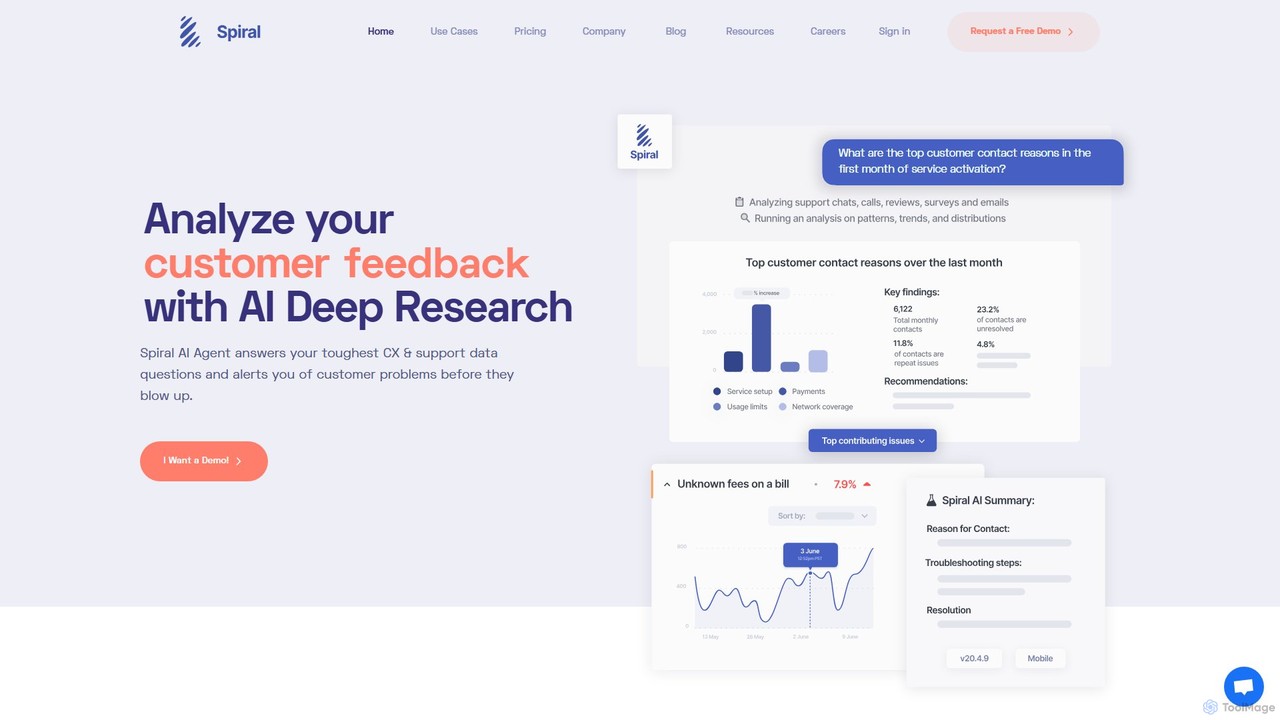
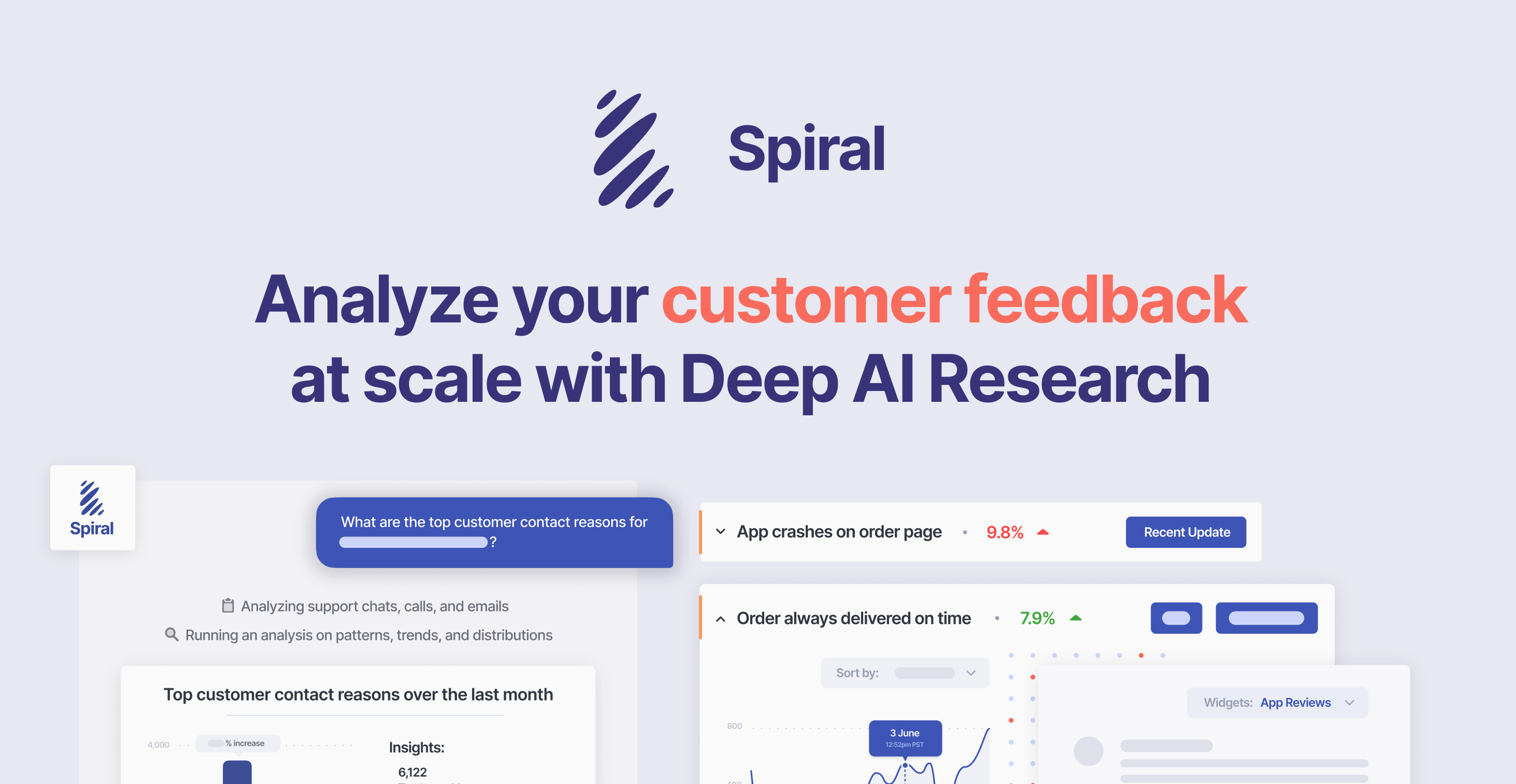
Spiral is an AI-powered platform that analyzes unstructured customer feedback from multiple channels. It intelligently classifies interactions, detects issues, and provides actionable insights to improve customer support, product quality, and overall customer experience. It helps businesses save time on data analysis and make data-driven decisions.

Business Intelligence
Visits 10.3KFavorites 109Likes 109
anecdoteai
Freemium

anecdoteai

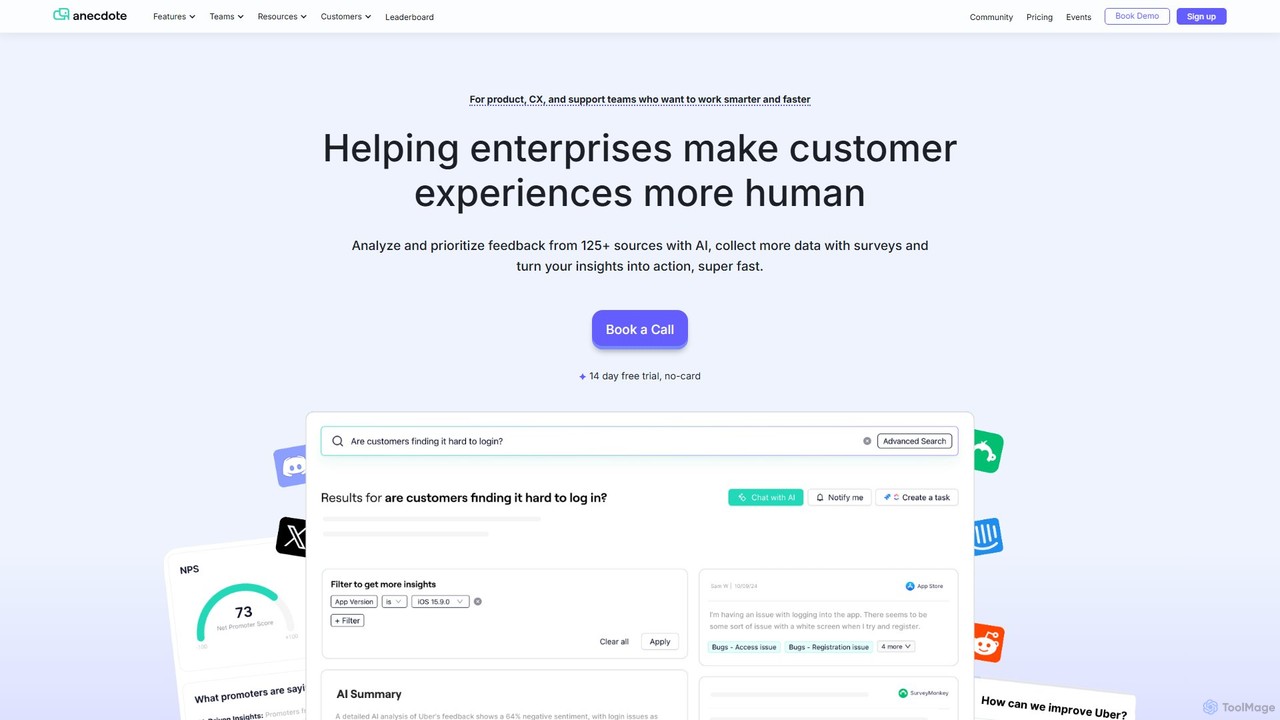
AnecdoteAI is an all-in-one customer experience (CX) platform that uses AI to analyze and prioritize feedback from over 125 sources. It helps product, CX, and support teams centralize feedback, uncover actionable insights, monitor competitors, and automate analysis to build more human customer experiences, faster.

Market Research
Visits 6.1KFavorites 122Likes 118

About Feedback Analysis

Feedback Analysis tools are AI-powered solutions designed to automatically collect, process, and interpret customer feedback from various sources. Leveraging advanced Natural Language Processing (NLP) and machine learning, these tools extract sentiment, identify key topics, and uncover actionable insights from unstructured data like reviews, surveys, and support tickets. They enable businesses to understand customer sentiment at scale, pinpoint pain points, and drive data-informed improvements across products, services, and customer experiences, significantly enhancing overall customer support strategies.

Core Features

  • Sentiment Analysis: Automatically detects the emotional tone (positive, negative, neutral) within customer comments and texts.
  • Topic Extraction: Identifies recurring themes, keywords, and common issues mentioned across large volumes of feedback.
  • Root Cause Identification: Pinpoints underlying reasons behind customer dissatisfaction or specific problems reported.
  • Multi-Channel Aggregation: Gathers and unifies feedback data from diverse sources like social media, emails, chat, and surveys.
  • Automated Summarization: Generates concise summaries of extensive feedback threads or large datasets, highlighting key takeaways.

Use Cases

Feedback Analysis tools are invaluable for various roles. Product managers use them to prioritize feature development by understanding user pain points from app reviews and support tickets. Customer service teams leverage these tools to identify common issues leading to high call volumes, enabling proactive solutions and agent training. Marketing departments can analyze public sentiment around campaigns or products to refine messaging and improve brand perception.

How to Choose

When selecting a Feedback Analysis tool, consider its AI model's accuracy in sentiment and topic detection, especially for your industry's specific jargon. Evaluate its integration capabilities with existing CRM, helpdesk, and survey platforms. Assess the range of feedback channels it supports (e.g., text, voice, social media) and the depth of its reporting and visualization features. Finally, consider the level of customization offered for categories and sentiment dictionaries to align with your unique business needs.

Featured tool rankings

Feedback Analysis use cases

1

Enhancing Product Development with User Insights

Product teams utilize AI feedback analysis to automatically process thousands of user reviews, feature requests, and bug reports from app stores, forums, and support tickets. By identifying recurring themes and sentiment trends, they can pinpoint critical pain points, validate new feature ideas, and prioritize development roadmaps based on genuine customer needs, leading to more impactful product iterations.

2

Optimizing Customer Service Operations

Customer support managers deploy feedback analysis tools to analyze interactions from chat logs, call transcripts, and email exchanges. The AI identifies common customer queries, areas of agent struggle, and recurring service issues. This allows for targeted agent training, refinement of FAQ databases, and automation of responses for frequent problems, significantly reducing resolution times and improving customer satisfaction.

3

Monitoring Brand Reputation and Public Sentiment

Marketing and PR professionals use feedback analysis to continuously monitor social media mentions, news articles, and online reviews for brand-related discussions. The tools track sentiment shifts, identify emerging crises, and highlight positive brand advocates. This enables rapid response to negative feedback, proactive reputation management, and data-driven adjustments to marketing campaigns to maintain a positive public image.

4

Personalizing Customer Experiences through Feedback

E-commerce businesses and service providers leverage AI feedback analysis to understand individual customer preferences and pain points from their purchase history, survey responses, and direct feedback. By segmenting customers based on their expressed needs and sentiment, companies can tailor product recommendations, personalize marketing communications, and offer more relevant support, fostering stronger customer loyalty.

5

Improving Employee Engagement and Workplace Culture

HR departments can apply feedback analysis to anonymized employee survey responses, internal communication platforms, and exit interviews. The AI identifies key themes related to job satisfaction, management effectiveness, and workplace challenges. This provides actionable insights for developing targeted HR initiatives, improving internal processes, and fostering a more positive and productive work environment.

6

Gaining Competitive Intelligence from Market Feedback

Business strategists use feedback analysis to analyze public reviews and discussions about competitors' products and services. By comparing sentiment, feature requests, and common complaints directed at rivals, companies can identify market gaps, understand competitive advantages, and refine their own offerings to better meet customer expectations, gaining a strategic edge in the marketplace.

Feedback Analysis FAQ

What are AI Feedback Analysis tools?

AI Feedback Analysis tools are software solutions that use artificial intelligence, primarily Natural Language Processing (NLP) and machine learning, to automatically process and derive insights from large volumes of unstructured customer feedback. They go beyond simple keyword searches to understand context, sentiment, and underlying themes in text, voice, and other data, helping businesses make sense of what their customers are truly saying.

How do AI Feedback Analysis tools work?

These tools typically ingest feedback data from various sources like surveys, reviews, social media, and support tickets. They then apply NLP models to break down text, identify entities, and perform sentiment analysis to determine emotional tone. Machine learning algorithms cluster similar feedback, extract recurring topics, and identify trends over time, presenting these insights through dashboards and reports for easy interpretation.

What are the main benefits of using AI for Feedback Analysis?

The primary benefits include the ability to process vast amounts of feedback data at scale and speed, which is impossible manually. AI provides objective, consistent analysis, reducing human bias. It uncovers hidden patterns and emerging trends, offering deeper insights into customer needs and pain points. This leads to faster identification of issues, more informed decision-making, and ultimately, improved customer satisfaction and product development.

How do I choose the right AI Feedback Analysis tool for my business?

When selecting a tool, consider its accuracy in sentiment and topic detection for your specific industry and language nuances. Evaluate its integration capabilities with your existing CRM, helpdesk, and data platforms. Look for robust reporting and visualization features that make insights actionable. Also, assess its scalability to handle your data volume and the level of customization it offers for categories and sentiment models to fit your unique business requirements.

What's the difference between Feedback Analysis and general Customer Support analytics?

General Customer Support analytics often focuses on quantitative metrics like response times, resolution rates, and ticket volumes. Feedback Analysis, while part of customer support, specifically delves into the qualitative, unstructured data of customer comments, reviews, and conversations. It uses AI to understand the why behind the numbers – the sentiment, topics, and emotions expressed by customers – providing deeper, actionable insights into their experiences and needs, rather than just performance metrics.