ToolMage
Sign in

Best 2 Field Service Management AI tools for Customer Support

Popular Field Service Management AI tools in Customer Support include BookingHub.AI, helping you work more efficiently.

BookingHub.AI

BookingHub.AI

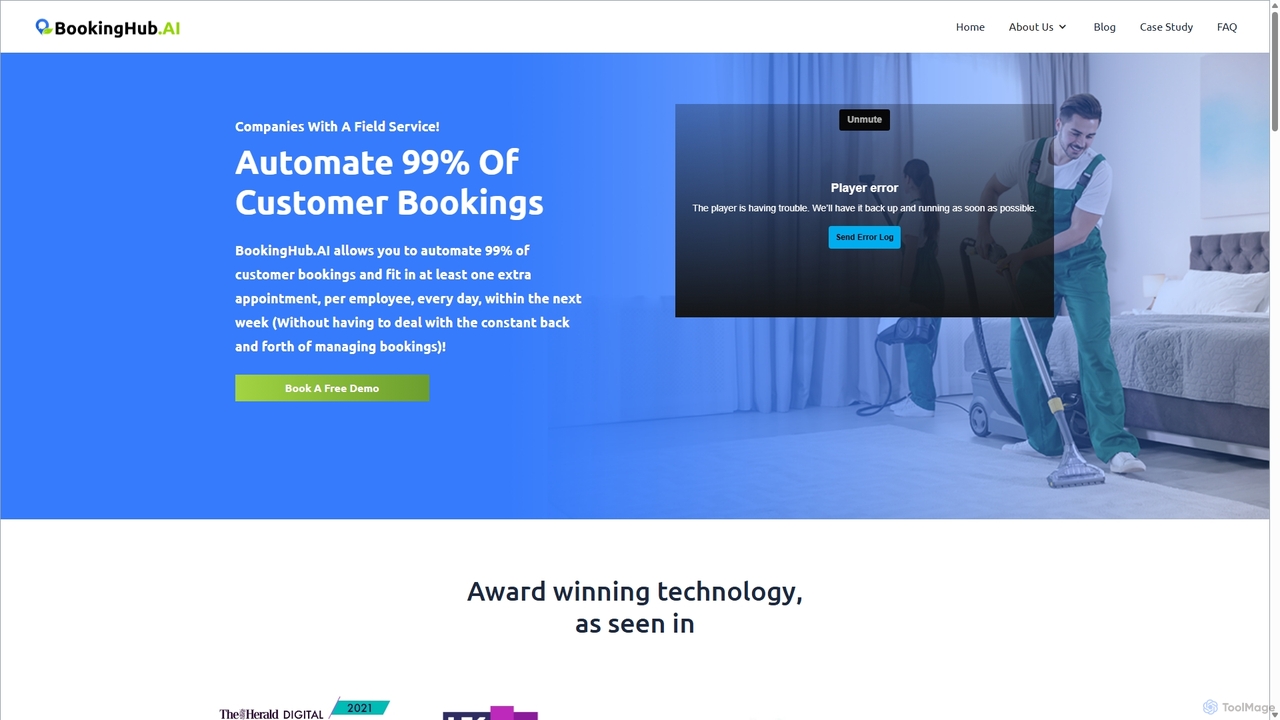
BookingHub.AI is an intelligent booking and scheduling platform designed for businesses with mobile workforces. It uses AI to automate 99% of bookings and optimize travel routes, significantly reducing costs and travel time. The platform empowers teams with a mobile app and provides administrators with a comprehensive management hub, boosting overall productivity and customer satisfaction.

Scheduling
Visits 5.9KFavorites 145Likes 144
BookingHub.AI

BookingHub.AI

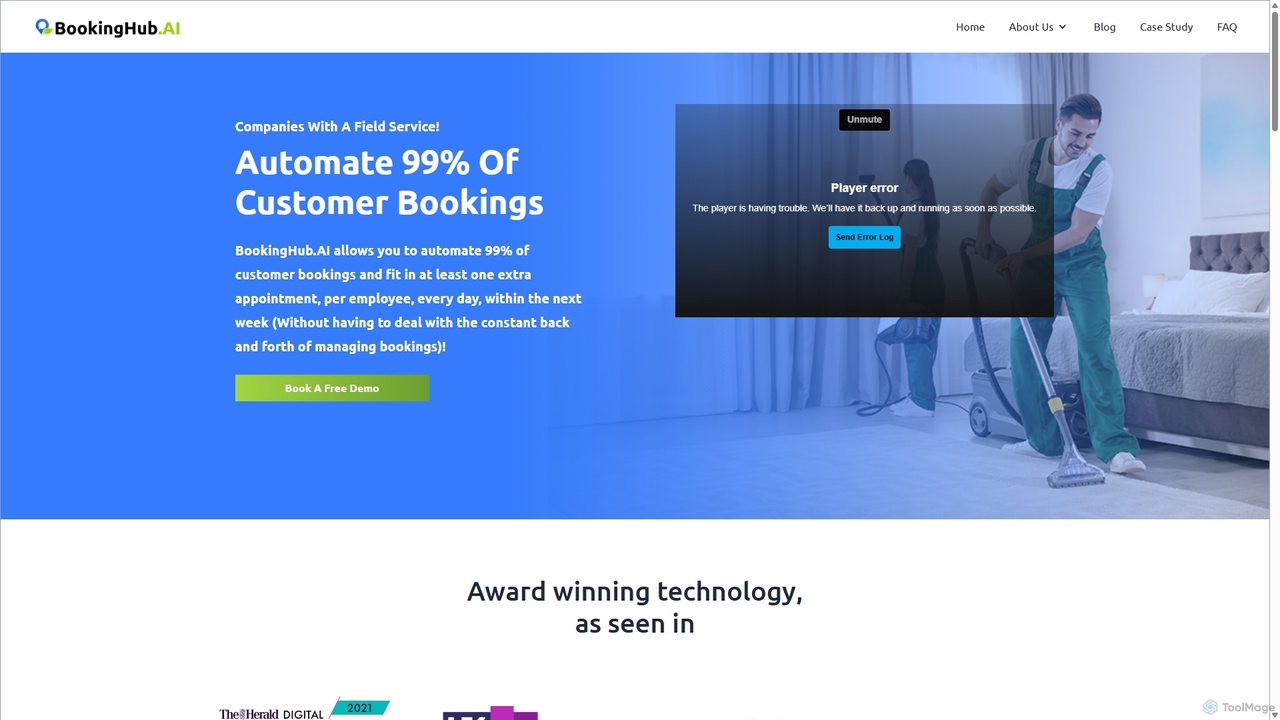
BookingHub.AI is an intelligent booking and scheduling platform designed for businesses with mobile workforces. It uses AI to automate 99% of bookings and optimize travel routes, significantly reducing costs and travel time. The platform empowers teams with a mobile app and provides administrators with a comprehensive management hub, boosting overall productivity and customer satisfaction.

Scheduling
Visits 6.7KFavorites 102Likes 118

About Field Service Management

Field Service Management (FSM) tools are a specialized type of customer support software that uses AI to manage and optimize the work of mobile technicians or employees operating outside the office. These platforms leverage algorithms for intelligent scheduling, route optimization, and real-time job tracking. The primary value of AI-powered FSM is in boosting operational efficiency, increasing first-time fix rates, and enhancing customer satisfaction by providing timely and effective on-site service. They transform reactive service models into proactive, data-driven operations.

Core Features

  • AI-Powered Scheduling & Dispatch: Automatically assigns the best technician to a job based on skills, location, availability, and job priority.
  • Intelligent Route Optimization: Calculates the most efficient travel routes in real-time to reduce fuel costs and travel time.
  • Predictive Maintenance: Analyzes equipment data to forecast potential failures and schedules preventative service before a breakdown occurs.
  • Mobile Workforce Enablement: Equips technicians with mobile apps for accessing work orders, customer history, inventory, and knowledge bases.
  • Inventory Management: Tracks parts and equipment in real-time across warehouses and service vehicles to ensure availability.

Applicable Scenarios

FSM tools are crucial for industries with a significant mobile workforce, such as telecommunications, utilities, HVAC, property management, and medical equipment maintenance. They are used by service managers to oversee operations, dispatchers to coordinate jobs, and field technicians to execute tasks efficiently. For example, a utility company uses FSM to manage power line repairs, while an HVAC provider uses it to schedule seasonal maintenance for thousands of clients.

Selection Criteria

When choosing an FSM tool, consider its integration capabilities with your existing CRM and ERP systems. Evaluate the functionality and user-friendliness of its mobile application, as this is the primary interface for technicians. Assess the sophistication of its AI features—does it offer true predictive analytics or just basic automation? Also, consider its industry-specific modules and scalability to support future business growth.

Field Service Management use cases

1

Automated Dispatch for HVAC Emergency Repairs

An HVAC service company receives an urgent call about a broken furnace in freezing weather. Instead of a dispatcher manually checking schedules and locations, the AI-powered FSM system instantly analyzes the situation. It identifies the nearest certified technician with the required parts in their van, checks their current job status, and automatically dispatches them. The system also sends an automated SMS to the customer with the technician's ETA, significantly reducing response time and improving customer trust during a critical event.

2

Dynamic Route Optimization for a Telecom Fleet

A telecommunications provider manages a fleet of 50 technicians handling installations and repairs across a city. Each morning, the FSM tool generates optimized routes for every technician. Throughout the day, as new high-priority repair requests come in, the system dynamically re-routes nearby technicians without disrupting their existing schedules significantly. This real-time adjustment ensures urgent issues are addressed quickly while minimizing total travel time and fuel consumption for the entire fleet, increasing the number of jobs completed per day.

3

Predictive Maintenance for Industrial Machinery

A manufacturing plant uses an FSM tool integrated with IoT sensors on its critical machinery. The AI analyzes vibration, temperature, and performance data in real-time. It detects subtle anomalies that indicate a specific component is likely to fail within the next two weeks. The FSM system automatically generates a work order, schedules a technician for the next planned downtime, and ensures the required replacement part is ordered and available. This prevents costly unplanned shutdowns and extends the lifespan of the equipment.

4

Improving First-Time Fix Rates with Mobile Access

A junior technician is on-site to repair a complex piece of medical equipment. Using the FSM mobile app, they scan a QR code on the machine to instantly pull up its entire service history, schematics, and common fault resolutions from the knowledge base. When faced with an unfamiliar error code, they use the app's AI-powered diagnostic tool, which suggests a step-by-step troubleshooting guide. This access to information empowers the technician to solve the problem correctly on the first visit, avoiding a costly and reputation-damaging second trip.

5

Automated Customer Communication and ETA Tracking

A property management company uses an FSM tool to handle tenant maintenance requests. When a technician is dispatched, the system automatically sends an email and SMS to the tenant confirming the appointment window. On the day of service, the tenant receives a link to a live map where they can track the technician's vehicle and see a real-time ETA. After the job is completed, an automated survey is sent to gather feedback. This proactive communication reduces calls to the office and significantly improves the tenant experience.

6

Streamlining Compliance and Safety Reporting

A utility company must adhere to strict safety regulations for its field engineers. Using their FSM mobile app, engineers complete mandatory digital safety checklists before starting any job. The app can prompt them with specific checks based on the job type and location. After completion, they can capture photos of the site, get a digital signature from the customer, and submit a full compliance report directly from the field. This process ensures safety protocols are followed, creates a digital audit trail, and eliminates hours of manual paperwork.

Field Service Management FAQ

What is AI-powered Field Service Management (FSM)?

AI-powered Field Service Management (FSM) is software that uses artificial intelligence to optimize the management of a mobile workforce. It goes beyond basic scheduling by using AI for intelligent dispatching, real-time route optimization, and predictive maintenance. Key functions include automating work order assignments based on technician skills and location, forecasting equipment failures, and providing mobile tools for on-site job execution. The goal is to increase efficiency, reduce operational costs, and improve customer satisfaction.

How to choose the right FSM tool for my business?

Choosing the right FSM tool involves evaluating several key factors. First, consider your industry-specific needs; some tools offer specialized modules for HVAC, utilities, or healthcare. Second, assess the quality of the mobile app, as it's the primary tool for your field team. Third, check for integration capabilities with your existing CRM, ERP, and accounting software. Finally, evaluate the AI features: does it offer simple automation or advanced predictive analytics? A trial or demo is highly recommended to test its usability and fit for your specific workflows.

What's the difference between FSM and CRM software?

FSM and CRM software serve different, though often complementary, purposes. CRM (Customer Relationship Management) focuses on managing interactions with current and potential customers, tracking sales pipelines, and marketing efforts. FSM (Field Service Management), a subset of customer support, focuses on the operational logistics of delivering on-site services *after* a sale or service request. While a CRM manages the 'who' and 'why' of the customer relationship, an FSM manages the 'how', 'when', and 'where' of service delivery. Many businesses integrate their FSM and CRM systems for a complete customer view.

What are the key benefits of using AI in Field Service Management?

Using AI in FSM provides several significant benefits:

  • Increased Efficiency: AI automates scheduling and optimizes routes, allowing technicians to complete more jobs per day.
  • Higher First-Time Fix Rates: AI-powered diagnostics and access to knowledge bases help technicians solve problems correctly on the first visit.
  • Reduced Costs: Route optimization lowers fuel consumption, and predictive maintenance prevents expensive emergency repairs.
  • Enhanced Customer Satisfaction: Proactive communication, accurate ETAs, and quicker service resolution lead to a better customer experience.
  • Proactive Service: Predictive maintenance shifts the service model from reactive to proactive, reducing equipment downtime.
Which industries benefit most from FSM tools?

Any industry that relies on a mobile workforce to perform tasks at customer locations or remote sites can benefit significantly from FSM tools. Key industries include:

  • Utilities (Electric, Gas, Water): For managing meter readings, repairs, and infrastructure maintenance.
  • Telecommunications: For installing equipment, and repairing network outages.
  • HVAC and Plumbing: For scheduling residential and commercial service calls and maintenance.
  • Medical Equipment: For maintaining and repairing critical hospital and clinic machinery.
  • Property Management: For handling tenant maintenance requests and inspecting properties.