Nector
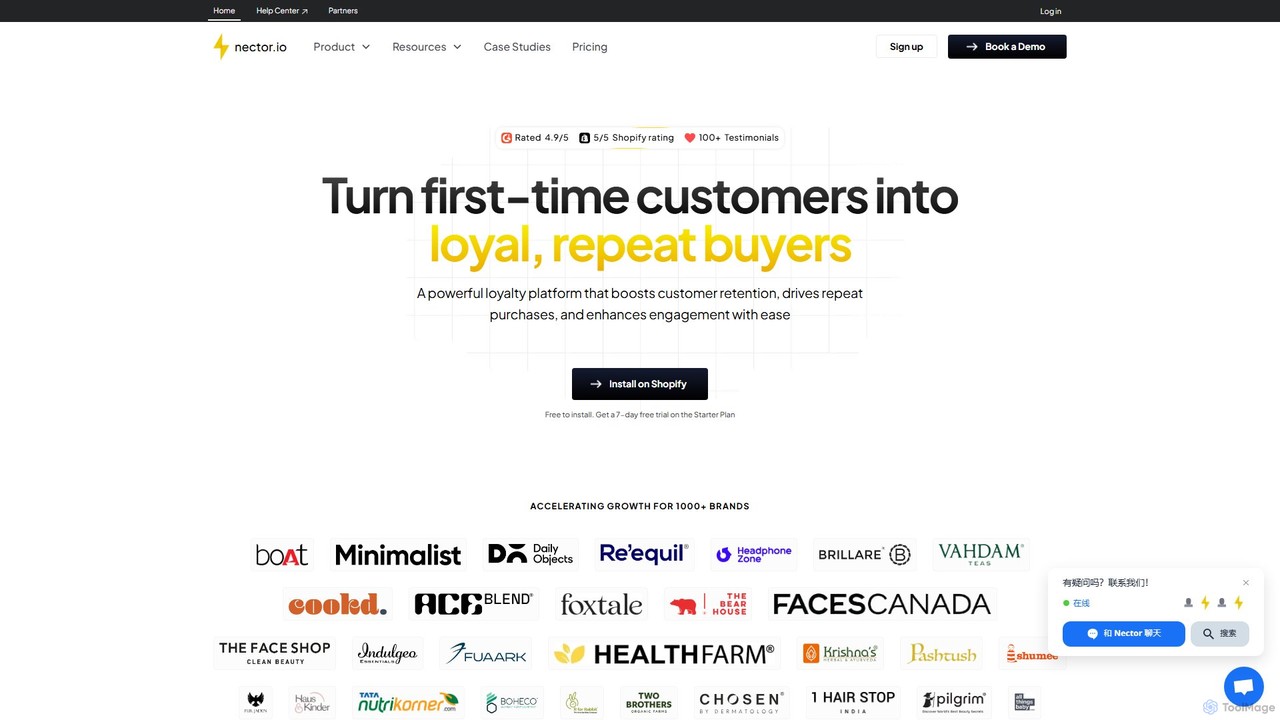
Nector is an AI-powered platform for DTC brands to enhance customer loyalty, referrals, and reviews. It helps businesses …
Nector is an AI-powered platform for DTC brands to enhance customer loyalty, referrals, and reviews. It helps businesses increase repeat sales and build lasting customer relationships through customizable rewards programs, automated engagement, and insightful analytics. It integrates seamlessly with Shopify and other e-commerce tools.
About Reviews Management
AI Reviews Management tools are specialized platforms that use artificial intelligence to automate the process of monitoring, analyzing, and responding to customer reviews. These tools leverage Natural Language Processing (NLP) to understand sentiment, identify key topics, and generate context-aware reply drafts. They enable businesses to efficiently manage their online reputation across multiple channels, gain actionable insights from customer feedback, and improve overall customer satisfaction. This technology transforms raw feedback into a strategic asset for product improvement and service optimization.
Core Features
- Review Aggregation: Gathers customer reviews from various platforms like Google, Yelp, app stores, and e-commerce sites into a single, unified dashboard.
- Sentiment Analysis: Automatically analyzes the tone of each review, classifying it as positive, negative, or neutral to prioritize responses.
- AI-Powered Reply Generation: Creates personalized and contextually appropriate draft responses to reviews, significantly speeding up response times.
- Thematic Analysis & Trend Identification: Identifies and categorizes recurring themes, complaints, or praises within large volumes of review data to spot trends.
- Reputation Reporting: Generates comprehensive reports on key metrics such as average ratings, sentiment trends, and response rates across different locations or products.
Use Cases
These tools are particularly valuable for businesses where online reputation is critical. This includes the hospitality sector (hotels, restaurants), e-commerce brands, SaaS companies, local service providers, and mobile app developers. For example, a restaurant chain can use it to monitor service quality across all its branches, while a software company can quickly identify bugs or popular feature requests from app store reviews.
How to Choose
When selecting an AI Reviews Management tool, consider the scope of platform integrations (does it cover the channels you care about?). Evaluate the accuracy of its sentiment and thematic analysis. Assess the level of automation and customization available for reply generation. Finally, examine the depth of its analytics and reporting capabilities to ensure it can provide the business insights you need.

Reviews ManagementUse Cases
Analyze E-commerce Product Feedback
An e-commerce manager for a consumer electronics brand uses an AI Reviews Management tool to monitor feedback for a newly launched headphone model. The tool aggregates reviews from their website, Amazon, and tech blogs. The AI's thematic analysis quickly identifies a recurring issue where customers mention 'poor Bluetooth connectivity'. This insight allows the product team to investigate and release a firmware update proactively, preventing further negative reviews and potential product recalls, thus protecting the brand's reputation.
Streamline Hospitality Reputation Management
The manager of a boutique hotel chain uses an AI tool to oversee reviews across Google, TripAdvisor, and Booking.com for all five of their locations. The system flags all negative reviews and uses AI to draft personalized, empathetic responses that acknowledge the specific issues raised. This allows the manager to approve and post replies in minutes, rather than hours. As a result, their average response time decreases by 80%, and their overall rating improves by 0.5 stars within six months due to improved guest engagement.
Prioritize Bug Fixes for Mobile Apps
A product manager for a popular productivity app connects their AI Reviews Management tool to the Apple App Store and Google Play Store. The tool is configured to automatically tag reviews mentioning terms like 'crash', 'bug', or 'won't open'. These tagged reviews are then automatically sent to a specific Slack channel for the engineering team. This creates a real-time feedback loop, enabling developers to identify and prioritize critical, user-impacting bugs much faster than manually sifting through hundreds of daily reviews.
Identify Feature Requests for SaaS Products
The product team at a SaaS company uses their review management platform to analyze feedback from sites like G2 and Capterra. They create a custom tag for 'feature request'. The AI scans all new reviews and automatically applies this tag when it detects phrases like 'I wish it had' or 'it would be great if'. This creates a centralized, auto-updating list of user-requested features. The team can then sort this list by frequency to see which requests are most popular, directly informing their product development roadmap with quantifiable data.
Monitor Service Quality Across a Franchise
The corporate marketing director for a national fast-food franchise uses an AI review tool to maintain brand consistency. The platform aggregates reviews for all 200 locations. A dashboard provides a comparative view of average ratings and sentiment scores. The director notices that three specific locations consistently receive negative reviews about 'staff friendliness'. This data allows them to work directly with those franchise owners to implement targeted customer service training, addressing a localized problem before it harms the national brand's reputation.
Conduct Competitive Brand Perception Analysis
A market analyst for a cosmetics company configures their AI review tool to track not only their own products but also those of their top three competitors. The AI analyzes sentiment and themes across all four brands. The resulting report shows that while their brand scores high on 'packaging', competitors are rated much higher for 'long-lasting formula'. This competitive intelligence, derived directly from authentic customer voices, provides clear, actionable direction for the R&D team to focus on improving product formulation in their next development cycle.