TypeflowAI
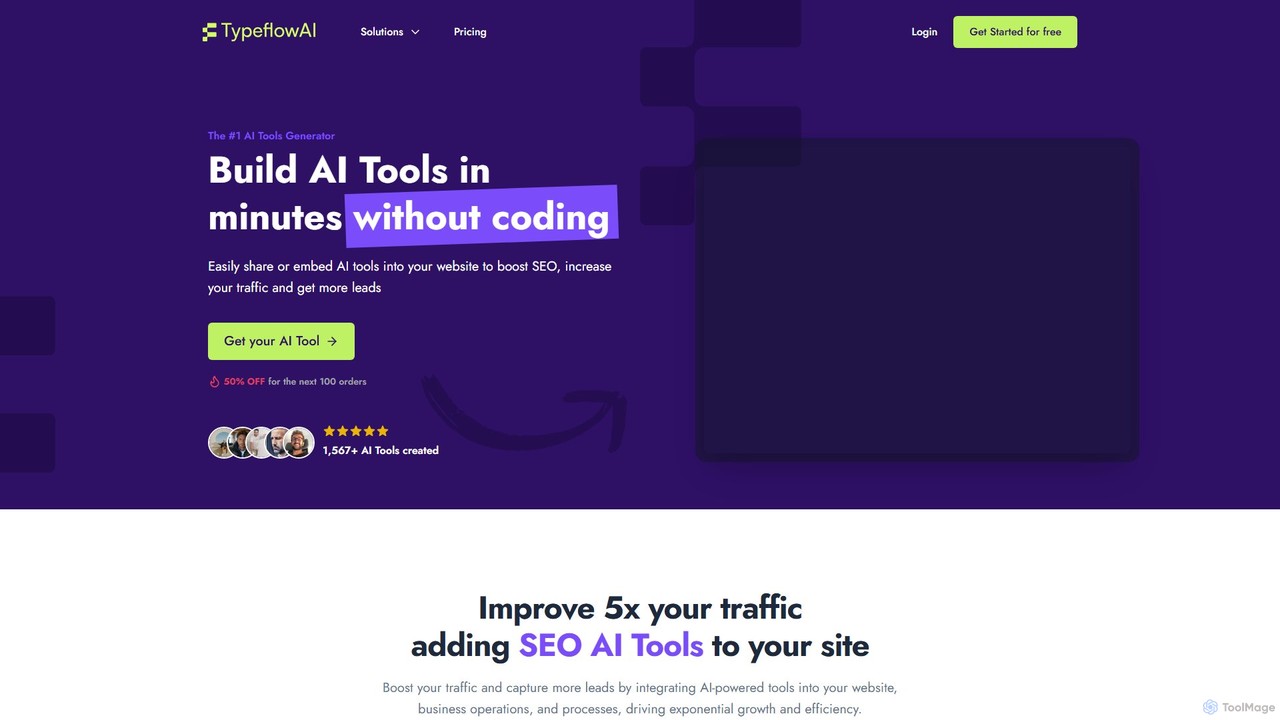
TypeflowAI is a no-code platform that enables users to create and embed custom AI tools, forms, quizzes, and …
TypeflowAI is a no-code platform that enables users to create and embed custom AI tools, forms, quizzes, and lead magnets in minutes. It's designed to boost website traffic, improve SEO, and generate more leads by offering interactive, value-driven content. With extensive templates, powerful integrations, and support for various GPT models, it simplifies the creation of dynamic, brand-aligned AI applications for marketing, sales, and internal processes.
Robly
Robly is an AI-powered email marketing platform designed to significantly boost open rates and engagement. It features proprietary …
Robly is an AI-powered email marketing platform designed to significantly boost open rates and engagement. It features proprietary technologies like OpenGen and RoblyAI, alongside robust tools for email automation, list growth, and customer surveys. Robly helps businesses of all sizes to enhance their marketing efforts, personalize communication, and drive revenue through smarter, more effective email campaigns.
Customform AI
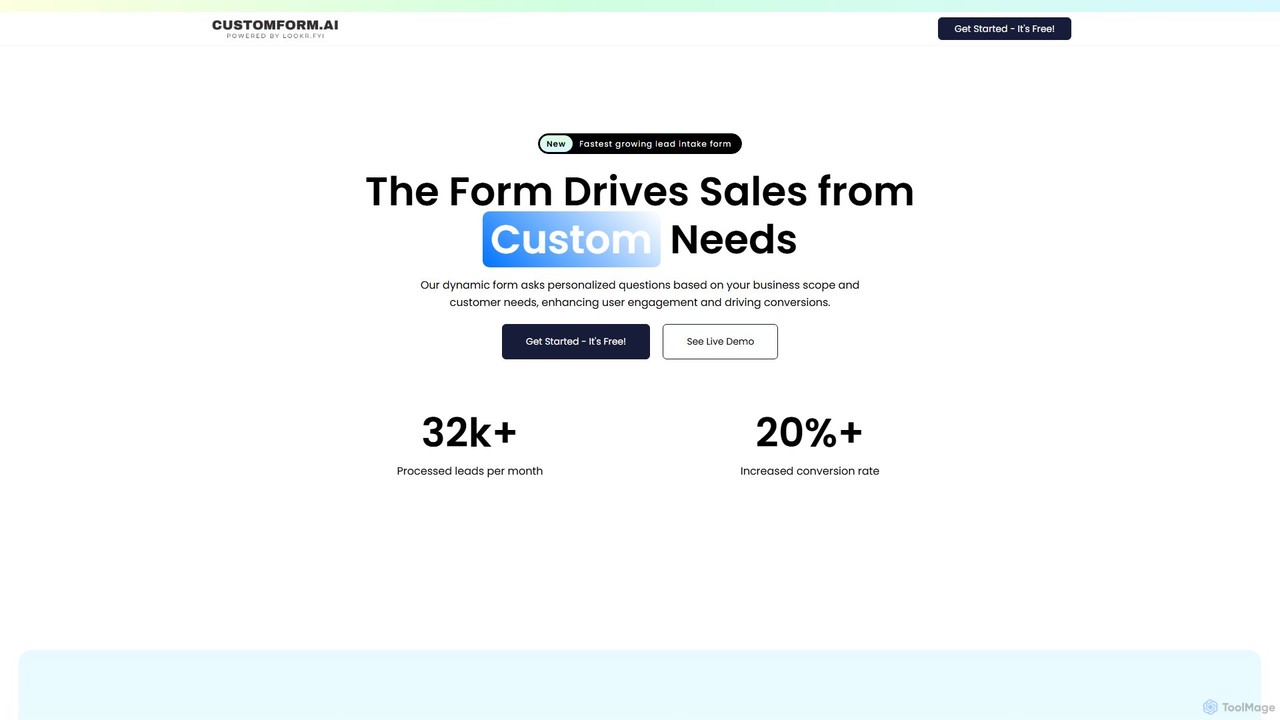
Customform AI is an intelligent form builder that creates dynamic, conversational lead forms. It uses AI to ask …
Customform AI is an intelligent form builder that creates dynamic, conversational lead forms. It uses AI to ask personalized questions based on your business and customer responses, significantly boosting lead quality and conversion rates.
Weavely
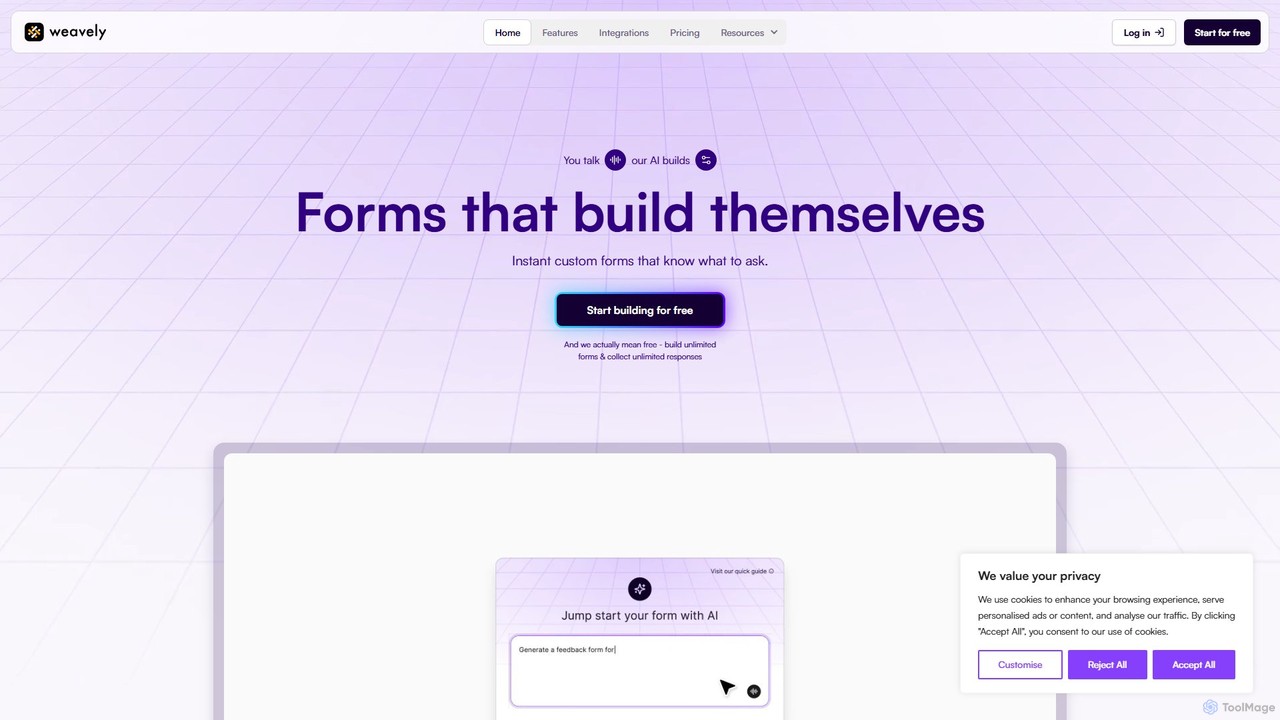
Weavely is an AI-powered form builder that creates intelligent, conversational forms instantly. Just describe your needs, and Weavely …
Weavely is an AI-powered form builder that creates intelligent, conversational forms instantly. Just describe your needs, and Weavely generates relevant questions and logic, streamlining data collection. It's a smarter, more engaging alternative to traditional tools like Google Forms and Typeform, designed to boost completion rates and save you time.
Deformity
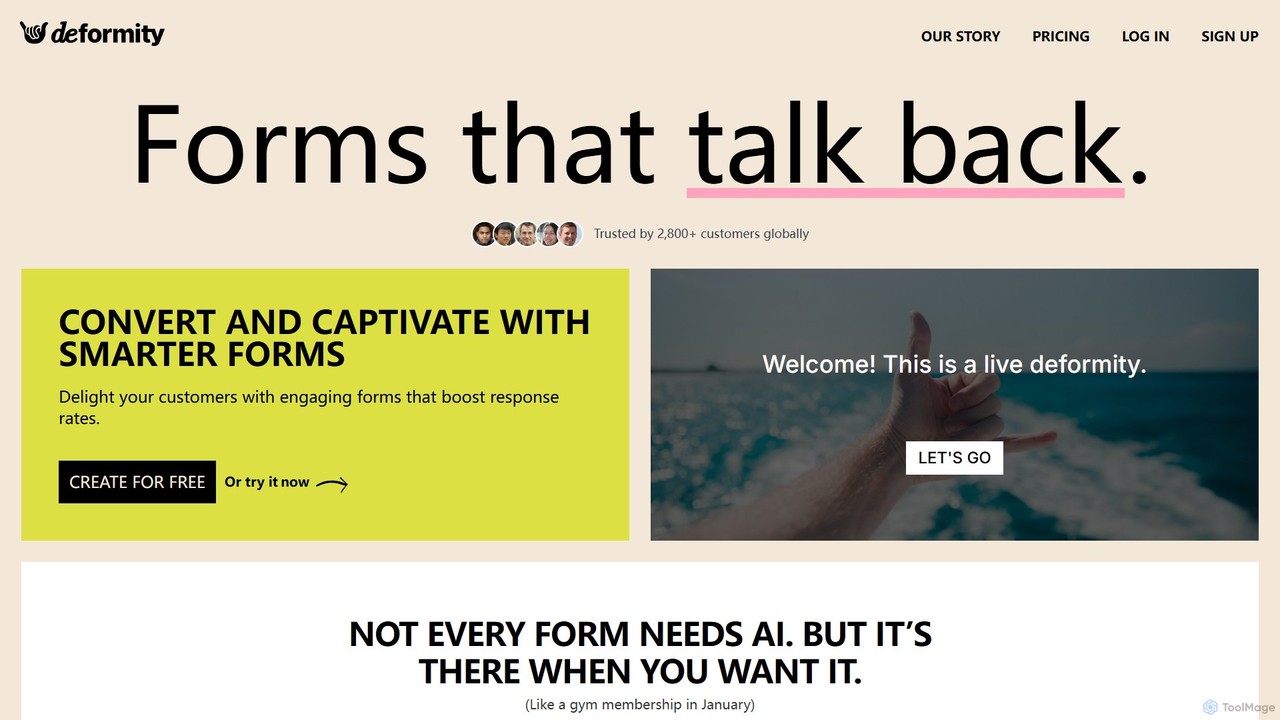
Deformity is an AI-powered form builder that creates engaging, conversational forms to boost response rates. It offers a …
Deformity is an AI-powered form builder that creates engaging, conversational forms to boost response rates. It offers a unique dual-mode approach, allowing you to either let AI generate dynamic, adaptive flows or manually craft beautiful, branded forms. With no-code logic, 120+ language support, and extensive integrations, Deformity makes data collection smarter, smoother, and more human.
About Surveys
AI-powered survey tools are specialized platforms that leverage artificial intelligence to revolutionize the process of gathering, analyzing, and acting upon feedback. These tools utilize advanced Natural Language Processing (NLP) and machine learning to go beyond simple data collection, offering intelligent question design, automated sentiment analysis of open-ended responses, and predictive insights. They enable organizations to gain deeper, more actionable understandings from their target audiences, making them an indispensable component within the broader customer support ecosystem for continuous improvement.
Core Features
- Intelligent Question Design: AI assists in crafting unbiased, effective, and contextually relevant survey questions.
- Automated Sentiment Analysis: Processes open-ended text responses to identify emotional tone, key themes, and underlying sentiment.
- Dynamic Survey Paths: Adapts follow-up questions in real-time based on previous responses, personalizing the survey experience.
- Predictive Analytics: Identifies trends and forecasts future behaviors or satisfaction levels from collected data.
- Automated Reporting & Insights: Generates comprehensive reports and highlights actionable insights without manual data crunching.
Use Cases
AI survey tools are crucial for various applications, from understanding market dynamics to enhancing service delivery. They are widely adopted by marketing teams for market research, product managers for feature feedback, and customer service departments for satisfaction monitoring. These tools provide a structured yet flexible way to gather nuanced opinions and data-driven insights across diverse user groups.
How to Choose
When selecting an AI survey tool, prioritize its AI capabilities, such as the sophistication of NLP, the accuracy of sentiment analysis, and predictive modeling. Consider its integration potential with existing CRM, marketing automation, or analytics platforms to ensure seamless data flow. Evaluate the level of customization offered for survey design and branding, alongside the clarity and depth of its reporting and visualization features for effective decision-making.
SurveysUse Cases
Enhancing Product Feature Development
Product managers utilize AI surveys to gather detailed feedback on new features or prototypes. The AI analyzes open-ended responses for common themes, sentiment, and pain points, providing actionable insights to prioritize development and refine user experience, leading to more user-centric product iterations.
Automating Customer Satisfaction Monitoring
Customer service teams deploy AI-powered surveys (e.g., post-interaction CSAT, regular NPS) to automatically collect feedback. The AI identifies critical issues, categorizes feedback by topic, and alerts agents to at-risk customers, enabling proactive support and continuous service improvement based on real-time data.
Conducting In-depth Market Research
Marketing professionals leverage AI surveys for comprehensive market analysis. AI helps design targeted questionnaires, identifies emerging trends from large datasets, and segments audiences based on preferences and behaviors, informing strategic campaigns and optimizing product positioning for competitive advantage.
Personalizing Employee Engagement Feedback
HR departments utilize AI surveys to gauge employee sentiment and engagement. AI can adapt follow-up questions based on initial responses, ensuring more relevant feedback, and then analyze anonymized data to pinpoint areas for improving workplace culture, fostering a positive environment, and enhancing retention.
Optimizing Website/App User Experience
UX/UI designers integrate AI surveys into websites or applications to collect real-time user feedback on specific flows or features. AI processes qualitative comments to highlight usability issues, navigation difficulties, and areas for design improvement, leading to more intuitive and user-friendly interfaces.
Streamlining Event Feedback Collection
Event organizers use AI surveys to gather post-event feedback efficiently. AI can summarize key takeaways from attendee comments, identify popular sessions or speakers, and suggest improvements for future events, automating the analysis of large volumes of qualitative data to enhance future planning.