ThumbsUp
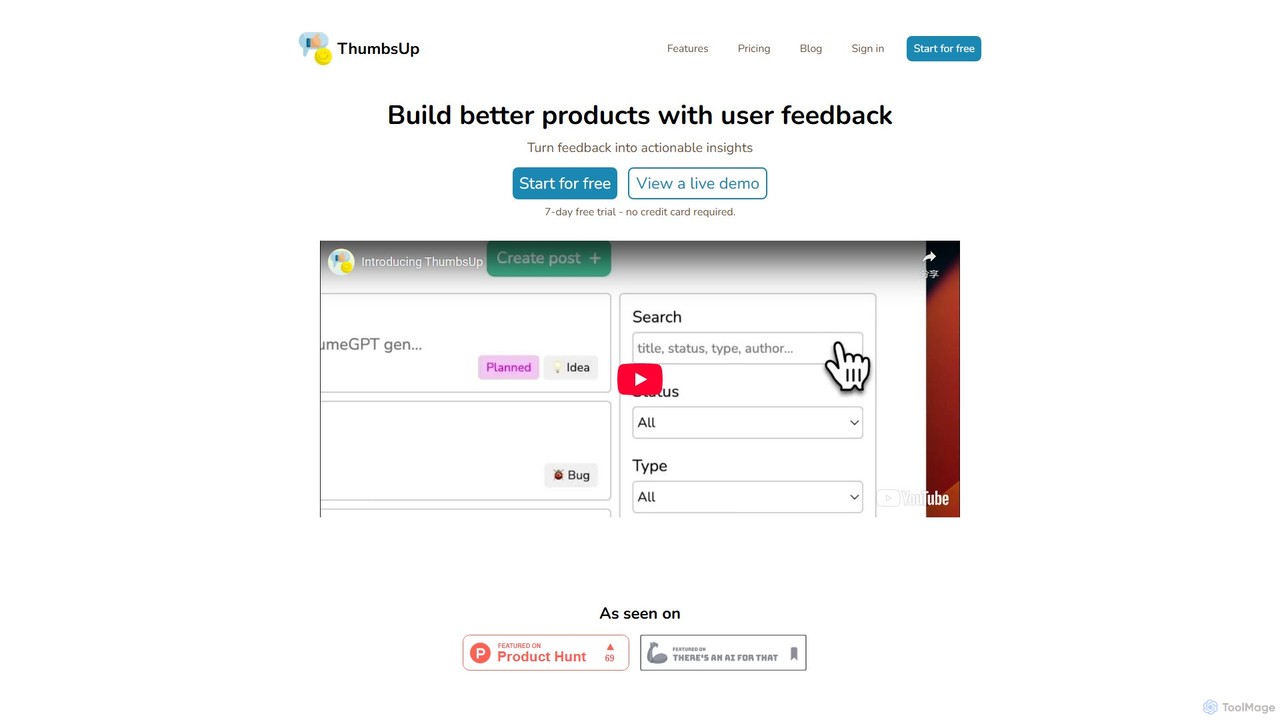
ThumbsUp is an AI-powered user feedback platform that helps businesses collect, analyze, and act on customer insights. It …
ThumbsUp is an AI-powered user feedback platform that helps businesses collect, analyze, and act on customer insights. It provides centralized feedback boards, AI-driven sentiment analysis, keyword trend tracking, and actionable suggestions to improve products and user satisfaction. Ideal for startups and growing teams.
CustomerGlu
CustomerGlu is a low-code, plug-and-play gamification platform designed to help mobile apps and websites boost user engagement, retention, …
CustomerGlu is a low-code, plug-and-play gamification platform designed to help mobile apps and websites boost user engagement, retention, and conversions. By integrating game mechanics like quizzes, streaks, and rewards, businesses can create interactive user journeys for onboarding, feature adoption, and monetization. With over 50 templates and deep personalization, it enables product teams to significantly improve key metrics and build stronger customer relationships in minutes.
About User Engagement
User Engagement AI tools are designed to proactively interact with users, leveraging artificial intelligence to personalize experiences, gather insights, and guide user journeys. As a specialized category within broader Customer Support solutions, these tools move beyond traditional reactive assistance. Their primary goal is to foster deeper connections, improve user satisfaction, and drive long-term retention by transforming passive users into active, loyal advocates through timely, relevant interactions.
Core Features
- Proactive Communication: AI-driven messages, notifications, or prompts are automatically sent to users based on their real-time behavior, context, and predefined triggers, ensuring timely and relevant outreach.
- Personalized Recommendations: Tools analyze individual user profiles, preferences, and past actions to tailor content, product suggestions, or next steps, enhancing relevance and driving conversions.
- Interactive Onboarding & Guidance: AI provides dynamic, personalized walkthroughs, contextual help, and step-by-step tutorials to guide new users through product setup and feature adoption, reducing friction.
- Sentiment Analysis & Feedback Collection: These tools monitor user sentiment across various touchpoints (e.g., reviews, chat, social media) and proactively solicit feedback to identify and address potential issues before they escalate.
- Behavioral Nudging & Gamification: AI is used to encourage desired user actions through timely prompts, intelligent reminders, or by integrating gamification elements and reward systems to boost motivation and loyalty.
Use Cases
User Engagement AI tools are vital for businesses seeking to cultivate stronger relationships with their audience across diverse sectors. In SaaS, they are crucial for improving feature adoption, reducing churn, and guiding users through complex workflows. E-commerce platforms leverage them for personalizing shopping experiences, offering tailored product recommendations, and recovering abandoned carts to increase conversion rates. Media and content platforms utilize these tools for curating highly relevant content, extending session durations, and fostering community interaction. These applications empower businesses to understand and respond to user needs dynamically, leading to more meaningful and impactful interactions.
How to Choose
When selecting User Engagement AI tools, prioritize solutions with robust integration capabilities for your existing CRM, marketing automation, and analytics platforms to ensure seamless data flow and a unified customer view. Evaluate the depth of personalization offered, ensuring it can adapt to individual user behaviors, preferences, and evolving needs in real-time. Consider its balance between proactive outreach and user control, allowing for easy opt-outs and respecting privacy. Assess its scalability to efficiently manage engagement for a growing user base without compromising performance. Finally, look for comprehensive analytics and reporting features to measure engagement effectiveness, identify trends, and calculate ROI.

User EngagementUse Cases
Enhance SaaS Onboarding with Interactive Guides
A SaaS Product Manager uses AI User Engagement tools to create personalized, interactive onboarding experiences for new users. Instead of static tutorials, the AI guides users step-by-step through key features, offering contextual help and suggesting next actions based on their progress and usage patterns. This approach significantly reduces the time-to-value for new customers, leading to higher feature adoption rates and a substantial decrease in early-stage churn.
Personalize E-commerce Product Recommendations
An E-commerce Marketing Manager deploys AI User Engagement tools to deliver highly personalized product recommendations. The AI analyzes a customer's browsing history, purchase patterns, demographic data, and even real-time in-session behavior to suggest relevant items on product pages, in emails, or through pop-ups. This targeted approach significantly increases click-through rates, boosts average order value, and enhances the overall shopping experience, fostering greater customer loyalty.
Proactive Support and Issue Prevention
A Customer Success Manager utilizes AI User Engagement tools to proactively identify and address potential user frustrations before they escalate into support tickets. The AI monitors user behavior, analyzes sentiment in feedback channels, and detects common pain points or anomalies. It then triggers automated, personalized messages offering solutions, tips, or direct assistance. This significantly reduces support volume, improves customer satisfaction scores, and enhances overall user retention by demonstrating attentive, anticipatory service.
Content Personalization for Media Platforms
A Content Editor on a media platform leverages AI User Engagement tools to personalize content delivery and increase consumption. The AI learns individual user preferences, such as preferred genres, authors, topics, and viewing habits, to dynamically curate news feeds, video playlists, or article suggestions. This ensures users are consistently presented with highly relevant content, leading to longer session durations, increased content consumption, and a stronger sense of connection to the platform.
Automated Feedback Collection and Sentiment Analysis
A Product Manager or UX Researcher employs AI User Engagement tools to continuously gather user feedback and understand sentiment at scale. The AI deploys targeted surveys, in-app prompts, or monitors social media conversations, then uses Natural Language Processing (NLP) to analyze open-ended responses and identify emerging trends, pain points, or feature requests. This enables faster product iteration cycles, data-driven improvements, and a significantly better overall user experience by actively listening to the user base.
Gamified User Journey for Learning Platforms
An Educational Content Creator on a learning platform utilizes AI User Engagement tools to gamify the learning journey and boost completion rates. The AI designs personalized learning paths, awards badges, points, or unlocks premium content based on a learner's progress, performance, and engagement levels. It provides timely encouragement and challenges, transforming the educational experience into an interactive and rewarding one, resulting in higher course completion rates and sustained learner motivation.