Customer Support Best in category 5 results Virtual Agent AI Tool

Popular AI tools in the Virtual Agent field of Customer Support include Cognigy、Salient、Teammates.ai、Revmo AI、Aissist, etc., helping you quickly improve efficiency.

Revmo AI

Revmo AI

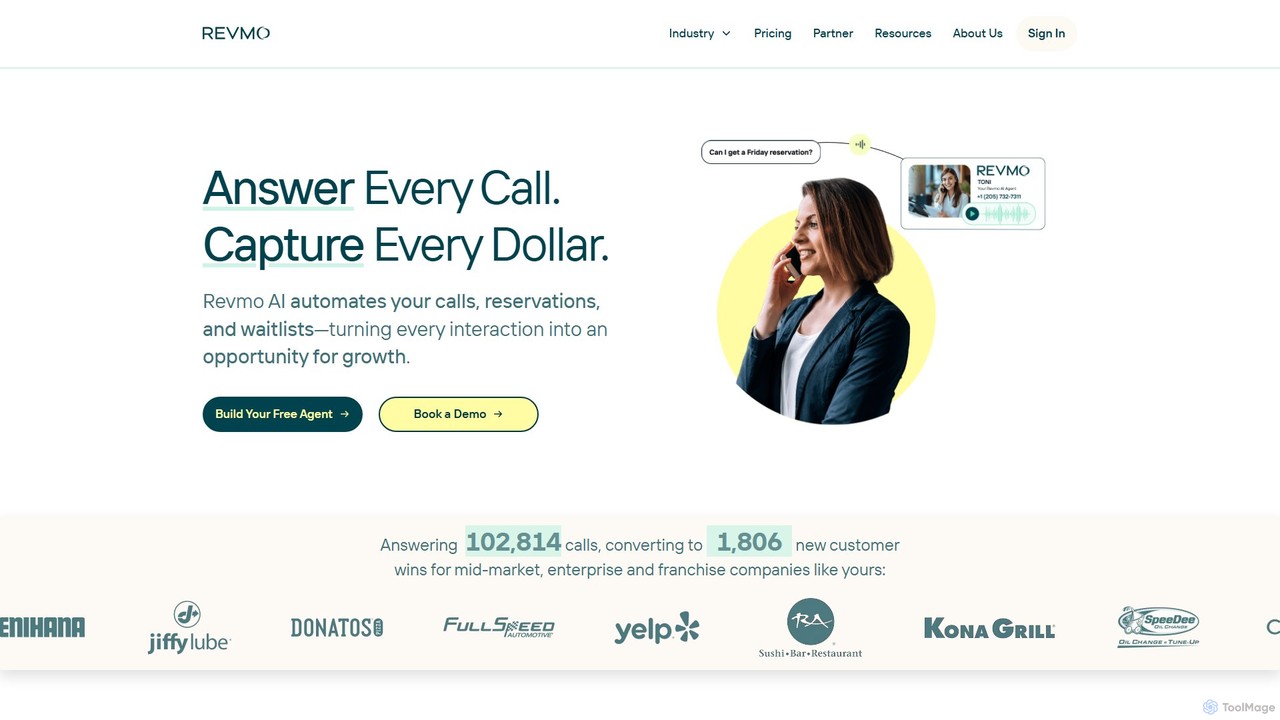
Revmo AI is an intelligent virtual agent that automates business communications 24/7. It handles phone calls, manages reservations, …

8.9K
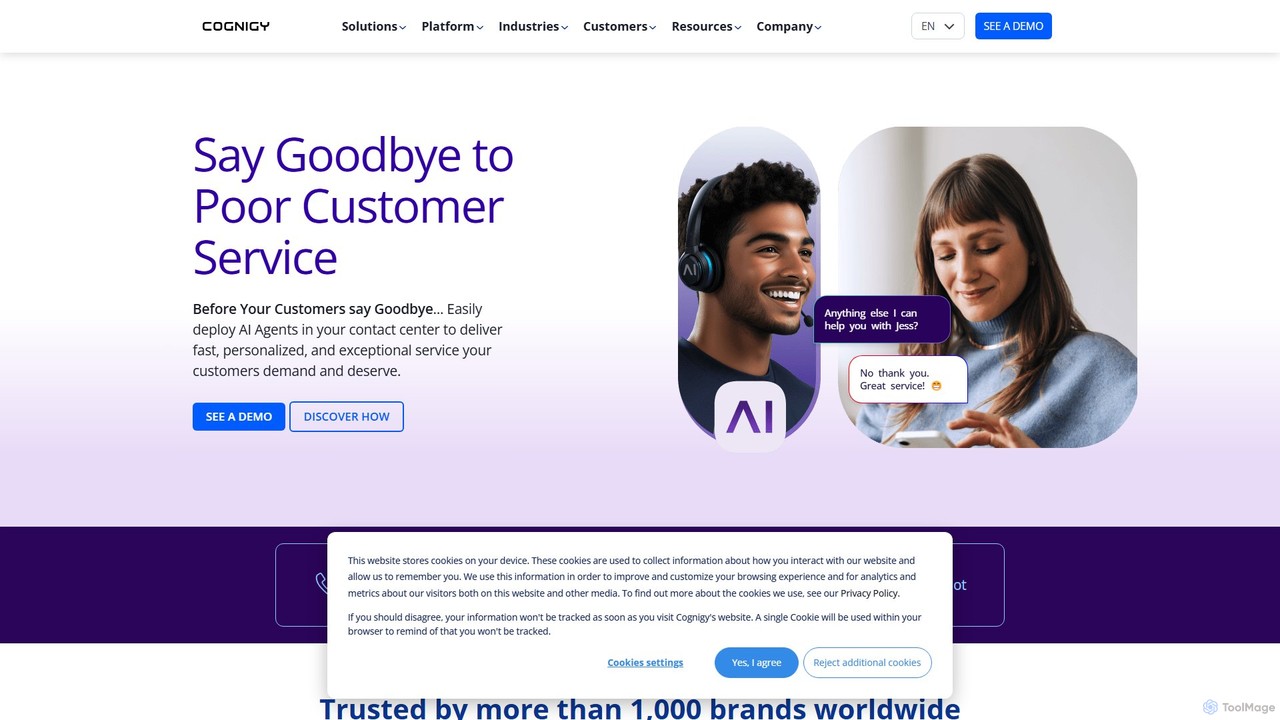
Cognigy

Cognigy

Cognigy is an enterprise-grade conversational AI platform for creating and deploying advanced AI agents for customer service. It …

109.3K
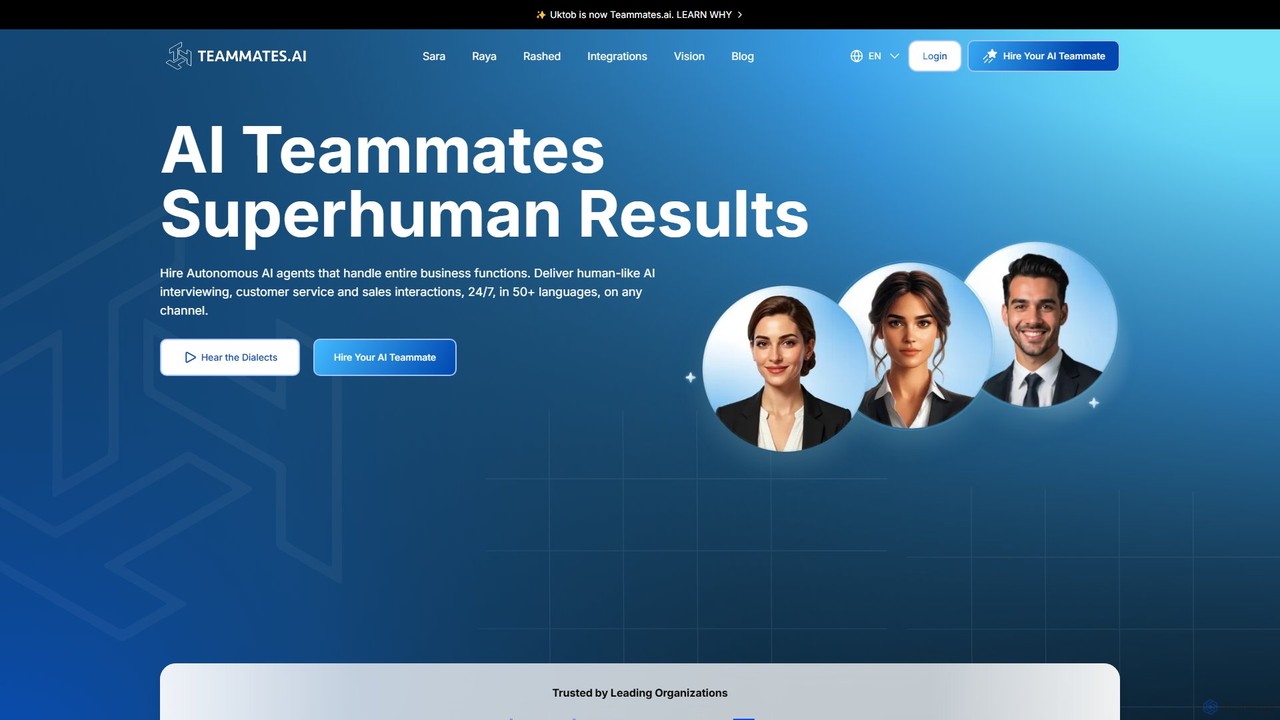
Teammates.ai

Teammates.ai

Teammates.ai provides a workforce of autonomous AI agents designed to handle entire business functions. It offers specialized AI …

15.3K
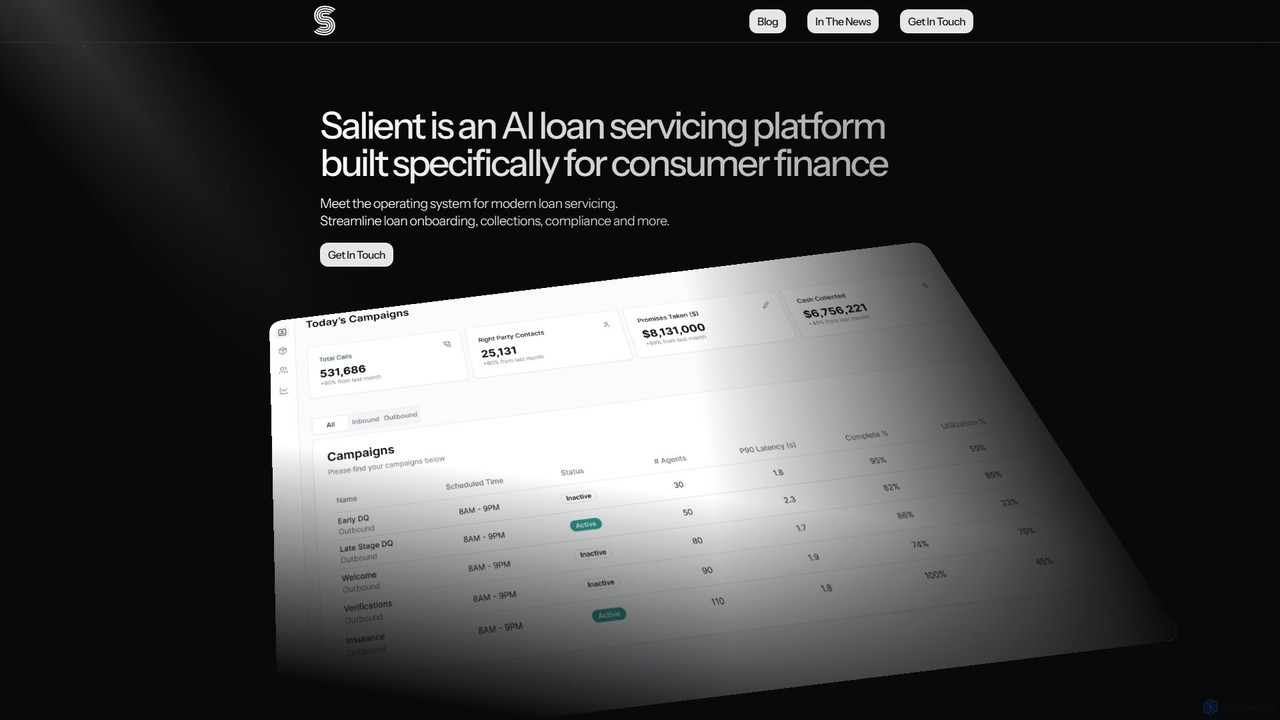
Salient

Salient

Salient provides enterprise-grade AI agents specialized in loan servicing for the financial industry. These agents automate customer interactions …

17.9K
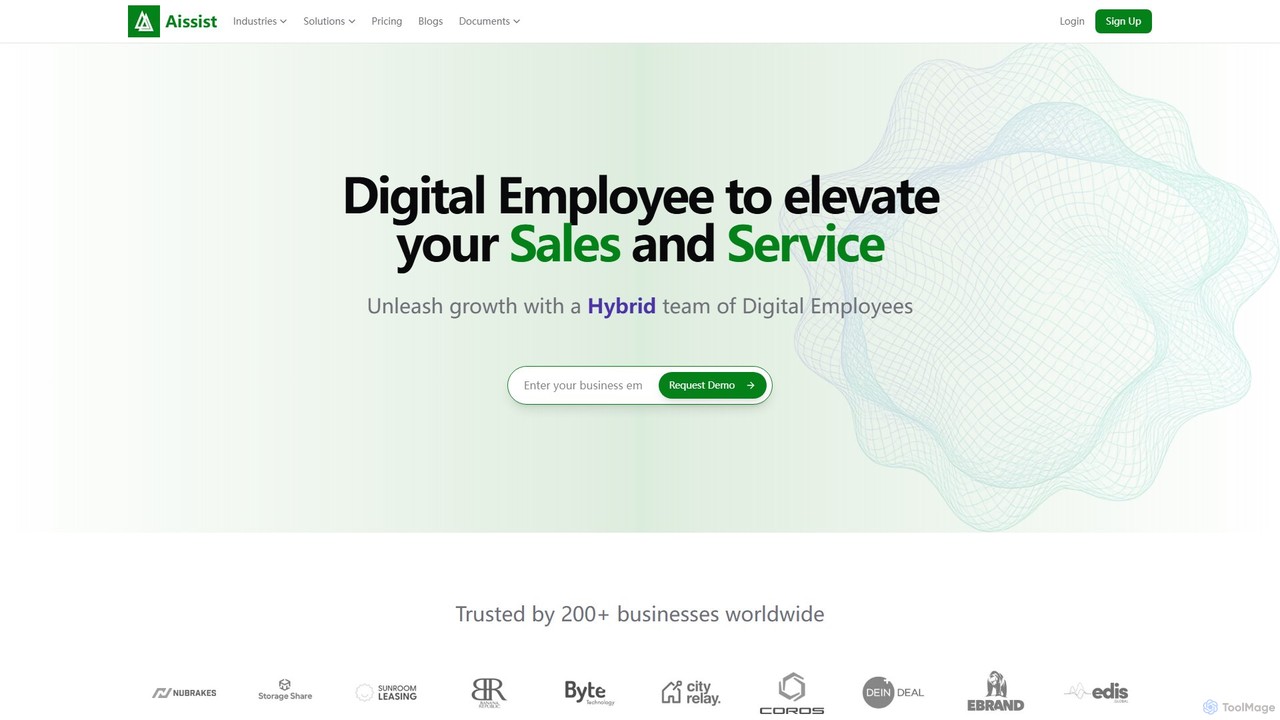
Aissist

Aissist

Aissist provides enterprise-grade AI Digital Employees to automate and elevate sales and customer service. Leveraging a proprietary multi-agent …

8.1K

About Virtual Agent

Virtual Agents are AI-powered tools designed to automate and enhance customer interactions within the broader Customer Support domain. Leveraging advanced natural language processing (NLP) and machine learning, they can understand user intent, provide instant responses, and perform tasks without human intervention. These intelligent assistants offer 24/7 support, improve response times, and free up human agents for more complex issues, significantly boosting operational efficiency and customer satisfaction.

Core Features

  • Natural Language Understanding (NLU): Interprets user queries in natural language, identifying intent and extracting key information.
  • Automated Responses: Provides instant, accurate answers to frequently asked questions and common inquiries.
  • Task Automation: Executes routine tasks like checking order status, booking appointments, or resetting passwords.
  • Contextual Memory: Maintains conversation context across interactions for a more personalized and seamless experience.
  • Seamless Escalation: Intelligently transfers complex or sensitive issues to human agents with full conversation history.

Use Cases

Virtual Agents are widely adopted across various industries to streamline customer service. They excel in scenarios requiring rapid, consistent responses to high volumes of inquiries, such as e-commerce for order tracking, banking for account inquiries, or telecommunications for technical troubleshooting. Businesses leverage them to provide immediate support, reduce wait times, and ensure consistent brand messaging.

How to Choose

When selecting a Virtual Agent, prioritize its natural language understanding capabilities, ensuring it can accurately interpret diverse user inputs. Evaluate its integration potential with existing CRM, ticketing, and knowledge base systems. Consider scalability to handle fluctuating query volumes and customization options to align with your brand voice and specific business processes. Finally, assess the analytics and reporting features for continuous performance improvement.

Virtual AgentUse Cases

1

24/7 Customer Service Automation

For e-commerce businesses, a Virtual Agent can provide round-the-clock support, answering common questions about product availability, shipping policies, and return procedures. This allows customers to get immediate answers outside of business hours, reducing abandoned carts and improving overall satisfaction without requiring human staff presence.

2

Automated FAQ and Knowledge Base Access

Companies with extensive product documentation or service guides can deploy a Virtual Agent to act as an intelligent interface to their knowledge base. Users simply ask questions in natural language, and the agent retrieves the most relevant information, eliminating the need for manual searching and improving self-service resolution rates.

3

Lead Qualification and Routing

Sales and marketing teams can utilize Virtual Agents on their websites to engage visitors, ask qualifying questions (e.g., budget, needs, company size), and then intelligently route qualified leads to the appropriate sales representative. This streamlines the sales funnel and ensures sales teams focus on high-potential prospects.

4

Technical Support and Troubleshooting

Software or hardware companies can use Virtual Agents to guide users through common troubleshooting steps for their products. The agent can ask diagnostic questions, provide step-by-step instructions, and even link to relevant support articles, resolving many issues without requiring a live support agent.

5

Order Status and Account Management

Retailers and service providers can empower customers to check their order status, track shipments, or manage their account details (e.g., update contact information, view billing history) directly through a Virtual Agent. This reduces inbound calls to call centers and provides customers with instant self-service options.

6

Internal Employee Support (HR/IT Helpdesk)

Large organizations can deploy Virtual Agents internally to assist employees with HR-related queries (e.g., leave policies, benefits information) or IT helpdesk issues (e.g., password resets, software installation guides). This provides immediate support to employees, reducing the workload on internal support departments.

Virtual AgentFrequently Asked Questions